The New Path for Hair Stylists: Why Talent Alone Is No Longer Enough
— Exploring Waseda Beauty College’s “Skills + Social Media” Education Model
In Japan, hairstyling is a traditional profession that requires a national qualification. Yet the industry is now undergoing a quiet revolution: technical skills are no longer the only passport to success. Popularity and visibility are increasingly becoming assets as valuable as craftsmanship itself.
This shift is being embraced by Waseda Beauty College, a specialized vocational school in Tokyo with just over 600 students. Despite its modest size, the school has attracted significant attention through an unconventional approach to beauty education.

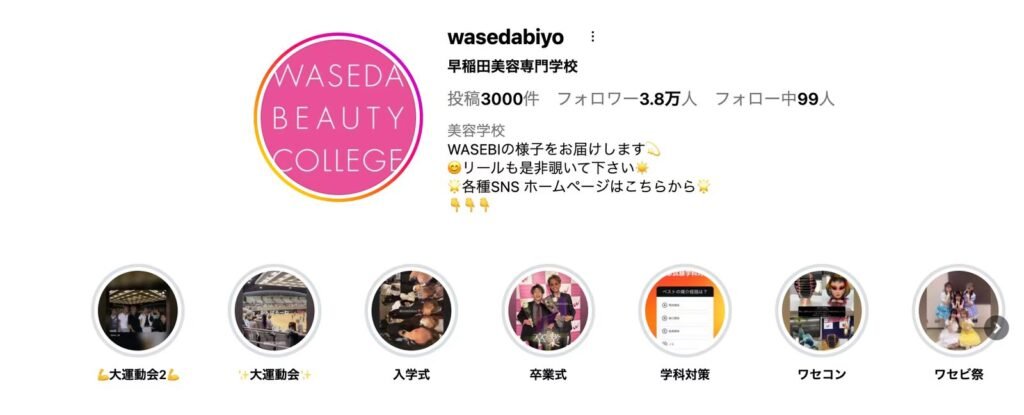
Across YouTube, TikTok, and Instagram, the school’s official accounts have accumulated more than 110,000 followers—an extraordinary figure for a beauty school.
More remarkably, these accounts are not managed by a professional marketing team. Instead, teachers casually film, edit, and post content during their daily routines.
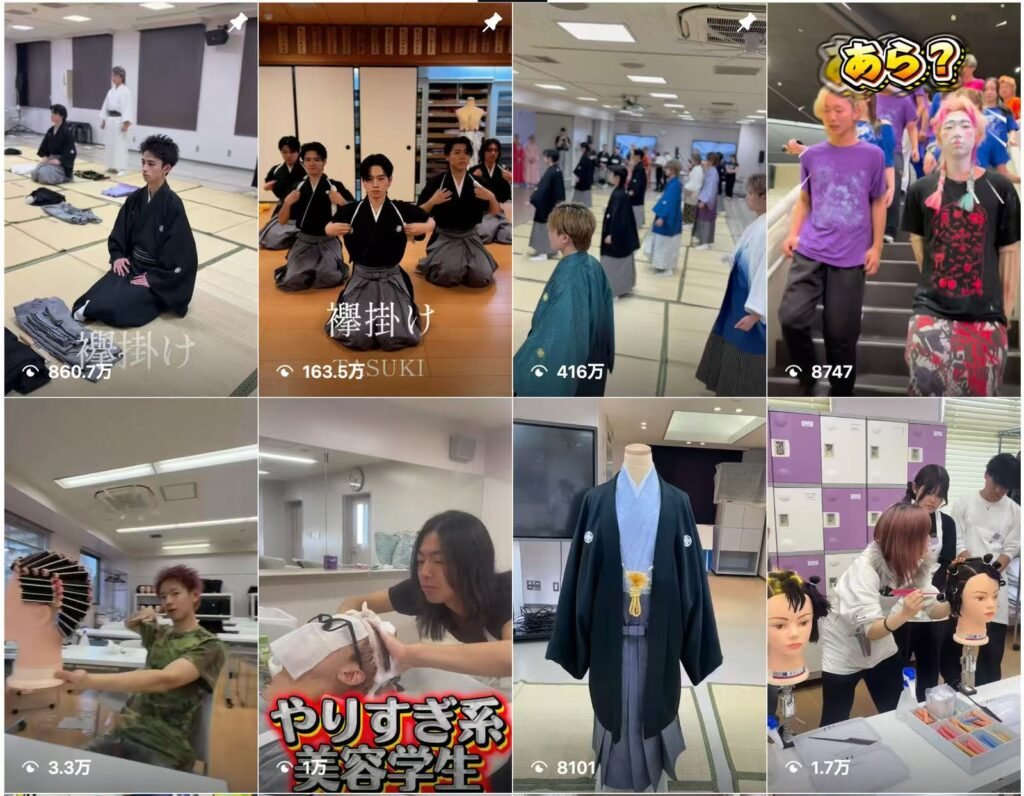
“Our teachers simply walk around campus, spot something interesting, and film it,” a school representative explained. There are no promotional videos, no outsourced production companies—just authentic classroom moments, student creations, and everyday campus life.
What Waseda Beauty College is attempting is the integration of social media, VR technology, and traditional beauty education, creating a new pathway for aspiring hairstylists built on both technical expertise and digital influence.
A Dual-Track Curriculum: Small in Scale, Specialized in Focus
The school operates two academic programs that complement one another through a “major program + specialized program” structure.
The Beauty Program, enrolling approximately 280 students per year, focuses on preparing students to obtain Japan’s national hairstylist qualification. More than half of the curriculum is devoted to national examination preparation, while the remainder covers practical skills such as shampooing, hair coloring, and dressing techniques.
The Comprehensive Beauty Program, with around 40 students per year, trains multi-skilled professionals such as nail technicians, skincare specialists, beauty advisors, and makeup consultants. Students also study traditional Japanese culture, including kimono dressing and tea ceremony etiquette.
With two academic years combined, the school’s total enrollment exceeds 600 students. Currently, five international students—all from China—are enrolled in the Comprehensive Beauty Program, including two second-year students and three first-year students. Applicants are generally expected to possess Japanese proficiency at approximately the JLPT N2 level, although those below N2 may still apply.
This dual-track structure allows the school to meet the mainstream demand for hairstylist certification while also providing broader career pathways for students seeking more diverse skill sets.
The 110,000-Follower Classroom: When Social Media Becomes Part of Education
One of the school’s most distinctive features is its transformation of social media into an integral part of the learning environment.
Unlike many schools that use social media primarily for recruitment, Waseda Beauty College treats its accounts as platforms for showcasing student work and engaging with the beauty industry.
Two phenomena stand out.
The first is the school’s official account, which has amassed over 110,000 followers. Teachers continuously document classroom demonstrations, student creations, and creative moments around campus, editing and uploading them directly without elaborate planning or professional production.
“Many of our followers are professional hairstylists who actively like and comment on student work,” a school representative said. “That feedback motivates students to keep sharing their creations.”
This creates a unique learning ecosystem. Students begin building professional visibility while still in school, and their work may be seen directly by stylists from leading salons—effectively creating employment opportunities long before graduation.
The second phenomenon is the emergence of student influencers.
Many students begin showcasing their work on social media during their studies, accumulating followers and industry recognition. Some graduate with an established online presence and are already regarded as emerging beauty influencers.The school is candid about the realities of today’s beauty industry in Japan.
The school is candid about the realities of today’s beauty industry in Japan.
“Popularity directly affects income. Without visibility, it becomes difficult,” a school representative noted. “Many of today’s top hairstylists are also influencers with hundreds of thousands—or even millions—of followers.”
The profession’s income structure is changing fundamentally. Traditionally, earnings depended on salon clientele and commission-based compensation. Increasingly, success is being driven by a combination of technical expertise and personal influence.
A hairstylist’s value is no longer determined solely by scissors and dye brushes, but also by engagement on a smartphone screen.
In the social media era, the ability to present one’s work is becoming just as important as the ability to create it.
To support this reality, the school operates a photography club with roughly 100 members. Students create hairstyles, photograph their work using DSLR cameras, and publish the images on Instagram. In effect, the school is not only training hairstylists—it is also helping students develop skills in personal branding and social media management.
VR Technology and the Efficiency Revolution in Skills Training
Beyond social media, Waseda Beauty College has also embraced digital innovation in the classroom.
Visitors entering the school’s classrooms will notice the absence of traditional blackboards. Teaching relies heavily on smart devices, with one of the most notable innovations being the introduction of VR-based training.
According to the school, VR can increase the speed of skill acquisition by approximately four times.
The system allows students to observe instructors from a first-person perspective, creating the sensation of performing the techniques themselves. Through 360-degree viewing, students can simultaneously observe detailed hand movements, instructional diagrams, and the instructor’s posture and body mechanics.
In a class of 40 students, everyone effectively gains the perspective of standing directly beside the instructor.
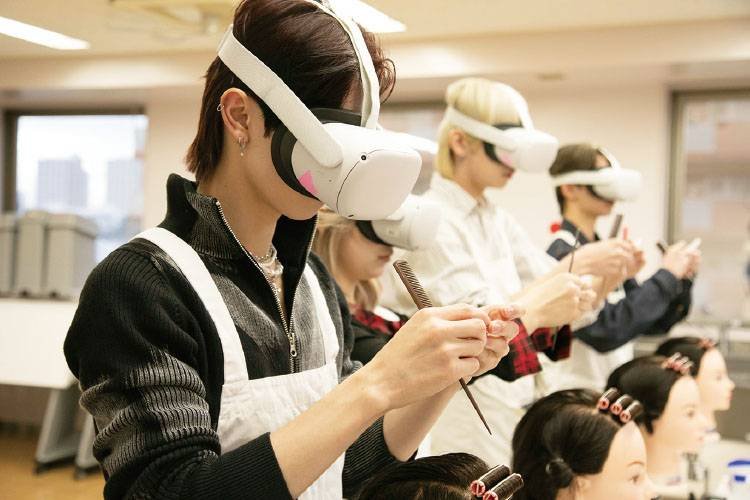
When a technique is difficult to understand, students can replay the demonstration repeatedly before removing the headset and practicing independently.
Despite embracing advanced technology, the school’s curriculum remains closely aligned with Japan’s national hairstylist examination, which is widely regarded as challenging. More than half of the curriculum is dedicated to examination preparation, while the remainder focuses on practical training.
The school also places significant emphasis on traditional Japanese culture, including kimono dressing and tea ceremony studies—skills that remain valuable in high-end salons and the wedding industry.
One senior school official, who previously worked as a hairstylist in New York for 13 years, offered this assessment:
“Japanese professionals place tremendous importance on technical training. Their skill level is exceptionally high. Precision and attention to detail are key characteristics, and these strengths are highly competitive internationally.”
Employment Prospects: Finding Opportunities in a Competitive Market
Japan’s beauty industry is undergoing profound structural change.
Competition for positions at prestigious salons has intensified to the point where “200 applicants competing for 10 openings” is no longer unusual.
Nevertheless, graduates of Waseda Beauty College continue to enjoy advantages in the job market due to the school’s tailored career guidance.
For example, applicants seeking positions at the highly sought-after salon SHIMA must submit professional portfolios. Students are responsible for creating hairstyles, photographing their work, and designing portfolio layouts. Because each salon has different requirements, the school provides individualized support throughout the application process.
Graduates can be found throughout Tokyo’s leading salons, including:
OCEAN TOKYO
LIPPS
SHIMA
PEEK-A-BOO
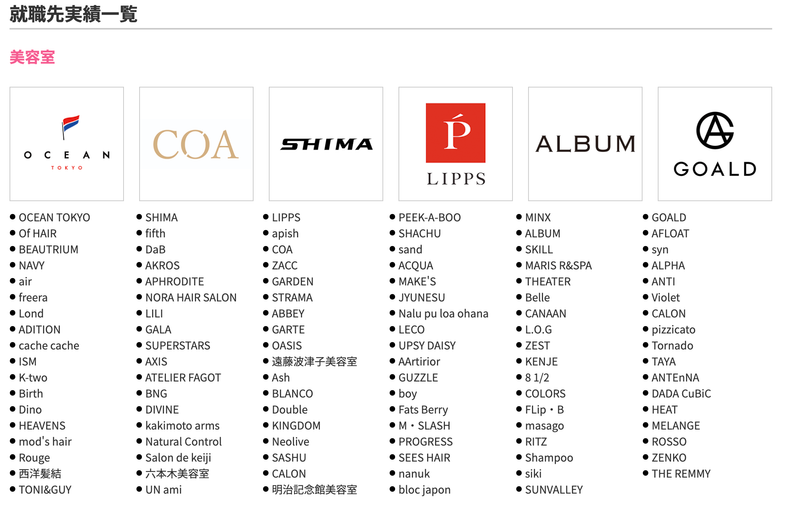
These salons represent some of the most influential trendsetters in Tokyo’s beauty industry.
Opportunities and Challenges for International Students
For international students, obtaining a work visa remains one of the greatest challenges.
Although Tokyo’s special regulatory framework offers certain pathways for foreign hairstylists, relatively few companies are willing to provide visa sponsorship.
According to the school, possessing a hairstylist qualification alone does not necessarily make obtaining a visa easier.
In contrast, careers in comprehensive beauty fields—such as cosmetics sales and department-store beauty consulting—often offer better visa prospects because large corporations are more likely to act as sponsors.
The school cites the example of a Malaysian student who completed the Beauty Program, obtained Japan’s national hairstylist qualification, returned home, and successfully opened a salon. The case demonstrates the international competitiveness of skills acquired through Japanese beauty education.
Returning to School at 53: Pursuing a Dream Later in Life
Beauty education is not exclusively for the young.
This year, one graduate was a 53-year-old woman who had dreamed of becoming a hairstylist since high school. Discouraged by her parents at the time, she instead attended university, built a career, married, and raised a family.
After her children became independent, she finally had the opportunity to pursue her original ambition. She enrolled at age 51 and graduated successfully two years later.
“No matter your age, you can still pursue your dreams,” the school believes.
While mid-career enrollment remains relatively uncommon, the number of adult learners is gradually increasing.
Commentary“Skills + Influence”: A New Experiment in Vocational Education
Waseda Beauty College’s approach reflects two significant shifts occurring within Japan’s vocational education sector.
The first is a transition from a purely skill-centered model to a dual-engine model combining technical expertise with digital influence.
In the past, hairstylists needed only to perfect their craft. Today, however, even highly skilled professionals may struggle to stand out if they lack the ability to showcase their work online. Through teacher-generated content, student-led social media activity, and photography club projects, the school has integrated social media literacy directly into its educational framework.
This is not about training students to become influencers. Rather, it is about helping them understand that in the attention economy, the ability to present work is increasingly as important as the ability to create it.
The second shift is from traditional apprenticeship toward technology-enabled learning.
If VR training can indeed accelerate skill acquisition by fourfold, it represents more than a novelty—it signals a significant efficiency upgrade to the conventional master-apprentice model. As Japan faces declining birth rates and labor shortages, improving educational efficiency is becoming increasingly important for vocational schools.
Smart classrooms, digital devices, and immersive technologies are reshaping the foundations of beauty education.
At the very least, Waseda Beauty College offers a noteworthy case study. Rather than waiting for industry changes to arrive, it has proactively incorporated those changes into its curriculum.
Its exploration deserves attention, and its experience may offer valuable lessons for vocational education more broadly.