Chinese NEV Batteries Are Redefining “Made in Southeast Asia”
(Report by Li Da, Tokyo) In June 2026, several seemingly isolated events occurred in the new energy battery sector in Southeast Asia:
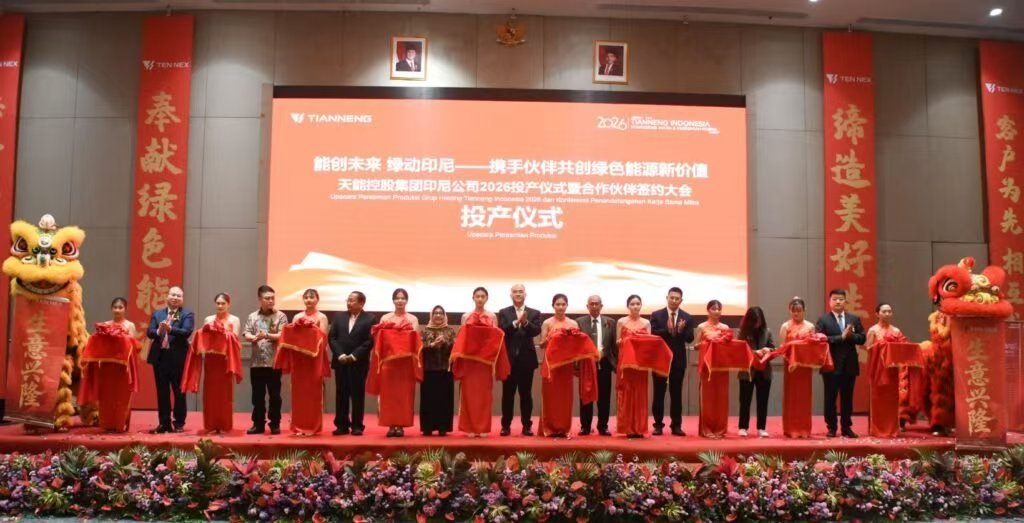
On June 25, the Indonesian base of the Tianneng Group officially commenced production in Surabaya.
On the same day, the Shenzhen municipal government held a promotion and exchange conference on green renewable energy and energy storage product technology services in Jakarta.
On June 22, a Chinese company signed a joint venture agreement with a Vietnamese partner to launch the construction of a high-performance battery full-industry-chain base.
Viewed together, a structural change is emerging: the Chinese new energy vehicle (NEV) battery industry is rewriting the meaning of “Made in Southeast Asia”.
In the past, “Made in Southeast Asia” signified cheap labor, processing of supplied materials, and low-value-added assembly. Today, in the race for NEV batteries, Southeast Asia is undergoing a leapfrog industrial upgrade—a process driven by the entire industrial chain brought over by Chinese enterprises.
Product Export: From “Selling Globally” to “Local Manufacturing”
The story of Gotion High-tech and VinFast is the most typical sample of “product export” upgrading to “local manufacturing”.
In 2022, Gotion High-tech partnered with VinES, a subsidiary of VinFast’s parent company VinGroup, to build Vietnam’s first lithium iron phosphate battery factory in the Vung Ang Economic Zone, Ha Tinh Province, which officially went into production at the end of 2023 with a planned phase-one annual capacity of 5GWh. In March 2025, the two parties signed an agreement to co-build a battery factory with a planned annual capacity of 15GWh to produce semi-solid-state batteries for the ASEAN market, with production scheduled for 2026.
As VinFast—often called the “Tesla of Vietnam”—targets 300,000 global deliveries in 2026, the fact that its batteries are produced locally in Vietnam by a Chinese company marks a shift to a “Chinese technology + Vietnamese manufacturing” model.
Capacity Export: From “Single-Point Breakthrough” to “Full-Chain Rooting”
The story of Indonesia is the strongest evidence of “capacity export”.
However, the situation is changing. CATL’s power battery project in Karawang, West Java, Indonesia, spans a total construction area of approximately 290,000 square meters. With an initial capacity of 6.9 GWh, it is expected to be completed and operational by the end of 2026, with plans to gradually expand capacity to 15 GWh. CATL Vice President Meng Xiangfeng revealed that the Indonesian factory will commence production within this year, integrating the entire industry chain from mineral resources to battery manufacturing. The Indonesian government is currently coordinating corporate income tax exemption policies to support the development of the new energy battery industry.
Even more noteworthy is the involvement of multinational automakers. Toyota Motor Manufacturing Indonesia (TMMIN) has reached a strategic partnership with CATL, with the total project investment reaching 13 trillion Indonesian Rupiah (approximately $820 million). Toyota has contributed 1.3 trillion Indonesian Rupiah (approximately $75.8 million) to this project, aiming to localize the entire production process of hybrid battery cells and modules—from raw materials to finished products. The export plan for battery components and finished battery packs is scheduled to launch in the second half of 2026
What does this mean? It means that Indonesia is no longer merely a ‘nickel ore supplier’ but is transforming into a ‘battery manufacturer.’ From nickel ore refining to cell production and battery pack assembly, the entire chain is becoming localized in Indonesia. According to local media reports, when the process was limited to assembly, the battery-related localization rate remained at only about 8%; however, with the launch of mass production for battery cells and modules, the localization rate is expected to soar to as high as 80%.
This is not a simple transfer of production capacity; it is a leap in industrial hierarchy.
Thailand serves as another example. BYD’s factory in Rayong has an annual capacity of 150,000 vehicles, taking only 16 months from the start of construction to production. When it officially began operations in July 2024, the supporting battery production line was launched simultaneously, achieving localized supply of battery cells. The factory covers the four major manufacturing processes—stamping, painting, welding, and assembly—as well as component production, with 85% to 92% of the workforce being Thai nationals.
What is truly noteworthy is the ‘ripple effect.’ The arrival of BYD has spurred the upgrading of Thailand’s local automotive component suppliers—CATL has already laid out plans for a battery factory in Thailand, and the first batch of battery packs and electric drive systems produced locally by Chinese suppliers in Thailand has already achieved mass production and delivery. With the steady release of capacity from overseas bases like Thailand and Brazil, BYD’s complete localized operating system is further improving.
The significance of the Thailand factory goes beyond capacity. It proves one thing: Chinese car companies in Southeast Asia are no longer just ‘selling cars,’ but are ‘building ecosystems’—rooting the entire chain locally, from complete vehicles to batteries, from manufacturing to supply chains, and from technology to talent.
The landing of one factory drives the rooting of an entire chain—this is the second level of upgrading.
Standard Export: From “Product Export” to “Technology Embedding”
Here is the word-for-word English translation of the section provided:
What China is bringing is not just production lines, but technical standards, process standards, and quality standards—they are becoming the “default configuration” for the Southeast Asian battery industry.
Gotion High-tech’s lithium iron phosphate battery technology has become a core choice for VinFast. The introduction of semi-solid-state battery production lines means that higher-level technical standards are being implanted into the soil of Vietnam’s manufacturing industry. Gotion High-tech and VinFast have also established a joint R&D center to develop battery thermal management systems specifically for tropical climates—standards are being customized and adapted according to local needs.
The cooperation between CATL and Toyota is even more iconic. Chinese battery technology is being adopted by top global automakers in their Southeast Asian strategies, which in itself is proof of standard exporting.
BYD’s Blade Battery technology has achieved localized production in Thailand—Chinese battery technical standards are taking root overseas. With the steady release of capacity from overseas bases such as Thailand and Brazil, BYD’s complete localized operating system is further improving, and Chinese standards are taking root along with it.
Changhong Energy is deploying a “alkaline battery + lithium-ion battery” dual-wheel drive model in Malaysia. The overseas layout of Chinese battery companies is moving from “single-point breakthroughs” toward “system embedding.”
Once a standard is accepted, it is difficult to be replaced—this is the true “moat” of China’s battery industry.
From “selling products” to “selling standards”—this is the third level of upgrading.
System Export: From “A Single Enterprise” to “A Forest”
If the core of the first three levels of export is “capability migration”—moving Chinese manufacturing capabilities to Southeast Asia—then the core of the fourth level is “structural migration”—moving the architecture and operational logic of an entire industrial system to Southeast Asia. The former resolves the question of “can it be manufactured,” while the latter resolves the question of “can it operate autonomously.”
The approach of SAIC-GM-Wuling is the most typical example. It is not limited to simple transfers of overseas production capacity; instead, it has united 16 core domestic “three-electric” (battery, motor, and control) enterprises to build a new energy core component production base in Indonesia. The company invested $1 billion to build an Indonesian vehicle manufacturing and supplier park, fostered over 100 local supporting suppliers, and established a complete overseas automotive industry support system.
The results are already evident. The “Shenlian Battery” has achieved localized mass production. In 2026, Wuling’s new energy market share in Indonesia reached 37%, ranking first in terms of vehicle ownership. From January to April 2026, SAIC-GM-Wuling’s overseas sales grew year-on-year consecutively, with monthly overseas sales in April exceeding 30,000 units/sets for the first time, and cumulative overseas sales surpassing 1.5 million units.
Yao Zuoping, a deputy to the National People’s Congress and Party Secretary of SAIC-GM-Wuling, further elaborated: on the basis of introducing the localization of power battery and electric drive industries, Wuling will continue to introduce partners in fields such as electronic control and charging ecosystems, and continuously deepen the localization layout of its supply chain. At the same time, with Indonesia as the core, the company is actively promoting an “Indonesia-Malaysia-Thailand integration” development strategy, extending its new energy vehicle products and localized supply chain to cover Malaysia.
This is not the global expansion of a single enterprise, but the wholesale relocation of an entire industrial system. From components to complete vehicles, from production to supporting facilities, and from manufacturing to talent, a complete industrial operational system is taking root in Indonesia.
From “selling cars” to “building systems”—this is the fourth level of upgrading.
Commentary:
Symbiosis, Not Replacement
By turning Indonesian nickel into batteries, Thai factories into systems, and Vietnamese workshops into sites where standards take root, the Chinese NEV battery industry is bringing more than just capacity; it is redefining “Made in Southeast Asia”. From a “buying and selling relationship” to a “symbiotic relationship,” the industrial cooperation between China and ASEAN is entering a new stage, shifting from simple product trade export to integrated investment and trade.