Central Asia Tourism: Rich in History, Thin in Presentation
By Meng Linna in Kazakhstan
On July 31, 2026, on the shores of Issyk-Kul, Kyrgyz President Sadyr Japarov proposed a long-discussed idea: a unified tourist visa for Central Asian countries. Uzbek President Shavkat Mirziyoyev and Kazakh President Kassym-Jomart Tokayev expressed support.
Often described as a potential “Central Asian Schengen,” the proposal has raised expectations for the region’s tourism industry.
The headline numbers are impressive. According to the World Travel & Tourism Council, tourism’s total contribution to Central Asia’s GDP rose 17.7% in 2025, the fastest growth in the world. International visitor spending increased 26.4%, also the highest globally, while tourism investment grew 12.4%, placing the region among the world’s top three for investment growth. WTTC forecasts that tourism will contribute $21.7 billion to Central Asia’s economy in 2026.
But while the statistics are heating up, people working on the ground are reporting a cooler reality.
Guides and travel companies in the region say Kazakhstan’s tourism market in 2026 has been noticeably weaker than last year. The difference is partly one of timing: WTTC’s figures describe the performance of 2025, while frontline operators are experiencing the market in real time.
Strong Numbers, Weak Readiness
Kazakhstan’s own government has acknowledged the problem.
In January 2026, Prime Minister Olzhas Bektenov said tools used to attract foreign visitors had not been updated in time over the previous four years and still relied on outdated information. Promotion of culture, ethnicity and sports, he said, remained insufficient. He ordered officials to prepare a detailed tourism plan for 2026.
President Tokayev has also acknowledged weaknesses in infrastructure, management and professional staffing, noting that questions over whether Kazakhstan is fully prepared for large numbers of tourists are “entirely reasonable.” Ecotourism remains underdeveloped, ski tourism has not reached its potential, and a shortage of qualified tourism professionals has become a major constraint.
In other words, visitor numbers may be rising, but the government itself admits the sector is not fully ready.
Tourist experiences reinforce that concern. Some visitors have complained on social media that local guides provide little meaningful interpretation and often have limited English ability, making it difficult to learn about local history, geography or culture. One visitor to Kazakhstan’s Central State Museum wrote that without proper explanation, the museum could easily be mistaken for “just a costume exhibition.”
A guide is the bridge between a visitor and history. Without that bridge, even the richest history becomes difficult to understand.
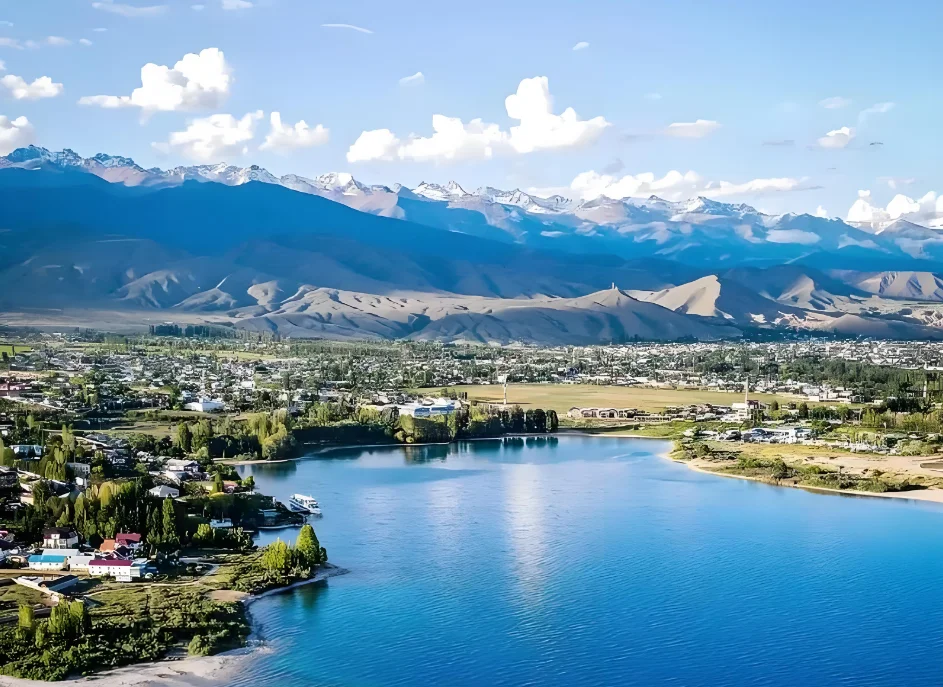
Kyrgyzstan faces similar problems. Visitors to the National Historical Museum in Bishkek have complained that there are too few ancient artifacts and that the exhibition is heavily weighted toward modern history. At Issyk-Kul, one of Central Asia’s most famous natural attractions, tourists have reported road construction, disrupted infrastructure and even water outages in Cholpon-Ata that affected restaurants and cafés.
Kyrgyz authorities themselves have acknowledged shortages in hotel capacity and qualified tourism workers.
Kazakhstan does not lack history. It lacks the ability to translate that history into a language visitors can understand. Kyrgyzstan does not lack scenery. It lacks the ability to help visitors see the history behind the landscape.
Presentation Is Part of Respecting History
Central Asia has tourism assets that many regions would envy: snow mountains and deserts, ancient cities and nomadic culture, and a deep Silk Road heritage.
The problem is not a lack of stories. The problem is that many of those stories have not been transformed into experiences visitors can actually understand.
Shymkent, one of southern Kazakhstan’s oldest cities, has more than 2,000 years of history. In the first quarter of 2026, the Shymqala historical site received around 1,000 foreign visitors. The site offers tours in Kazakh, Russian and English, yet one Chinese tourist simply concluded that “the local tourism industry still has considerable room for improvement.”
Language remains another barrier. In many parts of Central Asia, English is still far from widely used. Visitors to Kyrgyzstan frequently report that local residents do not speak English and that English-language menus are often unavailable. The lack of multilingual interpretation at tourist sites leaves many international visitors separated from centuries of history by a language barrier.
Food tourism shows the same gap. Kazakhstan has rich nomadic traditions and distinctive cuisine, but academic research has also pointed to service shortcomings that make it difficult to meet international visitor expectations.
Uzbekistan offers a useful contrast.
In Samarkand, authorities have increasingly used digital tools to present cultural heritage to younger generations. At Registan Square, digital guides, multilingual audio services and AR-based architectural reconstruction help visitors understand what they are seeing. Tourists are no longer simply looking at monuments; they are being given a way to read the history behind them.
Uzbekistan received 6.565 million international visitors in the first half of 2026, while WTTC data show tourism accounting for 6.0% of GDP, the highest share in Central Asia.
The difference is not simply about who has better historical assets. It is about what visitors are actually able to see, understand and remember.
If a “Central Asian Schengen” solves the question of how to arrive, then presentation solves the question of what visitors experience once they get there.
A Unified Visa May Bring Tourists — But What Will They See?
If a unified Central Asian tourist visa becomes reality, one visa could allow travelers to move across all five countries, significantly reducing the fragmentation of regional tourism.
But easier entry alone will not solve the deeper problem.
Central Asian countries are now racing to improve how they present themselves. Those that can turn culture into compelling stories, deeper experiences and internationally accessible products before the visa regime takes effect are likely to capture the greatest benefits.
Kazakhstan has history, nomadic culture and dramatic landscapes. But unless those assets are turned into better tours, immersive experiences and stories that travel well internationally, the tourism boom may pass by without leaving much behind.
Kyrgyzstan has Issyk-Kul, the Tianshan Mountains and a rich nomadic heritage. But if visitors arrive on damaged roads and then enter museums with limited interpretation, beautiful scenery alone will not create a complete tourism experience.
Governments are beginning to respond. In March 2026, Kazakhstan approved a 2026–2028 cultural heritage protection and promotion plan under the UNESCO framework, including world heritage conservation, professional training and international promotion.
But plans are only the first step. Implementation will determine whether the opportunity is captured.
A “Central Asian Schengen” may soon bring more global attention to the region. Yet opportunity favors those that are prepared — not only those with history, but those that know how to present it.
Central Asia’s history is deep. Its presentation cannot remain shallow.
Commentary | History Needs to Be Seen
Central Asia has mountains and deserts, natural wonders and ancient cities. Travelers can drive across it, join organized tours, or follow the traces of the Silk Road.
But there is a gap between having these assets and making them visible.History does not explain itself. It has to be translated into language visitors understand, turned into experiences they are willing to pay for, and communicated as a reason they feel they must come.
Samarkand has begun to find its answer through digital guides, AR reconstruction and multilingual interpretation. Meanwhile, visitors in Kazakhstan still complain that museums lack explanation, while tourists around Issyk-Kul continue to encounter basic infrastructure problems.
A unified Central Asian visa may be approaching, and international attention is shifting toward the region.
The history has always been there.
Only when it is truly seen can heritage become an economic asset.Central Asia does not lack stories. It lacks enough people and systems capable of telling them well.