From Dashi to the Kitchen: How Culinary School Teaches the Taste of Japan
In Japanese cuisine, dashi—the stock drawn from kombu and bonito flakes—is the foundation of flavor. Clear and restrained, it never overwhelms, yet it quietly determines the character of an entire dish. Only after learning how to make dashi can one truly be said to have stepped into the world of washoku.
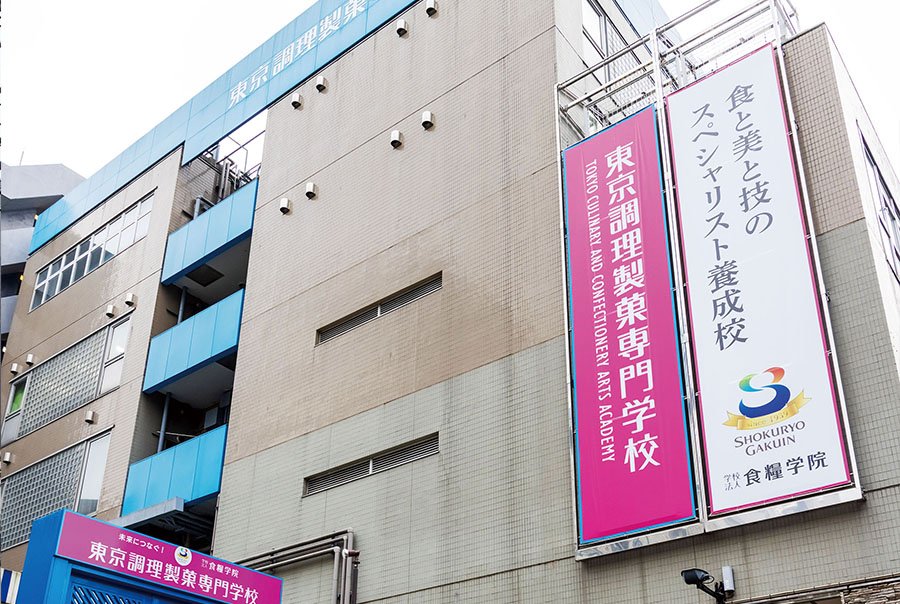
Take the JR, Toei Subway or Seibu Line to Shinjuku Station and head toward the West Exit. From there, walk slowly along Otakibashi-dori in the direction of Okubo. Turn into an inconspicuous side street, and a simple, unadorned school building comes into view. There is no flashy sign at the entrance—only a metal plaque engraved with the name Tokyo College of Culinary and Confectionery, quietly set into the exterior wall.
Although the school is located in the Shinjuku area, it sits surprisingly apart from the bustle of the main entertainment district, with a calm atmosphere of its own. Restaurants, supermarkets and everyday services are clustered nearby, along with a wide range of food-related resources.
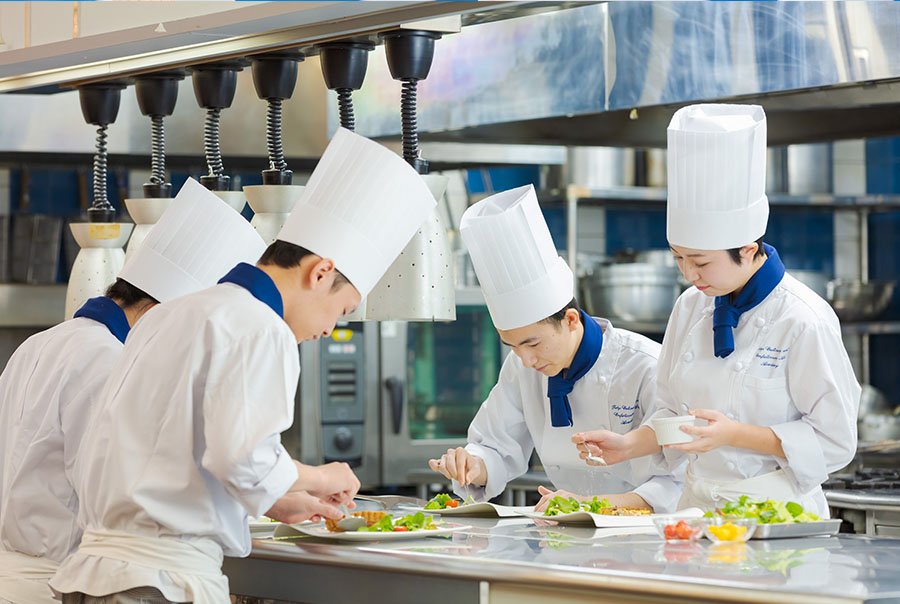
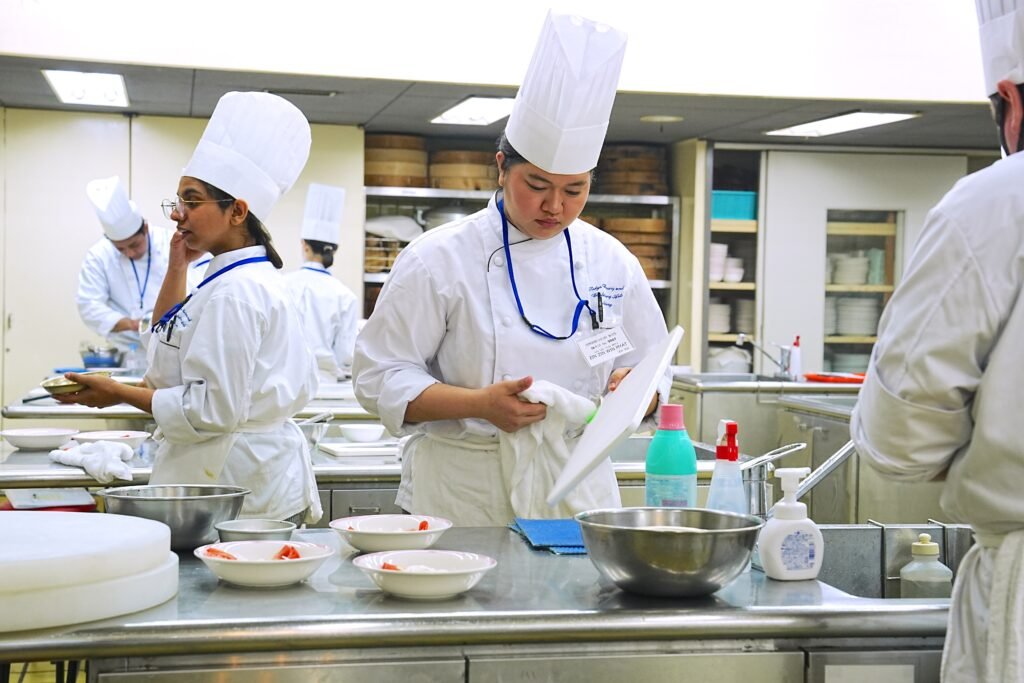
Operated by Shokuryo Gakuin, the school offers courses in Japanese, Western and Chinese cuisine, as well as confectionery. Its programs range from a one-year culinary course to a two-year advanced program in culinary technology and management. More than 80% of class time is devoted to practical training, with a strong emphasis on developing students into work-ready professionals who can step into a professional kitchen and contribute immediately after graduation.
Yet beyond these facilities and course structures, what deserves even greater attention is the school’s commitment to preserving and passing on the core foundations of Japanese cuisine.
The stories of two Chinese international students, Zhao Haocheng and Shen Wenjuan, vividly illustrate this journey—from first learning how to make dashi to gradually becoming fully fledged culinary professionals.
Flavor First: The Educational Philosophy of Tokyo College of Culinary and Confectionery
Principal Imai, who teaches Japanese cuisine at the school, was asked what he considered the most important characteristic of washoku. Rather than pointing to visible techniques such as ingredients, knife skills or presentation, he first emphasized seasonal ingredients and the basic knowledge needed to handle them properly—from preparing vegetables to working with fish.
At first glance, this may sound like a textbook answer. What sets Imai apart, however, is the way he judges how much to teach, and when.
“Japanese cuisine involves an enormous amount of detailed work, and if you pursue every technique to its fullest, there is no end to it,” Imai said. “If we begin by teaching students things that are too deep or too complicated, they can easily become intimidated.”
His method is to first show students the fundamentals—“this is the basic way”—and then introduce a variation: “actually, you can also do it like this.” The application sparks curiosity, which then brings students back to repeated practice of the basics.
This approach works backward from the goal. Rather than overwhelming students with techniques, it places greater emphasis on awakening their interest first—a teaching philosophy that still feels fresh in the highly practical environment of vocational culinary education.
Where the Philosophy Is Most Visible: Seasoning
When asked which aspect of Japanese cuisine he most enjoys teaching, Imai gave an unexpected answer. Rather than naming a particular dish, he chose how to make dashi and how to cook rice.
“These are the foundations of everything,” he said. “That is why, in class, I place great importance on explaining the process verbally while also demonstrating it directly in front of the students.” Japan is, after all, a country with a deeply rooted fish culture, so fish-based cooking demonstrations are another major focus.
This emphasis on fundamentals is not necessarily common to every vocational school. Some schools, under pressure to prioritize employment outcomes, may focus more heavily on fashionable or marketable dishes. Imai, however, is unequivocal: without understanding dashi, one cannot truly understand Japanese cuisine. The synergy between the umami of kombu and the umami of bonito flakes is, in his view, one of the essential foundations of washoku.
He also spoke about the difficulty many international students initially have in adjusting to these subtle flavors.
“Japanese seasoning is very simple,” Imai said. “Basically, it is dashi made from kombu and bonito, with just a little salt.”
“Many international students love spicy food and tend to want to add heat to everything. Even with clear soup, they may initially feel the flavor is too weak and want to add pepper or spices. But as their studies deepen, they gradually learn to recognize the umami within it. I tell them that once you add too much heat, you can no longer appreciate the delicate natural flavor of the ingredients themselves.”
This shift in taste—from adding more to taking away—is a transformation that almost every foreign student must go through when learning Japanese cuisine.
The Educational Philosophy Also Shows in Sensitivity to Language and Cultural Differences
Imai shared another revealing example. International students often need considerable time to become familiar with expressions that are specific to Japanese cooking.
For instance, terms such as “hi ga tōru”, meaning that heat has fully penetrated and the food is cooked through, can be difficult to grasp at first. Even the name “shiraga-negi”—literally “white-hair green onion,” referring to finely shredded scallion—can raise questions. Some students have asked, “Why isn’t it called ‘white-fur green onion’ instead?”
These subtle differences in language are, in themselves, expressions of cultural difference. Understanding them requires more than vocabulary or grammar. It also requires an ability to understand and empathize with the way of thinking that lies beneath Japanese food culture.
A Young Chef’s Challenge
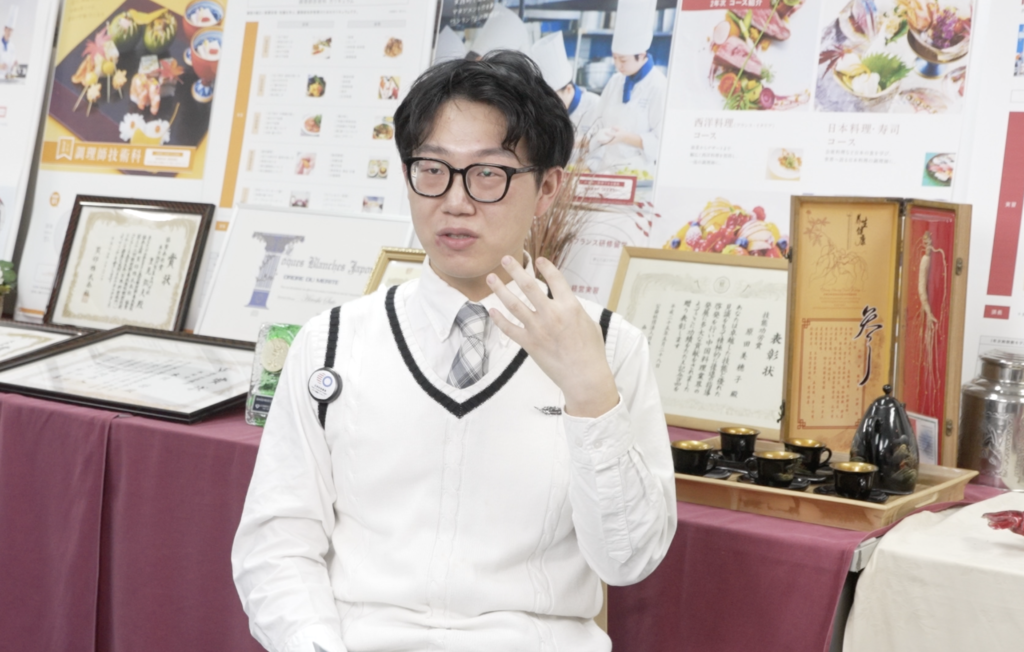
Zhao Haocheng is from Danyang, Jiangsu Province, China. He attended culinary school in China and, after graduating, worked for two years as a chef at a luxury hotel in Changzhou.
“But after working for a while, I began to feel that I had reached a kind of bottleneck. I felt there was still room for me to grow, and I wanted to go abroad and broaden my horizons,” he said. Since his uncle had moved to Japan years earlier, Zhao decided to follow that connection and come to Japan.
Unlike many international students who apply directly to vocational schools from their home countries, Zhao first spent a year and a half studying at a Japanese language school in Tokyo’s Suginami Ward. After earning JLPT N3, he enrolled at Tokyo College of Culinary and Confectionery.
He chose the International Culinary Business Course, designed for international students. Because the classes were relatively easy to follow and he already had a foundation in cooking from China, the initial adjustment was not especially difficult.
But Zhao says the moment he truly felt his skills had advanced to another level came after he began studying the systematic techniques and structure of Japanese cuisine at the school.
A Fundamental Shift in the Approach to Seasoning
“Compared with the cooking I learned in China, Japanese cuisine is completely different in many ways,” Zhao said.
The first difference is in the fundamentals. In China, whether cooking at home or preparing staff meals in a professional kitchen, it was natural for him to use seasonings such as soy sauce, oyster sauce and cooking wine. After studying Japanese cuisine systematically, however, he became familiar with a different set of techniques: drawing kombu dashi, controlling sweetness with mirin, and using light soy sauce to create more delicate flavors.
“When I first came to Japan, the food I made still leaned heavily toward Chinese cooking, so I used more oil and the flavors were stronger,” he said. “After receiving feedback from my colleagues at work, I gradually adjusted. Now my cooking style is strongly influenced by Japanese cuisine, and the seasoning has become much gentler and lighter.”
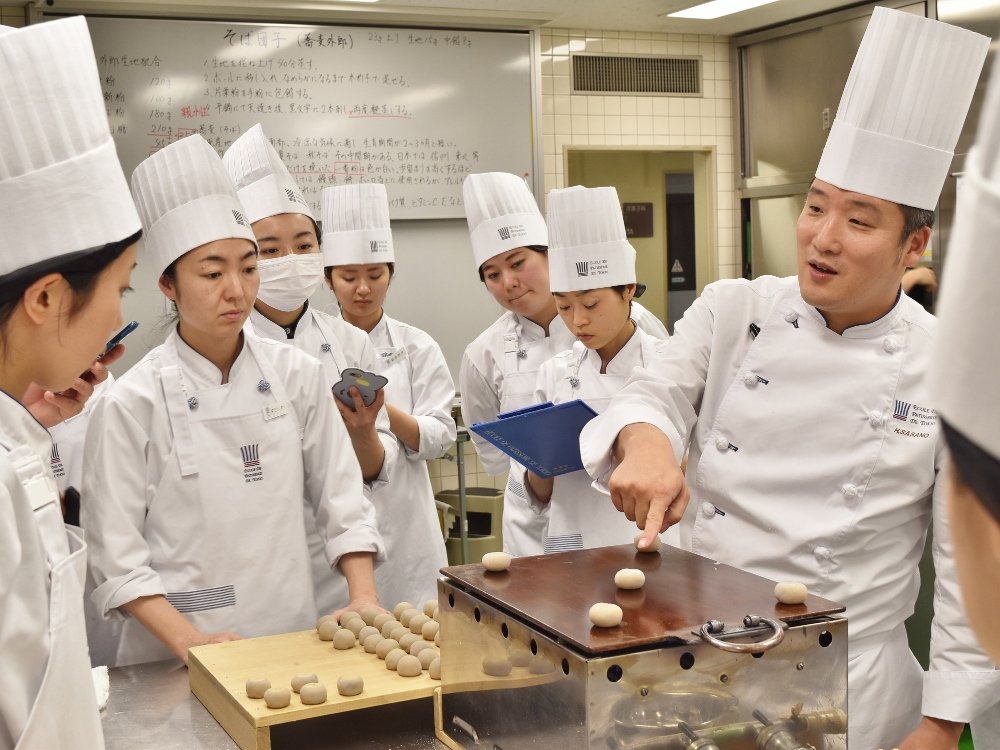
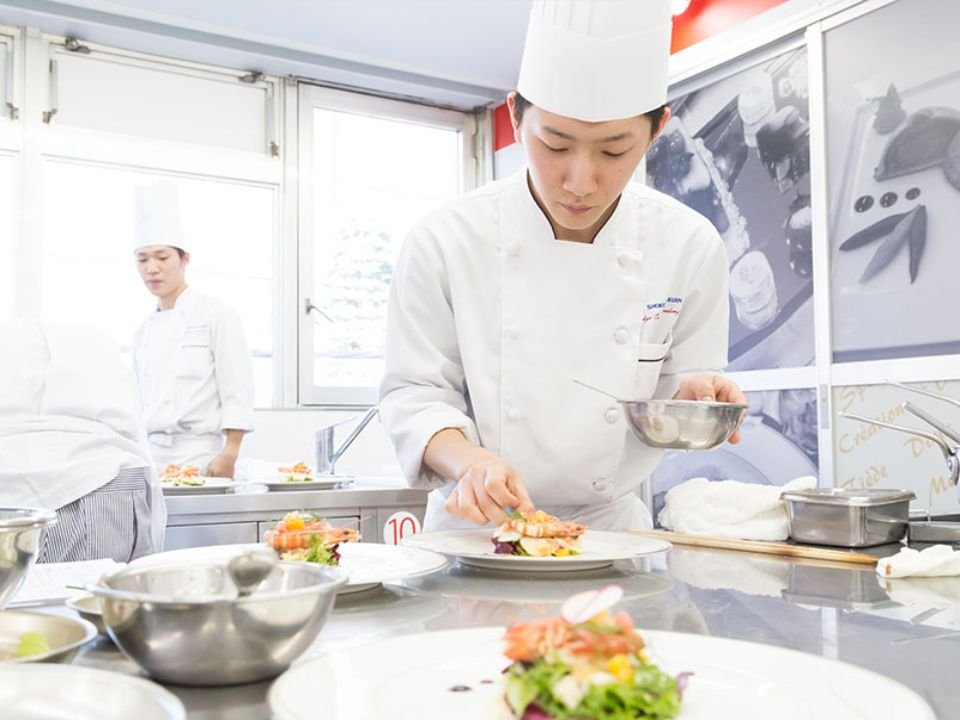
From Reproduction to Creation: A Breakthrough in the Graduation Project
For Zhao, one of the most rewarding moments came during last year’s graduation project.
“At the time, I had only been in Japan for a short while, and I kept wondering how I should express the essence of Japanese cuisine.”
In the end, he chose to recreate two classic Chinese dishes: Chrysanthemum Tofu and Swan Pastry. Both require highly advanced knife skills and a strong sense of form and presentation. When the finished dishes were presented, they received strong praise from those at the exhibition.
“That was last year. In fact, just yesterday on the train, I was thinking about what I should make for this year’s graduation project,” Zhao said. “After a year of deeper study, this time I want to challenge myself with a more original dish that incorporates more Japanese culinary techniques.”
For Zhao, the shift is clear: from showcasing the cuisine of his home country to creating something new with the Japanese techniques he has learned.
His progress vividly reflects the transformation of a Chinese international student within Japan’s culinary education system—from reproducing familiar dishes to developing his own culinary expression.
A Fresh Start for an Experienced Shop Owner
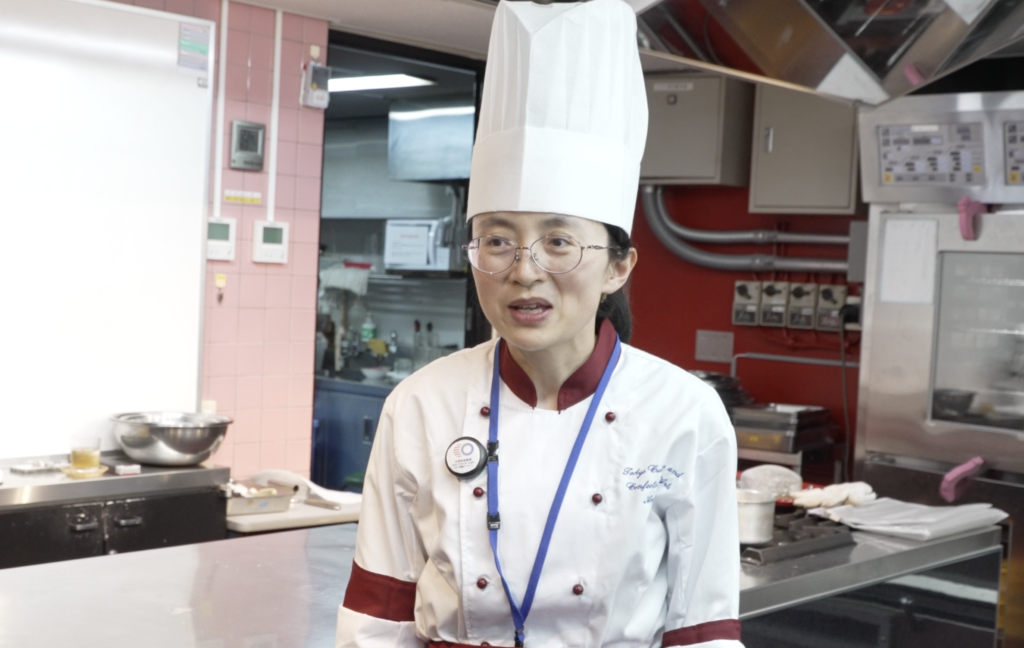
Shen Wenjuan’s story is different. Hers is a journey of returning to study in order to move beyond the experience she had already built as a business owner.
Unlike Zhao, Shen started from a more experienced position. Before coming to Japan, she had already spent 10 years running a pastry shop in China.
“There are many differences between China and Japan in the way sweets are made and approached. That is exactly why I felt I needed to come to Japan and study properly,” she said. Shen arrived in Japan in September 2023 and is now majoring in confectionery at the school.
For her, the greatest challenge in class was not the technical work itself. “Technically speaking, there hasn’t been anything I found especially difficult,” she said frankly. The biggest obstacle was language. “When I first came to Japan, communicating in Japanese was definitely the hardest part.”
At the same time, she also recognized an advantage that Chinese students often have. “For many international students from other countries, kanji is one of the biggest difficulties. But for Chinese students like us, kanji is a major advantage. I feel that advantage both in regular classes and in written exams.”
Her approach to studying is straightforward and disciplined: take thorough notes. “If I can’t immediately understand a Japanese expression in class, I first write it down in Chinese.”
Interestingly, she says her Japanese classmates are equally meticulous.
“They take even more detailed notes than we do.”
The School’s Hidden Gem: A “Michelin-Level” Student Restaurant
There is one place Shen praised repeatedly during the interview: the student restaurant run by second-year students in the Advanced Culinary Technology Department.
“My favorite thing about this school is the student restaurant. Students can have lunch there for just ¥600,” she said with a laugh. “The same meal would cost ¥1,800 for outside visitors. That’s how high the standard is—it’s really delicious.”
Her top recommendation is the Japanese restaurant. “It’s better than any Japanese restaurant I’ve eaten at outside.”
The restaurant’s quality is closely connected to the school’s history. “Our school originally started with cooking and culinary education as its main focus, while confectionery developed gradually later on.”
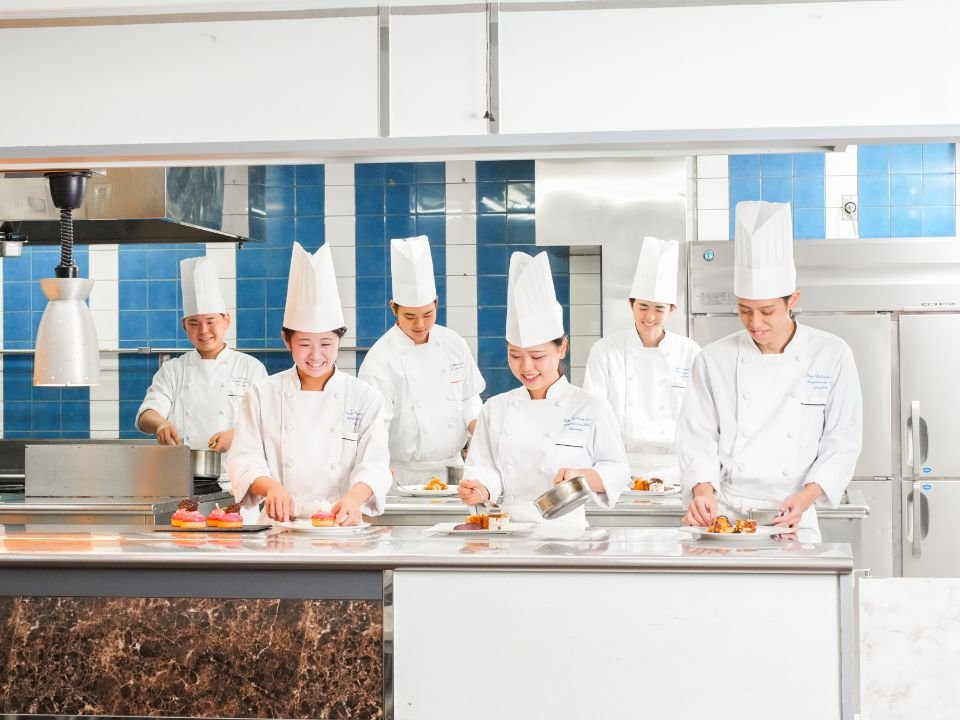
Today, the school has four major fields—Japanese cuisine, Western cuisine, Chinese cuisine and confectionery—and the student restaurant serves as one of the best real-world training grounds for students in each discipline. They prepare everything from appetizers to desserts and also handle service. Every dish and every interaction is evaluated in real time by teachers, fellow students and visiting guests.
“There is just too much to learn at this school. It feels like no matter how much I study, there is always more,” Shen said, sounding slightly regretful. “This year I’m in the pastry and bread course, so because of my timetable, I don’t get many chances to eat at the Japanese restaurant. That’s the one thing I’m disappointed about.”
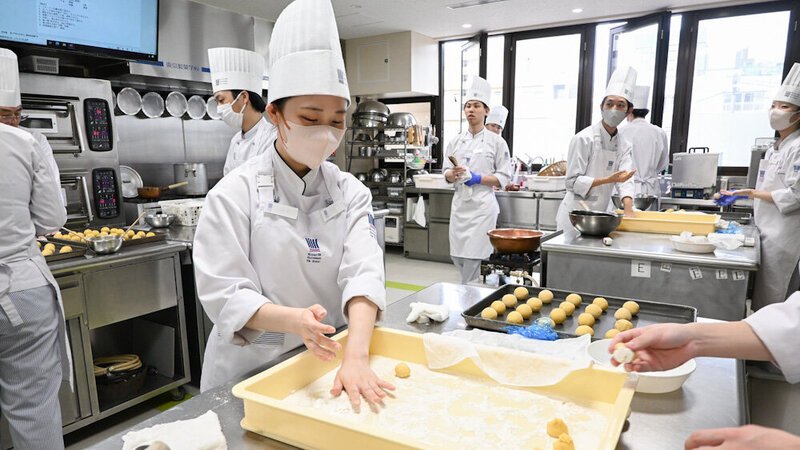
Meanwhile, Zhao has built a different cycle between learning at school and putting those skills into practice in the real world. He works part-time at an izakaya, where he recreates techniques learned in class while preparing staff meals in the evening.
“I look back at what worked well, and when I make a different dish next time, I try to mix in those decorative cutting techniques or cooking methods across different styles,” he said. His staff meals, incorporating techniques learned at school, have been well received by his coworkers. “Everyone is happy to eat them,” he said with a shy smile.
For Zhao, the cycle of learning techniques at school, practicing them at work, and receiving feedback has become one of the most useful ways to grow as a chef.
He also pointed to one interesting discovery in Japan: the everyday use of burdock root, or gobo, as an example of the idea that food and health are closely connected.
“In China, burdock is not commonly used as an everyday ingredient. It is more often treated as a medicinal ingredient and used in soups,” Zhao said. “But in Japan, you can buy it almost anywhere, it is inexpensive, and people use it all the time. Seeing Japanese people cook burdock in different kinds of nimono made me realize how naturally ingredients associated with health are incorporated into everyday meals here. I think that is wonderful.”
Zhao is still exploring how best to work with different ingredients, but this year he plans to take a course in food and nutrition, where he will gain more specialized knowledge.
The integration of theory and practice is precisely at the core of the school’s curriculum design.
Advice from Experience: Visa, Visa, Visa — A Realistic Path That Must Be Planned in Advance
When asked about his plans after graduation, Zhao’s answer was strikingly pragmatic. Unlike many international students who may be guided mainly by aspiration, he has already begun thinking carefully about the realities of working and staying in Japan.
“After graduation, I hope to work at a good restaurant in Japan and continue learning both culinary techniques and management philosophy,” he said. “I’ve heard that visa requirements have become stricter, but I will do everything I can in my job search.”
Zhao has also carefully studied the visa options currently available to international students seeking work in Japan’s food-service industry.
The first route is the Specified Skilled Worker (i) visa for the food-service sector. For many international culinary students, this has become one of the most practical ways to transition from study to employment. Zhao is particularly interested in the possibility of progressing from Specified Skilled Worker (i) to Specified Skilled Worker (ii) under the current system. The latter allows family members to accompany the worker and places no limit on the number of renewals, effectively opening the door to long-term residence.
The second route involves visas connected to food processing and manufacturing, such as employment at food factories. Zhao also sees this as a possible option.
The third route is a Designated Activities visa, described as a pathway for people who help promote Japanese food culture overseas. It can allow a stay of up to five years, but the screening requirements are extremely strict. Employers are required to provide detailed training plans, and in principle, participants are expected to return home after completing the designated period.
“I’m still carefully considering which option is the best for me right now,” Zhao said.
It is relatively uncommon to hear an international student speak with such a clear understanding of visa pathways. His awareness reflects both the complicated reality of employment visas in Japan’s food-service industry and his own highly practical approach to career planning.
Both Zhao and Shen emphasized one point above all when offering advice to younger students hoping to study in Japan: learn Japanese seriously before coming.
Their message was straightforward:
“Before anything else, study Japanese properly while you are still in China. If you cannot communicate well, daily life, communication, further study—everything in Japan becomes much more difficult. Only with a solid language foundation can you fully benefit from the learning opportunities and convenience of life here.”
Their conclusion is the same: culinary techniques can be learned after arriving in Japan, but Japanese-language ability is something students should begin building long before they leave home.