Kazakhstan Expands AI Data Centers — Can Power Supply Keep Pace?
By Li Da in Tokyo
Kazakhstan’s “Data Center Valley” in Ekibastuz is moving ahead with its first 50 MW facility, scheduled for completion in June 2027. According to an October 19, 2026 report by Kazinform, project partners include Firebird AI and NVIDIA, while the first phase will be supported by a 215 MW substation. The long-term plan is to expand the project in stages to 1 GW.
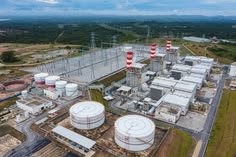
The project is located in Ekibastuz, home to a major coal-fired power base. China Economic Net reported that the Data Center Valley will “rely on the local large-scale coal power base to provide stable baseload electricity.” From the generation side, this is not a location chosen without preparation.
But computing power consumes electricity — a great deal of it.
Kazakhstan’s power system had just gone through a highly visible stress test in August 2026. The key question is not simply whether the country “has electricity,” but how much spare capacity its grid retains in terms of cross-regional coordination and redundancy.
What Happened on August 14?
According to an official announcement by KEGOC, at 14:37 on August 14, 2026, a disturbance occurred in Kazakhstan’s unified power system.
The 500 kV Agadyr–Ulken L-5300 and L-5320 transmission lines, as well as the Aktogay–Taldykorgan L-5400 line, tripped. The southern power grid was disconnected from the Central Asian unified power system and entered island operation, while approximately 2,810 MW of customer load was shed.
KEGOC’s preliminary assessment attributed the disturbance to a “sudden power surge on the Central Asian unified power system.”
Kyrgyzstan’s Ministry of Energy later acknowledged that the temporary shutdown of two generating units at the Toktogul Hydropower Plant was the “initial disturbance,” but stressed that this should not be equated with the direct cause of outages in individual power systems in other countries. It also noted that the Almaty blackout occurred after system frequency had already recovered.
The two sides therefore continue to differ over responsibility.
What can be established is that Kazakhstan’s grid experienced cascading line trips when confronted with a power disturbance in the interconnected regional system. The southern network was forced into island operation, suggesting that redundancy in the north-south backbone was insufficient to maintain synchronization during the disturbance.
But whether this incident means power supply in Ekibastuz itself is unreliable is another question.
Publicly available information does not support such a direct conclusion. Ekibastuz is located in northeastern Kazakhstan, close to major coal-fired generation assets. Its power-supply arrangement is not the same issue as the vulnerabilities exposed in the southern grid.
What Does the “Wear Rate” Actually Refer To?
Kazakhstan’s aging power infrastructure is a real issue, but the statistics must be understood within their proper scope.
A 2026 report by S&P Global showed that, as of January 1, 2024, the average depreciation rate of major equipment at Kazakhstan’s conventional power plants stood at 56.8%.
More than one-third of power plants had equipment wear levels of 70% to 90%, while most accidents occurred at plants where wear exceeded 80%.
But these figures refer to power-generation equipment.
They do not describe the transmission grid, nor do they refer to the specific lines through which the Data Center Valley will actually receive electricity.
The previously cited range of “65% to 70% wear” does not appear to correspond directly to an official publicly available statistical measure.
A more cautious conclusion is that Kazakhstan’s electricity system faces significant aging problems. But when assessing the reliability of the Data Center Valley specifically, the more relevant questions concern its grid connection, reserve capacity and upgrade plans, rather than a single nationwide depreciation figure.
What Is Missing Between 215 MW and 1 GW?
A 50 MW first phase supported by a 215 MW substation appears to provide ample headroom on paper.
But a substation does not generate electricity.
Its capacity indicates the ability to connect and transmit power, not the availability of generation itself.
For the Data Center Valley to eventually expand to 1 GW, generation capacity and transmission infrastructure will need to increase in parallel.
China Economic Net reported that Kazakhstan’s Energy Ministry expects the country to achieve a stable electricity surplus by 2029, potentially allowing it to support high-density AI computing clusters.
Orda.kz provides a more detailed timeline.
The 2,640 MW Ekibastuz GRES-3 coal-fired power project has entered the construction stage, but its generating units are expected to come online gradually between 2029 and 2032.
The first phase of the Data Center Valley, however, is scheduled to begin operation in 2027.
That means the new coal-fired capacity will not yet be available when the first data-center load comes online.
Orda.kz quoted a local energy analyst as saying that before GRES-3 is commissioned, around 300 MW allocated to the Data Center Valley would have to come mainly from existing generation.
The sequence in which facilities become operational will therefore be critical.
If data centers are commissioned before new generating capacity, the effect on the power balance, wholesale electricity prices and peak-period system operation will depend on specific dispatch arrangements.
In other words, the issue is not necessarily that Kazakhstan has no electricity.
The issue is whether the new electricity supply or the new data-center load arrives first.
The first 50 MW phase in 2027 is not especially large, and existing spare capacity at the local coal-fired power base is likely to be able to cover it.
But expansion toward the long-term 1 GW target will depend on the timetable for GRES-3 and grid upgrades, not simply on the construction schedule of the data centers themselves.
Back to the Core Question
The tension between Kazakhstan’s AI computing ambitions and its power infrastructure should not be reduced to the claim that “the grid can no longer cope.”
The August incident demonstrated weakness in cross-regional coordination. It was not evidence that Ekibastuz itself lacks sufficient power.
The more important question is the timing gap.
A data center scheduled to begin operation in 2027 will initially rely on spare capacity from existing coal-fired generation.
The new generating capacity needed to support the longer-term 1 GW target will not begin coming online until after 2029.
How that gap will be managed — how dispatch will be arranged and how much reserve capacity will be maintained — is not fully explained in publicly available materials.
Kazakhstan’s Energy Ministry says the country could achieve a stable electricity surplus by 2029.
If that assessment proves correct, the expansion of the Data Center Valley should logically follow the commissioning schedule of GRES-3, rather than the other way around.
The difficulty is that data-center investment decisions and construction cycles often move faster than major power projects.
Who waits for whom is therefore a question that can only be answered by examining the specific power contracts and dispatch agreements.
During the days when Almaty’s metro system was disrupted by the August power incident, foundation work for the energy center at the Data Center Valley was continuing.
On one side, an aging grid was absorbing a cross-regional disturbance.
On the other, a new class of electricity-intensive computing demand was arriving according to its own timetable.
The coordination between the two will not be determined by the data-center construction schedule.
It will be determined by the timetable for grid upgrades and new generation capacity.