From Beijing to the Front of a Classroom in Tokyo: A 17-Year Journey of Reinvention
— How a Chinese Woman Found a New Career at Waseda Beauty College
When you first meet Ms. Li, it is hard to immediately associate her with someone who has “just graduated.”
She speaks calmly and gently, carrying the quiet confidence that often comes from years of life experience. Originally from Beijing, she arrived in Japan in March 2009 and has now lived there for 17 years. Over such a span of time, a person’s life can take many unexpected turns.
Even so, she never imagined that she would one day return to school in Japan—let alone stay on after graduation as a teacher.
“I was a student in the 26th class. I graduated this year and successfully passed the national licensing examination,” she says with a smile.
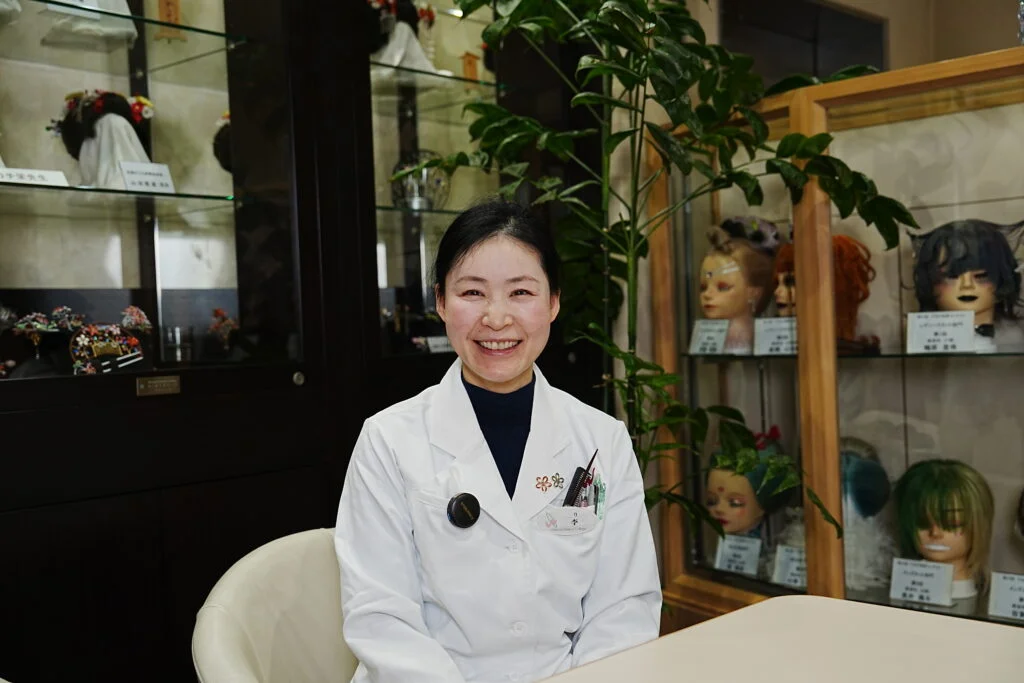
Behind that simple statement lies a path that was anything but easy.
Seeking Security: A Practical Choice as an Adult Learner
Ms. Li did not choose beauty education because of a passion for fashion or a dream of becoming a hairstylist.
Her motivation was much simpler—and more practical.
“As I got older, I felt uneasy without professional qualifications. I wanted to have some certifications that could give me more security.”
It is a mindset shared by many adult learners. When people are young, they often choose careers based on passion. Later in life, decisions tend to be shaped more by stability, certainty, and the question of whether they can continue to build a sustainable future.
Initially, Ms. Li wanted to obtain a hairstylist’s license not because she planned to work in a salon, but because she was interested in hair extension services. In Japan, this work legally requires a hairstylist’s license.
No matter what path someone has followed previously, entering the industry means returning to the classroom, starting from the basics, and completing formal training under Japan’s licensing system.
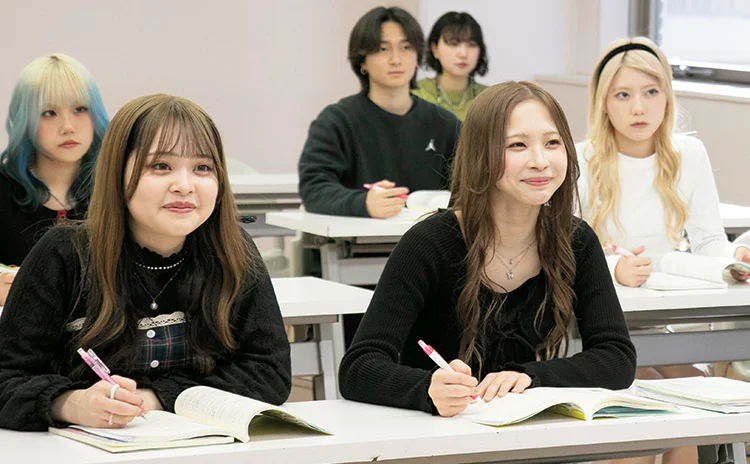
It was in this context that she began searching online for beauty schools in Japan.
“It Was a Place That Made Me Feel Calm”
Unlike many young people today who spend weeks comparing schools and reading reviews, Ms. Li made her decision surprisingly quickly.
During summer vacation, she searched for beauty schools on Google and found one close to her home. After making an inquiry, she visited the campus, where she was welcomed by instructor Mr. Monma.
The school was quiet because students were away for the summer break. She toured the classrooms and explored the campus facilities.
What left the deepest impression was not the equipment, the promotional materials, or the curriculum.
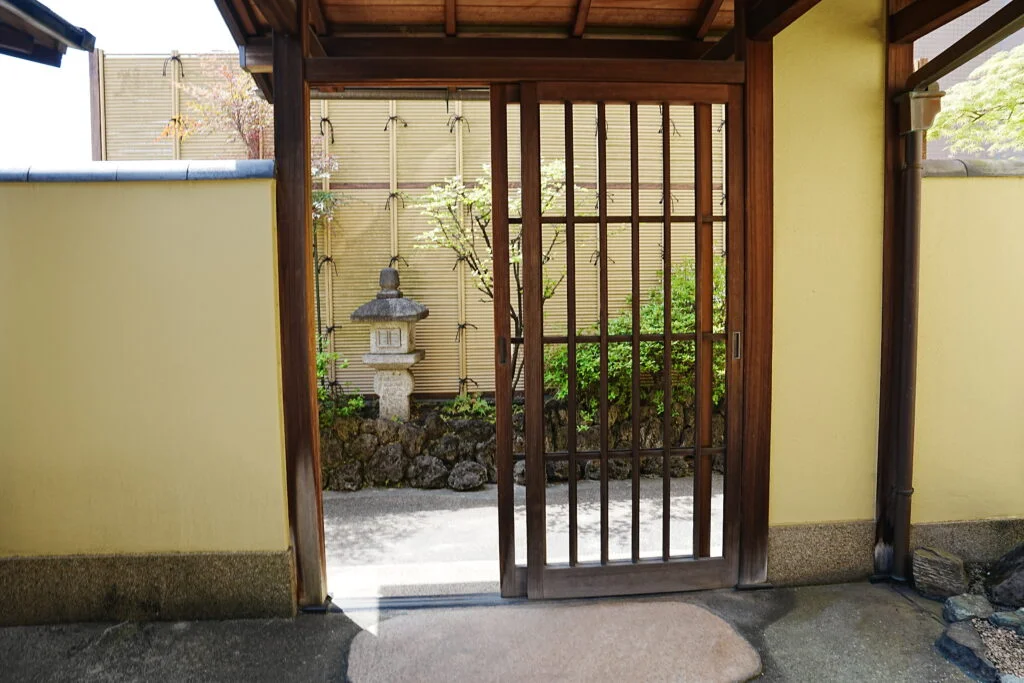
It was the tea room.
“The tea room had a strong sense of Japanese culture. I’ve always been interested in Japanese culture and enjoy drinking tea, so I found it very appealing.”
If proximity to home was the practical reason she stepped onto the campus, the tea room was the reason she decided to stay.
Looking back, she says that the school’s greatest attraction was its atmosphere—especially that tea room.
“It was a place that made me feel calm and helped me focus.”
The description sounds less like a vocational school and more like a place where someone could reorganize the rhythm of their life.
After a detailed introduction from Mr. Monma and a positive first impression, she decided to enroll on the very same day.
Perfect Attendance: Two Years of Consistency
Once classes began, Ms. Li quickly realized that the program was not easy.
Her approach, however, was straightforward: show up every day.
She never arrived late and never missed a class.
As the national examination approached, she stayed after school almost every day to practice. Except on Wednesdays, when after-school practice was unavailable, she remained on campus regularly. She even came in on Saturdays.
Classes ran from 9 a.m. to 4 p.m. Afterward, students could use the facilities for independent practice, focusing on areas they wanted to improve.
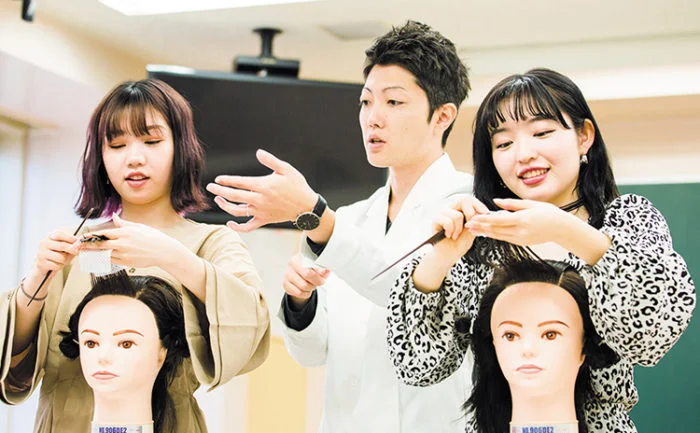
For Ms. Li, that meant spending countless hours working on techniques such as perming and rod wrapping.
As a Chinese student in Japan, language presented another challenge. Professional terminology—especially vocabulary related to cutting techniques, perming methods, and styling angles—often required repeated clarification.
Fortunately, teachers and classmates were supportive and patient.
“After enrolling, I worked hard every single day,” she says, with a quiet sense of pride.
An Unexpected Turn: From Student to Teacher
Becoming a teacher was never part of Ms. Li’s original plan.
She pursued the hairstylist license simply to qualify for work in hair extensions. Before graduation, she explored employment opportunities, but her age made entry-level salon positions less suitable.
Then an unexpected opportunity appeared.
A teacher at the school asked whether she would consider staying on as an instructor.
She decided to give it a try.
“I never imagined I would end up teaching here after graduation. Being able to stay was really a matter of good fortune,” she says with a laugh.
Asked whether hairstylists or teachers earn more, she shrugs off the comparison.
“For me, just having a job that I enjoy already makes me happy. Income isn’t my biggest concern right now. I’ve only recently graduated, and I still need more experience. My priority is to keep learning.”
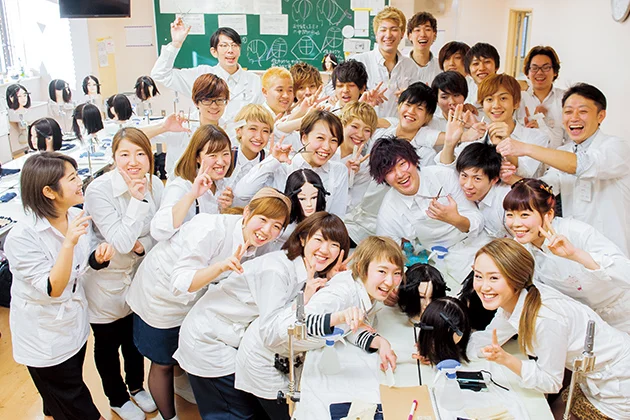
And so, seventeen years after leaving Beijing, she found herself standing at the front of a classroom in a Japanese vocational school.
Discovering Tea Ceremony Along the Way
The school offers tea ceremony classes as an optional activity, and Ms. Li participated from her first year until graduation.
Each year concludes with an event similar to a traditional Hatsugama gathering, hosted by the school principal, where students share tea and conversation.
“At first, I didn’t see any connection between tea ceremony and beauty education. But having the chance to experience tea culture while studying beauty was a wonderful opportunity.”
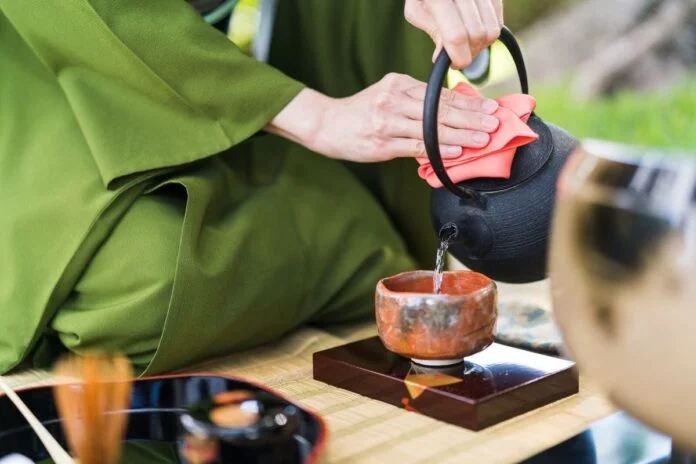
She did not pursue a tea ceremony certification. For her, the experience itself was what mattered.
The same tea room that first drew her to the school has now become a place where she can slow down and reflect after teaching.
“It’s Never Too Late”
When asked whether now is a good time for Chinese students to come to Japan to study beauty, her answer is immediate:
“I don’t think it’s ever too late. If you want to learn, you can start anytime.”
Her own employment situation is somewhat unique. Having already established her life in Japan and secured the appropriate visa status, she did not face the same employment pressures as many international students.
For most students coming from abroad, visa planning remains an important consideration.
In her view, one of the defining characteristics of Japan’s beauty industry is its commitment to craftsmanship.
“It’s a very traditional industry. The technical standards are extremely solid. People focus on one thing and keep refining it until it reaches the highest possible level.”
Commentary
A Different Model of Mid-Career Study Abroad and Career Reinvention
Ms. Li’s story is worth documenting not because she achieved extraordinary fame or success, but because she represents a group that is often overlooked in discussions about international education.
She is not an eighteen-year-old high school graduate chasing a dream abroad.
Nor is she a recent university graduate targeting a prestigious degree.
Instead, she belongs to a growing group of adults in their thirties and forties who already possess substantial life experience and choose overseas education for a much more practical reason: to create security and confidence for the next stage of life.
For Ms. Li, the answer initially seemed simple—a professional license.
Yet what she ultimately gained was far more than a certificate.
She discovered a career path she had never imagined.
The school’s distinctive value lies in its combination of three elements: rigorous technical training, exposure to traditional Japanese culture through activities such as tea ceremony and kimono dressing, and opportunities to showcase student work through social media platforms.
For adults who may excel technically but are less comfortable with self-promotion, the latter two elements provide valuable opportunities to be seen and recognized.
Of course, her path was not without advantages. Seventeen years of living in Japan provided her with language proficiency and visa stability, both of which played an important role in her ability to choose teaching rather than accept whatever employment was available.
For international students without those foundations, the journey remains challenging.
Nevertheless, her experience offers an important example.
In Japan, vocational schools are not only stepping stones for young people. They can also become places of reinvention for adults seeking a second start.
The real question is whether one is willing to begin again from zero—showing up every day, never missing class, and continuing to practice long after others have gone home.