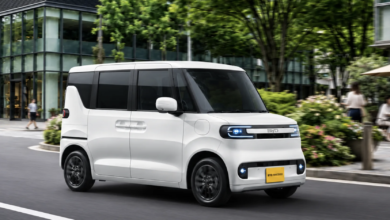
Li Auto’s Macau Gambit: What the Global Auto Industry Is Watching
Wan Ge reporting from Tokyo June 30, 2026— When Li Auto quietly opened a showroom on Ilha Dourada in Macau last week, the global automotive press barely noticed. It should have.

To international observers, a single retail outlet in a city of 700,000 — selling fewer than 6,000 cars a year — barely registers as news. But to analysts tracking China’s electric vehicle expansion, Li Auto’s Macau move is something else entirely: a calculated stress test of whether a Chinese EV brand can operate on Western-adjacent regulatory turf without stumbling. The results will matter far beyond this tiny peninsula.
The Question Western Automakers
Are Actually Asking
Executives at BMW, Stellantis, and Volkswagen aren’t losing sleep over Macau’s car market. What keeps them up at night is the underlying capability demonstration Li Auto is staging there.
The company didn’t just ship cars to a new territory. It partnered with Fuyao Glass — the world’s largest auto glass supplier — to engineer a bespoke, dual-layer laminated windshield that meets Macau’s specific light-transmittance regulations. That’s not a logistics exercise. That’s a product localization pipeline being validated in real time, with regulators, with a Tier-1 global supplier, on a timeline that would embarrass most legacy OEMs.
When Li Auto says it plans to enter European markets with the i6 EV by late 2026, international investors should note: the regulatory compliance muscle being built in Macau is precisely what will be needed in Brussels.
A Playbook That Looks Nothing
Like BYD’s
The conventional story of Chinese EV globalization runs through BYD — aggressive factory investment, volume pricing, and sheer manufacturing scale. Li Auto is writing a different chapter.
Where BYD has committed billions to overseas plant construction in Hungary, Thailand, and Brazil, Li Auto is entering new markets through dealer partnerships and export, carrying minimal fixed-cost exposure. Where BYD competes on price, Li Auto’s Macau lineup — the i6 and i8, both priced above RMB 300,000 — targets the premium segment. There is no race to the bottom here.
This “asset-light, precision-localization” model is structurally closer to how Tesla expanded in its early years than to how most Chinese brands have approached overseas markets. International investors who have written off Chinese EVs as a commodity play may need to reconsider.
The Balance Sheet
as Strategic Weapon
Li Auto enters this global expansion phase with RMB 94.3 billion in cash and RMB 83.3 billion in net cash. For context, that war chest rivals the liquidity position of several mid-tier European automakers.
This matters because international markets impose costs that domestic incumbency does not: homologation fees, right-hand-drive engineering, local compliance staff, dealer margin subsidies, and the inevitable early-market losses before brand recognition compounds. Li Auto’s financial position means it can absorb years of sub-breakeven overseas operations while building the network effects that make international auto retail defensible.
The strategic logic is “validate first, scale second” — a sequencing that Western analysts, accustomed to judging Chinese automakers by near-term revenue, have repeatedly underestimated.
Right-Hand Drive:
The Sleeper Signal
Macau is a mixed left- and right-hand-drive market, but Li Auto’s upcoming moves tell a clearer story: a right-hand-drive MEGA MPV for Hong Kong and Singapore by year-end, with the i6 targeting Europe shortly after.
Right-hand-drive engineering is a meaningful barrier to entry. Most Chinese EVs that have stumbled in markets like the UK, Australia, or Japan have done so partly because RHD development was an afterthought bolted onto a left-hand-drive platform. Li Auto appears to be treating RHD as a first-class product program, not a conversion exercise.
For markets like the UK — where EV adoption is accelerating but Chinese brand penetration remains thin — this is worth monitoring. The competitive displacement risk to incumbents in premium RHD markets may arrive sooner than the industry’s consensus timeline suggests.
Geopolitical Hedging
Not Just Commerce
International observers would be remiss to ignore the political geometry of Li Auto’s sequencing. The company’s first overseas market was Central Asia — Kazakhstan, Azerbaijan, Egypt — followed by Southeast Asia, with Europe next.
This is not the path of least resistance. It is the path of least regulatory hostility. As the EU’s investigation into Chinese EV subsidies drags on and tariff uncertainty clouds the transatlantic picture, Li Auto is building revenue and operational competence in markets where Chinese brands face no structural headwinds — banking credibility and cash flow before wading into contested Western territory.
When the political climate eventually shifts — and most trade analysts expect some form of market normalization — Li Auto will not be starting from zero in Europe. It will be arriving with a proven localization playbook, a running dealer network in adjacent markets, and years of cross-border vehicle connectivity data.
What the International Market
Should Watch Next
The Macau opening is a data point, not a conclusion. The meaningful signal will come in three stages:
Late 2026: Does the i6 clear European type-approval without major remediation? Does the Singapore MEGA launch generate waitlists or crickets? Premium-segment acceptance in mature, brand-conscious markets is the real test.
2027: Does Li Auto announce its first overseas manufacturing partnership or facility? The shift from export to local production is the inflection point that turns a brand into a market participant.
Longer term: Can Li Auto’s connected-vehicle ecosystem — built around Chinese data infrastructure — operate compliantly under GDPR and equivalent frameworks? This is the regulatory dimension that most Chinese EV brands have not yet confronted seriously.
The Verdict
From the Outside Looking In
From an international vantage point, Li Auto in Macau is neither a curiosity nor a triumph. It is a proof-of-concept being executed with unusual discipline by a company that, two years ago, was written off outside China as a niche EREV player with no global ambitions.
The global auto industry has a habit of underestimating Chinese manufacturers until the moment it cannot afford to. Li Auto is not yet a threat to Mercedes in Munich or Lexus in London. But Macau just made clear that it intends to be — and that it is doing the quiet, unglamorous groundwork to get there.
That, more than the showroom on Ilha Dourada, is what the world’s auto industry should be watching.