Geely’s Global Strategy: Expanding Through Partnerships, Not Factories
In June 2026, Geely accelerated its international expansion with a series of significant announcements.
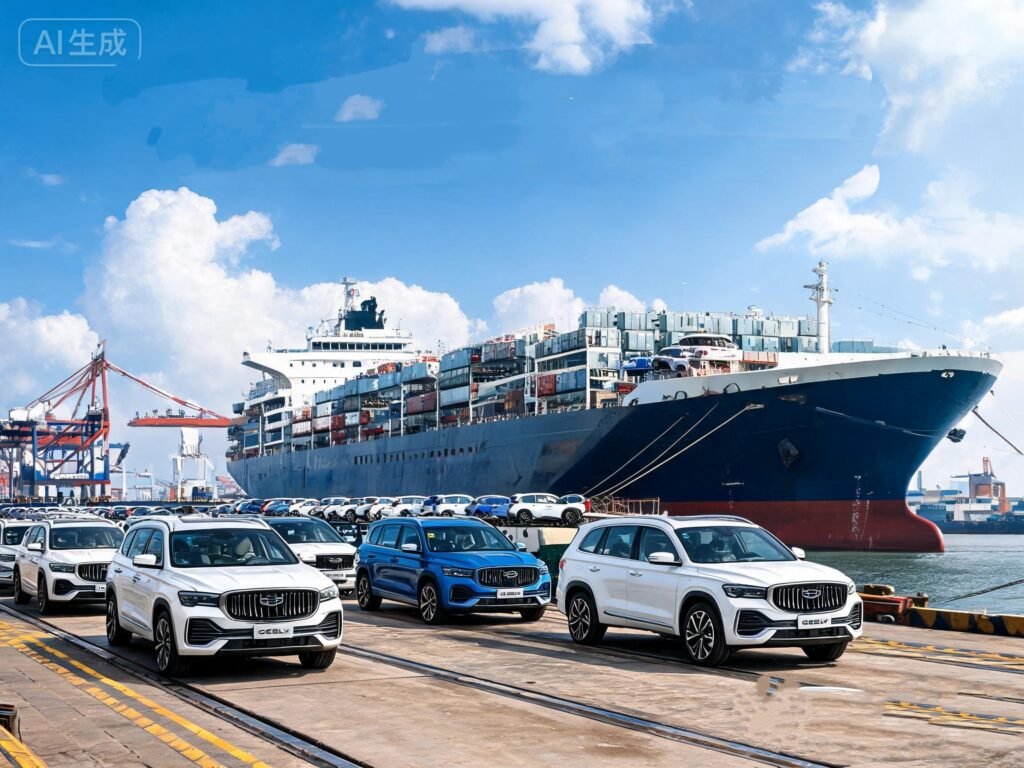
Early in the month, the company confirmed that monthly overseas exports would exceed 100,000 vehicles, bringing first-half exports to approximately 480,000 units. It subsequently raised its full-year export target to 900,000 vehicles.
On June 24, Geely completed the integration of its premium brands, including Zeekr and Lynk & Co, while incorporating strategic technology assets such as semiconductors and satellite businesses into its international platform. Around the same time, Volvo Cars’ CEO publicly suggested that Geely could utilize excess production capacity at Volvo’s European plants, while the company also entered discussions with Ford over acquiring an idle assembly line at its Valencia plant in Spain.
Viewed together, these developments illustrate a distinctive international strategy. Rather than relying primarily on building new manufacturing facilities overseas, Geely is leveraging acquisitions, strategic partnerships and existing industrial assets to expand its global footprint.
Building a Global Automotive Platform
Chinese automakers have adopted different approaches to international expansion.
BYD has focused on building wholly owned manufacturing facilities overseas. Chery has prioritized establishing localized sales and service networks.
Geely has pursued a different strategy—integrating existing global resources.
Instead of building every factory and distribution network from the ground up, the company has expanded through acquisitions, joint ventures, technology partnerships and industrial cooperation, allowing it to utilize established manufacturing capacity, brands and distribution channels in overseas markets.
A Multi-Brand Portfolio
One of Geely’s key advantages is the breadth of its brand portfolio.
Geely Holding owns more than ten automotive brands, including Geely Auto, Lynk & Co, Zeekr, Volvo Cars, Polestar, Lotus, Proton and Smart, covering market segments ranging from entry-level vehicles to premium and luxury products.
The corporate restructuring completed in June 2026 integrated Zeekr and Lynk & Co into Geely’s listed automotive business, reducing internal competition and enabling greater coordination across the group’s operations.
Combined sales of Geely’s brands—including Volvo, Polestar, Lotus, Lynk & Co, Zeekr and Smart—reached 124,000 vehicles in the European Union during the first five months of 2026, surpassing Ford’s 108,000 units over the same period.
Expanding Global Distribution
Geely is also rapidly expanding its international sales network.
By the end of 2026, the company expects to operate more than 2,200 overseas sales outlets across all brands. The Geely brand alone plans to expand to 1,300 dealerships, while Zeekr targets 500 overseas retail locations and Lynk & Co another 400 independent overseas dealerships.
The company is gradually shifting from a model centered on vehicle exports toward localized operations that include sales, after-sales service and regional management.
An Asset-Light International Strategy
Unlike manufacturers that invest heavily in building entirely new production facilities overseas, Geely has adopted an asset-light expansion model.
Its strategy focuses on acquiring underutilized manufacturing assets, contract production, technology licensing and industrial partnerships, enabling the company to expand market coverage while limiting capital expenditure.
Geely plans to establish several major regional markets, including Europe, Eastern Europe and Southeast Asia, each targeting annual sales of around 150,000 vehicles, alongside Latin America, Africa, the Middle East and Asia-Pacific markets, each targeting around 100,000 units.
The objective is to build a diversified global presence supported by multiple regional production and distribution hubs.
Making Use of Existing Industrial Capacity
A defining feature of Geely’s overseas expansion is its emphasis on utilizing existing industrial infrastructure rather than constructing entirely new facilities.
Southeast Asia: The Proton Partnership
Geely’s investment in Malaysia’s national automaker Proton remains one of its most successful international ventures.
In 2017, Geely acquired a 49.9% stake in Proton, gaining immediate access to the company’s manufacturing facilities, supplier base, dealer network and established domestic brand.
The partnership has delivered steady growth.
Proton sold 162,600 vehicles in 2025, maintaining its position as Malaysia’s second-largest automaker for seven consecutive years.
During the first four months of 2026, sales increased 43.2% year-on-year to 33,200 units, supported by strong demand for the Saga MC3 and the e.MAS electric vehicle lineup.
The e.MAS 5, developed from Geely’s Xingyuan platform, became the first electric vehicle to rank among Malaysia’s five best-selling passenger cars in a single month.
Building on Proton’s manufacturing base, Geely is developing the Automotive Hi-Tech Valley (AHTV), an integrated automotive industrial park with annual production capacity of 500,000 vehicles.
Designed as a regional manufacturing hub for Southeast Asia, the project targets 70% local sourcing of key components and has already supported technological upgrading among more than 120 Malaysian suppliers.
Europe: Leveraging Existing Manufacturing Networks
Europe has become another important pillar of Geely’s international strategy.
In June 2026, Volvo Cars’ CEO stated publicly that Volvo’s manufacturing facilities—including those in the United States—could potentially produce Geely-branded vehicles if additional capacity were required.
At the same time, Geely entered negotiations with Ford regarding an idle production line at Ford’s Valencia plant in Spain, where production has remained well below designed capacity since 2023.
If completed, the transaction would provide Geely with another manufacturing base in Europe without requiring construction of a new factory.
Geely has also strengthened coordination between its brands.
In April 2026, responsibility for Lynk & Co’s European operations was transferred to Volvo Cars. By utilizing Volvo’s established dealer network and after-sales infrastructure, Lynk & Co can expand its market presence while avoiding significant additional investment.
The arrangement reflects Geely’s broader strategy of integrating manufacturing, distribution and brand management across its portfolio.
Latin America, the Middle East and North America
Geely is also expanding through partnerships in other international markets.
In Latin America, the company is leveraging Volvo and Renault’s existing distribution networks to increase market penetration.
In the Middle East and Central Asia, Geely continues to expand its own brand presence. The Galaxy Starship 7 EM-i ranked as Kazakhstan’s best-selling plug-in hybrid SUV for two consecutive months.
North America remains a longer-term opportunity.
Volvo has indicated that its U.S. manufacturing facilities could accommodate additional production in the future, potentially creating another pathway for Geely-branded vehicles should market conditions become more favorable.
The Challenges of Managing a Global Portfolio
While Geely’s international strategy differs from that of many competitors, it also presents several challenges.
The first is portfolio integration.
Although Geely controls a broad range of automotive brands, achieving stronger coordination among them remains an ongoing process. Sales performance varies considerably across markets. Lynk & Co has yet to establish significant momentum in Europe, while Zeekr continues to grow but remains relatively small compared with established European manufacturers.
The second challenge is governance.
Many of Geely’s overseas operations are conducted through partnerships rather than wholly owned subsidiaries. The company owns 49.9% of Proton, while brands such as Volvo and Lotus continue to operate with substantial management independence. Maintaining strategic alignment across multiple organizations requires careful coordination.
Europe also presents uncertainty.
Negotiations over Ford’s Valencia production facilities remain ongoing, while plans for expanded manufacturing cooperation with Volvo have yet to be finalized. In addition, European tariffs on Chinese electric vehicles and intensifying competition from domestic manufacturers continue to reshape the market environment.
Finally, Geely must balance international growth with strong competition at home.
The company targets 3.45 million vehicle sales in 2026, making continued success in China’s highly competitive domestic market just as important as overseas expansion.
From Automaker to Global Mobility Group
Geely’s international strategy differs fundamentally from those of many other Chinese automakers.
Rather than emphasizing factory construction, the company seeks to maximize the value of existing global manufacturing assets.
Rather than relying on a single international brand, it operates a portfolio of complementary brands serving different customer segments and regional markets.
Its longer-term objective extends beyond exporting vehicles.
Geely is building an integrated global automotive ecosystem that combines manufacturing, technology, branding and distribution through partnerships and shared industrial resources.
Whether this strategy ultimately delivers a sustainable competitive advantage will depend on how effectively the company integrates its diverse brands and operations. If successful, Geely could establish a global business model that relies less on manufacturing scale alone and more on the efficient coordination of industrial assets across multiple markets.