Winners of “China Plus One” | Cambodia: Southeast Asia’s Rising Latecomer
By Kelly in Tokyo
Cambodia is emerging as the latest beneficiary of the “China Plus One” strategy.
In July 2026, Prime Minister Hun Manet made a three-day working visit to China, meeting executives from nine Chinese companies and institutions across infrastructure, energy, mining, smart appliances, artificial intelligence, agricultural processing and consumer manufacturing.
China has now been Cambodia’s largest trading partner for 14 consecutive years and its biggest source of investment for 13 years.
Unlike Vietnam, Malaysia and Thailand, Cambodia’s advantage is not early entry, technology or industrial transformation. Its strength is its latecomer advantage: lower costs, a more open investment environment and preferential access to major export markets.
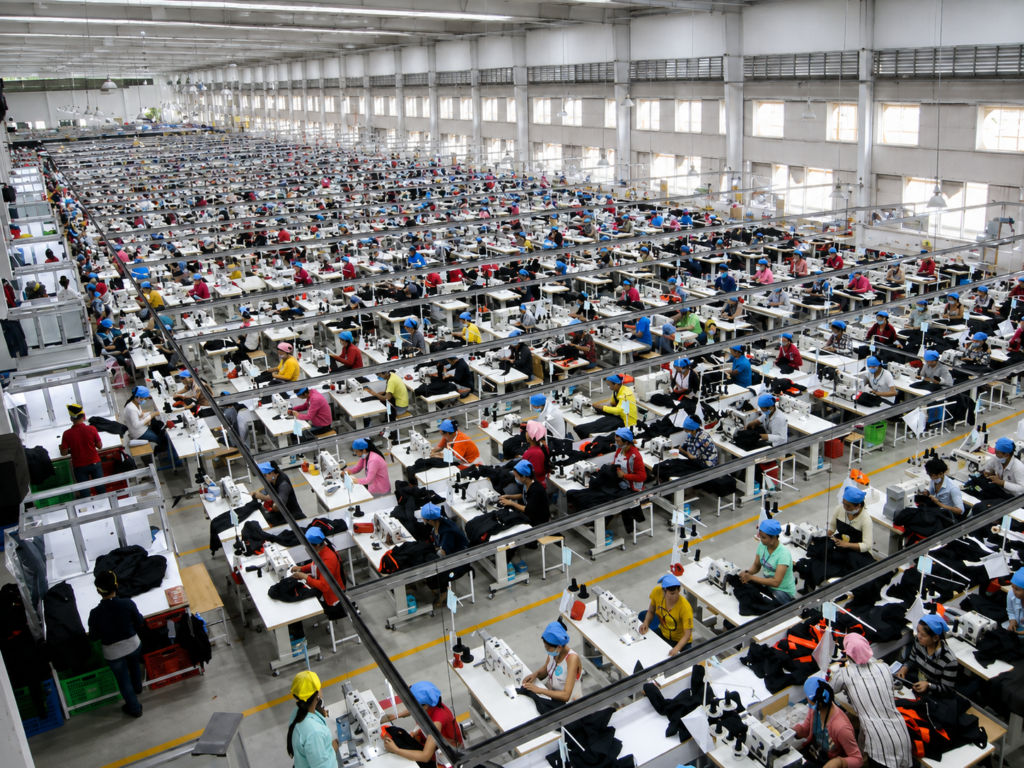
Latecomer Advantage: Lower Costs, Greater Openness
Cambodia’s biggest attraction is cost.
Industrial land can be significantly cheaper than in Vietnam, while the manufacturing minimum wage is around $208 a month, less than half the level in Thailand. For labour-intensive industries such as garments, furniture and electronics assembly, that difference can materially affect factory location decisions.
Trade preferences add another advantage. Cambodia continues to enjoy preferential access to European and US markets for many products, allowing some exporters to reduce tariff costs compared with alternative production bases.
This combination of cheaper land, lower labour costs and favourable trade treatment has made Cambodia especially attractive for the most cost-sensitive parts of the “China Plus One” supply chain.
But the advantage has limits. Electricity remains relatively expensive, infrastructure quality varies outside major industrial zones, and some preferential trade arrangements are being reduced. Cambodia therefore needs to upgrade its industrial base before the cost advantage begins to fade.
Chinese Capital Accelerates
Investment has expanded rapidly.
Cambodia approved 630 investment projects in 2025, with fixed-asset investment exceeding $10 billion. Chinese investment accounted for 54% of total foreign investment, and its share rose above 60% in the first half of 2026.
More importantly, the structure of investment is changing.
Chinese capital is moving beyond garments and textiles into tyres, renewable energy, digital infrastructure and higher-value manufacturing.
Qingdao Doublestar, for example, plans a major high-performance radial tyre project in Cambodia, while tyre exports have surged sharply. Cambodia has also introduced tariff incentives for electric vehicles, solar products and lithium batteries, creating new opportunities for Chinese green-technology companies.
Digital investment is another emerging field. New special economic zone proposals are targeting data services, ICT infrastructure and other technology industries, while Chinese AI companies are exploring applications in public administration and government services.
Chinese investment is increasingly moving from isolated projects toward broader industrial-chain development.
Special Economic Zones Create Industrial Clusters
Special economic zones are becoming one of Cambodia’s most important tools for attracting “China Plus One” investment.
The Sihanoukville Special Economic Zone, a flagship China–Cambodia Belt and Road project, has attracted more than 200 companies and developed into a diversified manufacturing base covering auto parts, tyres, machinery, construction materials, home products, new materials and medical supplies.
New zones are also emerging.
Proposals include a Shanghai Special Economic Zone in Kampong Speu Province, designed to strengthen manufacturing and logistics links between Phnom Penh and Sihanoukville, as well as a Fujian economic zone focused on timber processing, green building materials and light manufacturing.
Cambodia is also considering technology-focused special economic zones aimed at digital industries.
Together, these zones are helping Cambodia move from individual factory projects toward industrial clustering.
Cambodia Wants to Move Up the Value Chain
Cambodia does not want to remain merely the cheapest factory in the “China Plus One” network.
At the first Cambodia Industrial Development Conference in Phnom Penh in July 2026, more than 200 Chinese and Cambodian companies showcased technologies ranging from smart manufacturing and new energy to robotics, biomedicine and electronics.
By June 2026, Cambodia had more than 3,300 registered factories and an industrial workforce exceeding 1.3 million. Industrial investment had reached about $27.8 billion, while industrial exports continued to grow strongly.
The government is now placing greater emphasis on smart manufacturing, artificial intelligence, infrastructure and higher-value industries.
In that sense, Cambodia is beginning to follow a path similar to Vietnam’s earlier development: start with labour-intensive production, then gradually climb toward more sophisticated manufacturing.
The Asian Development Bank expects Cambodia’s economy to grow 4.5% in 2026 and 5.0% in 2027.
Cambodia may not be the largest, most technologically advanced or earliest mover in the “China Plus One” landscape. But its combination of low costs, expanding infrastructure and increasingly open industrial policy gives it something different:
the potential to become one of Southeast Asia’s most important latecomers in the next stage of supply-chain diversification.