Robots “Go to School” — Learning New Skills to Serve the Elderly
In today’s intersection of the “silver wave” and the “smart wave,” China’s elderly care services are undergoing a technological transformation. Recently, from Hangzhou to Shenzhen, from Shanghai to Lanzhou, a group of “robot students” have entered nursing homes, care centers, and community canteens to learn how to better serve seniors — delivering medicine and meals, mopping floors, folding clothes, practicing Tai Chi, and even understanding dialects, assisting mobility, and supporting rehabilitation.
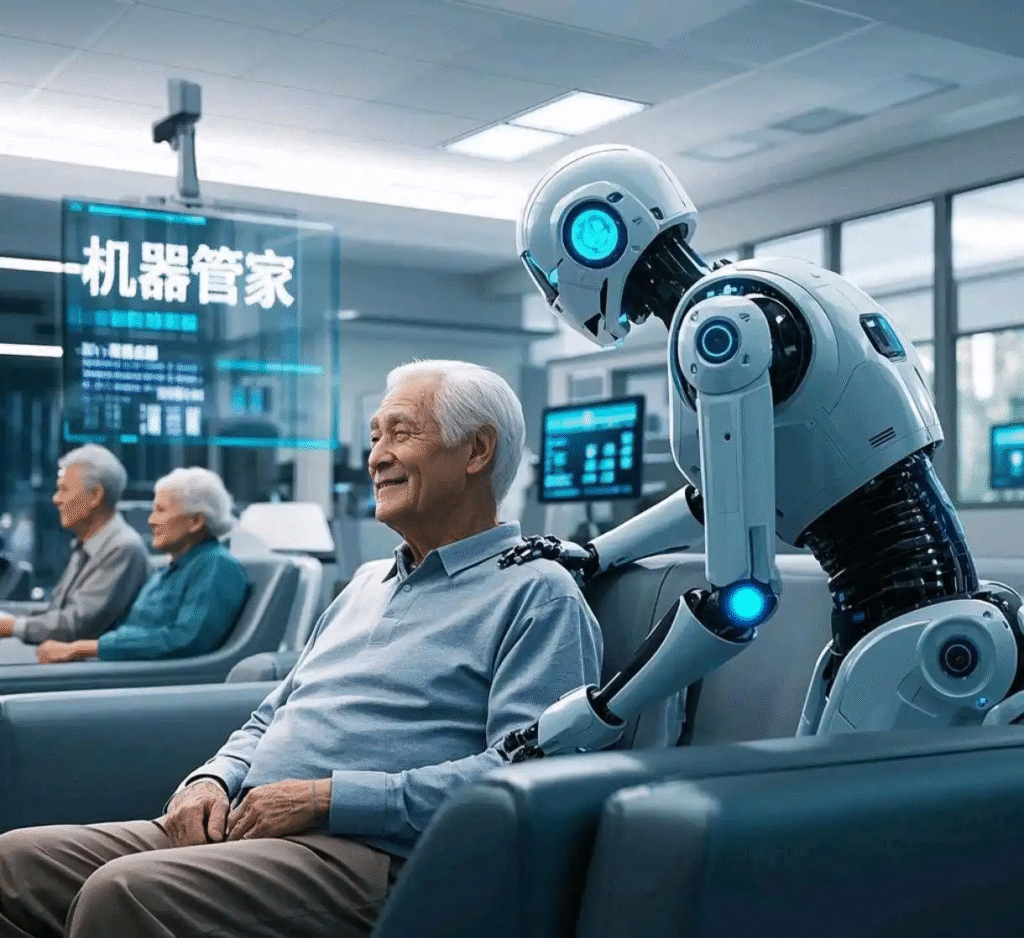
Behind this phenomenon lies a deep fusion of artificial intelligence, soft robotics, and human empathy.
In Hangzhou, a robot dog named *Xiaoxi* can accurately identify room numbers and deliver meals and medicine. In Shenzhen, robots fold clothes and play ping-pong with seniors, becoming true “smart companions.” In Shanghai, autonomous wheelchairs and exoskeletons restore confidence to those with mobility challenges. In Lanzhou’s smart canteens, cooking robots quietly serve as the “invisible chefs” behind elderly dining tables.
According to China’s National Bureau of Statistics, over 300 million people in China are aged 60 or older, with more than 45 million experiencing cognitive or physical impairments — yet only about 500,000 professional caregivers exist. Amid this shortage, the learning and evolution of “care robots” represent not only technological advancement but also an extension of social warmth.
From delivering meals to offering emotional companionship, from ensuring safety to aiding recovery, robots “going to school” symbolize more than efficiency — they mark a new path toward a future where every elder is cared for, joyful, and at peace.