【Treasures from the Zen】“Donghua Chan”: Human-Centered Philosophy— Refining the Mind Through Life
Located in Shaoguan, Guangdong, Donghua Chan Monastery was founded in the first year of Emperor Liang Wu (502 CE) and has a history of over 1,500 years. Originally named Lingjiu Monastery, it was established by the Indian monk Tripitaka Zhiyue.
In 661 CE, after inheriting the robe and bowl of the Fifth Patriarch, the Sixth Patriarch Huineng passed through this monastery, where he practiced in seclusion and renamed it Donghua Chan Monastery. The temple flourished during the Tang and Song dynasties but was later destroyed in the Ming–Qing period.
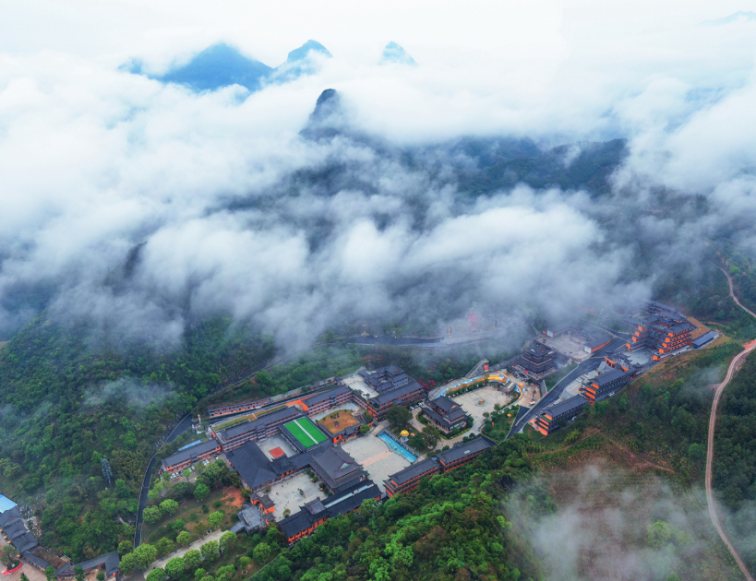
In 1997, after completing four years of closed retreat, Master Wanxing entered another three-year retreat on Mount Donghua. At the age of thirty, upon emerging, he resolved to restore the ancient monastery and continue the flame of Chan Buddhism.
The rebuilt Donghua Chan Monastery upholds four treasures: patriotic culture, blessing culture, agricultural Chan culture, and filial gratitude culture—the spiritual wealth that sustains the monastery’s vitality.
As a Chan monastery, Donghua Chan emphasizes the integration of farming and meditation, following the ancestral Zen tradition of mountain monastic life. Over time, three core meditation methods have been formed: Donghua Chan Dynamic Practice, Donghua Chan Static Practice, and Donghua Awareness Chan.
Donghua Chan Dynamic Practice
Activates primordial energy, opens the body’s meridians and channels. Derived from ancient Indian yoga, it consists of seven simple movements that harmonize yin and yang, strengthen the body, and promote longevity—a scientific and accessible health method.
Donghua Chan Static Practice
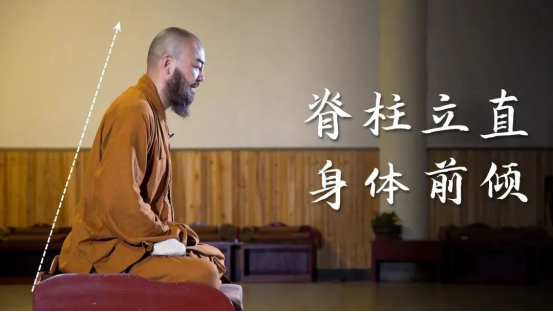
Integrates the essence of Chan, Pure Land, and Vajrayana traditions. It involves three steps—adjusting posture, breath, and mind—combined with the “Three-Syllable Mantra,” Diamond Chant, and Yoga Chant. Through mantra vibration and sound resonance, practitioners open the Brahma chakra, unite with cosmic energy, and realize the oneness of all existence.
Donghua Awareness Chan (Donghua Chan)
This is the life work and wisdom crystallization of Abbot Master Wanxing, the result of over thirty years of genuine cultivation—from childhood awakening and solitary retreat to temple building, teaching, and guiding sentient beings. He established the philosophy of Human-Centered Buddhism, offering a path to liberation through realizing one’s true nature.
Donghua Chan draws inspiration from Shakyamuni Buddha’s humanistic teaching—human-centered, respectful, compassionate, and service-oriented; equality among all beings; taking being human as the foundation, enlightenment as the goal.
It inherits the ancestral Chan method—“Do not fear deluded thoughts; only fear delayed awareness.” Cultivate mindfulness in all actions—walking, standing, sitting, and lying down—until awareness becomes one’s nature.
Donghua Chan aims to refine the mind through daily life, awaken to truth, and dedicate one’s life to benefiting others, realizing Humanistic Buddhism and creating a Pure Land in this world.
Faith is integrated into daily living; practice is rooted in the present moment. Buddhism merges with society, the individual with the collective—practice in work, and work as practice; fulfill duties to cultivate merit, awareness to cultivate wisdom, dedication to cultivate liberation.
Its essence: Begin with aspiration, deepen through realization, fulfill through vow—cultivate the Four Immeasurables, Four Means of Embracing, Six Perfections, and the Ten Great Vows. Though space has an end, vows are endless.
The Method of Donghua Chan
See the present as it is; close eyes and open them forward.
One with eyes yet blind cannot see; one clear glance beholds the universe.
Cut through delusion—clarity turns darkness to light; in seamless awareness, the knower and the known dissolve.
The family tradition remains—to study Buddha is to learn to be human; to learn to be human is to study Buddha.
The Heart of Donghua Chan
Guard mindfulness, keep a pure heart, and abide in constant awareness without attachment.
(Source: Donghua Chan Monastery, Author: Donghua Chan)