Jilin Observation | Charting a Blueprint for Revitalization at the Intersection of National Strategy and Jilin’s Mission
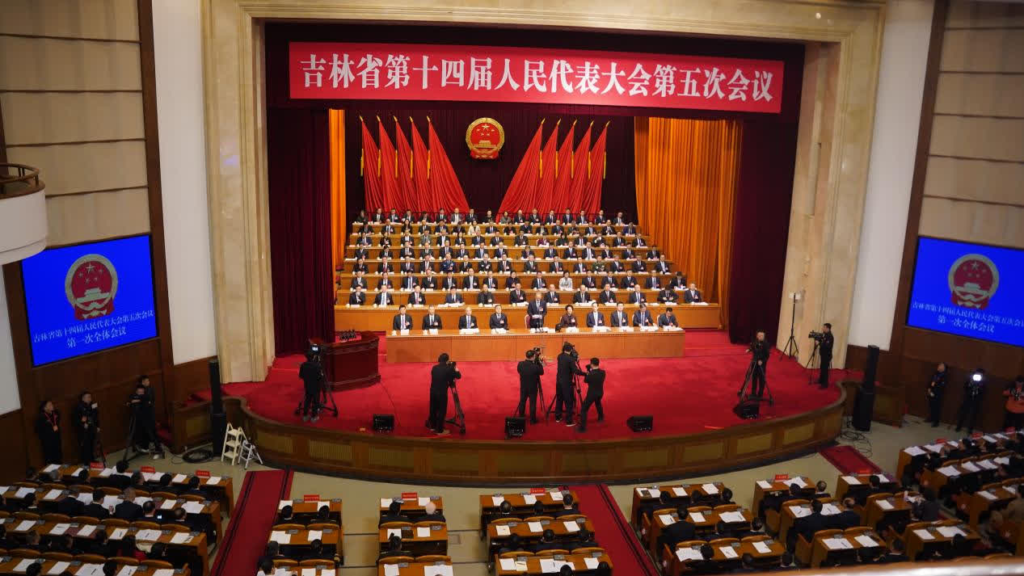
The Fifth Session of the 14th Jilin Provincial People’s Congress has opened.
As the opening year of the “15th Five-Year Plan,” Jilin Province—an essential pillar of Northeast China revitalization—has drawn widespread attention. On January 27, 2026, Governor Hu Yuting delivered the Government Work Report at the opening meeting of the Fifth Session of the 14th Jilin Provincial People’s Congress. Together with the “15th Five-Year Plan” Outline for Jilin Province, adopted during the session, these two weighty documents offer the outside world a new window through which to observe Jilin’s trajectory over the next five years.
Through these documents, one sees not only concrete economic and social development targets, but also the deeper logic and firm actions of a border province striving for systemic renewal and critical breakthroughs—balancing service to national priorities with its own path to revitalization.
From this vantage point, one can read a resolve of “burning the boats.”
“Outperform the national average,” “build comparative advantages,” “narrow gaps,” and “move up the rankings”—these four striking phrases in the Government Work Report go far beyond describing annual goals for 2026. They read instead like a forward-looking declaration spanning five years. They signal Jilin’s determination not to accept the status quo or be constrained by geography.
A GDP growth target of around 5 percent reflects self-imposed pressure aligned with the ambition to outperform the national average. Accelerating the growth of industries such as new energy and advanced equipment manufacturing represents a strategic choice to “build advantages” through industrial restructuring. Meanwhile, targets such as increasing total R&D expenditure by more than 10 percent and ensuring that income growth for urban and rural residents keeps pace with economic growth underscore a determined push to “narrow gaps” and achieve “upward movement” in innovation and livelihoods.
Together, these objectives outline a clear pursuit of both scale and quality growth—underpinned by a conviction that this is a moment requiring a do-or-die commitment.
From this vantage point, one can also read a confidence rooted in “understanding and shouldering responsibility.”
To grasp Jilin’s current ambition, one must situate it within two coordinates: its distinctive resource endowment and the formidable challenges it faces.
On one hand, Jilin holds three national-level strategic “aces”: a major grain-producing base, a major industrial manufacturing base, and a major ecological stronghold. It also enjoys strong scientific and educational resources—forming the foundation of its development confidence. On the other hand, deep-seated challenges remain, including a heavy industrial structure, insufficient conversion of scientific research into industrial outcomes, demographic shifts, and uneven regional development.
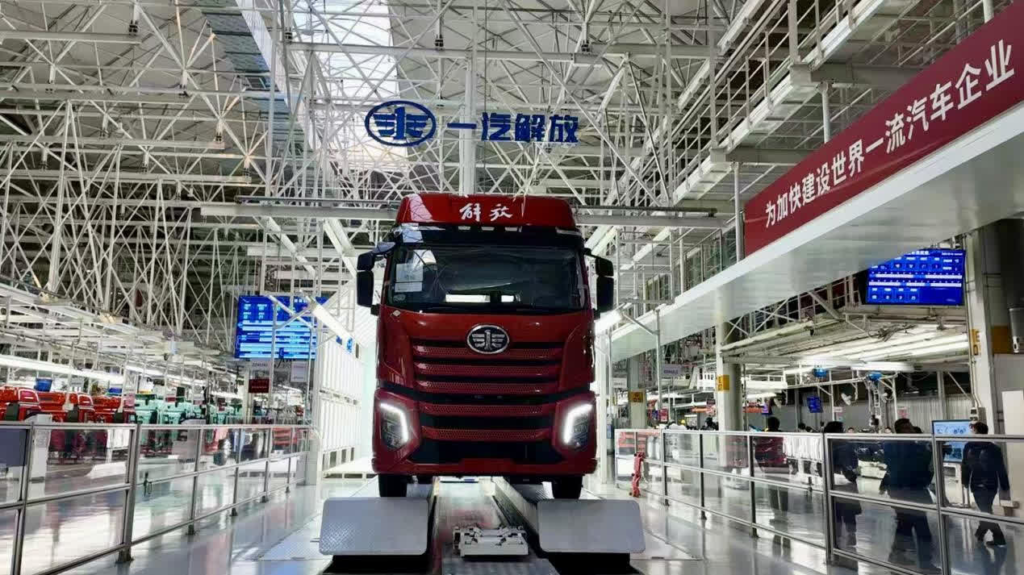
The rapid operation of FAW Jiefang’s production lines reflects Jilin’s steady efforts to consolidate the foundations of a modern industrial system.
At its core, Jilin’s central challenge is how to efficiently convert its strategic stock advantages—serving the nation’s “Five Major Securities” (national defense, food, ecological, energy, and industrial security)—into incremental momentum for its own high-quality development.
The Government Work Report and the Plan Outline confront problems head-on and fully tap existing strengths. This clarity of diagnosis and systematic planning is precisely where confidence originates: with accurate problem identification comes the possibility of targeted solutions, and the prospect of winning an early victory in the “15th Five-Year Plan” and securing overall success through extraordinary measures.
From this vantage point, one can further read a sense of “methodical and steady execution.”
Grand visions require solid pathways. A close reading of the report and the plan reveals a set of clear, pragmatic measures that together form a step-by-step operational roadmap for the next five years:
— Rebuilding the industrial system from traditional strengths toward new-quality productive forces. The path is defined by a “three-pronged approach”: upgrading traditional industries such as automobiles and petrochemicals toward high-end, intelligent, and green development; concentrating resources to cluster emerging industries such as new energy, new materials, and aerospace information; and empowering all sectors with digital technologies to accelerate momentum conversion.
— Strengthening the dual engines of innovation-driven development and reform and opening-up. Jilin positions the construction of an innovation-oriented province as a strategic fulcrum, focusing on resolving the long-standing issue of low local transformation rates of scientific and technological achievements. By building one-stop platforms for concept verification, pilot testing, and scenario-based application, the province aims to turn scientific strengths into industrial advantages. At the same time, it explicitly states that “openness should become a defining hallmark of Jilin’s high-quality development,” leveraging institutional opening-up to build a key gateway for China’s northward opening—demonstrating foresight in using openness to drive reform and expand development space.
— Coordinated regional development led by the Changchun Modern Metropolitan Area. The plan elevates the Changchun metropolitan area to a strategic, leading position, outlining a timeline of “laying foundations in one year, achieving visible results in three years, and reaching a new level in five years,” aligning closely with the “15th Five-Year Plan” cycle. This is not merely about creating a commuting circle, but about fostering a dynamic community with industrial synergy, integrated urban living, and smart connectivity—breaking the “single-core dominance” effect and shaping a multi-polar support pattern across the province.
— A profound shift in agriculture from scale advantages to quality advantages. As a cornerstone of national food security, Jilin’s path toward agricultural modernization carries national significance. The plan focuses on black soil protection, technological empowerment, and industrial chain upgrading, steadily advancing toward a target of 100 billion kilograms of grain capacity. This represents not only yield security, but a comprehensive uplift in agricultural value, farmers’ incomes, and rural vitality.
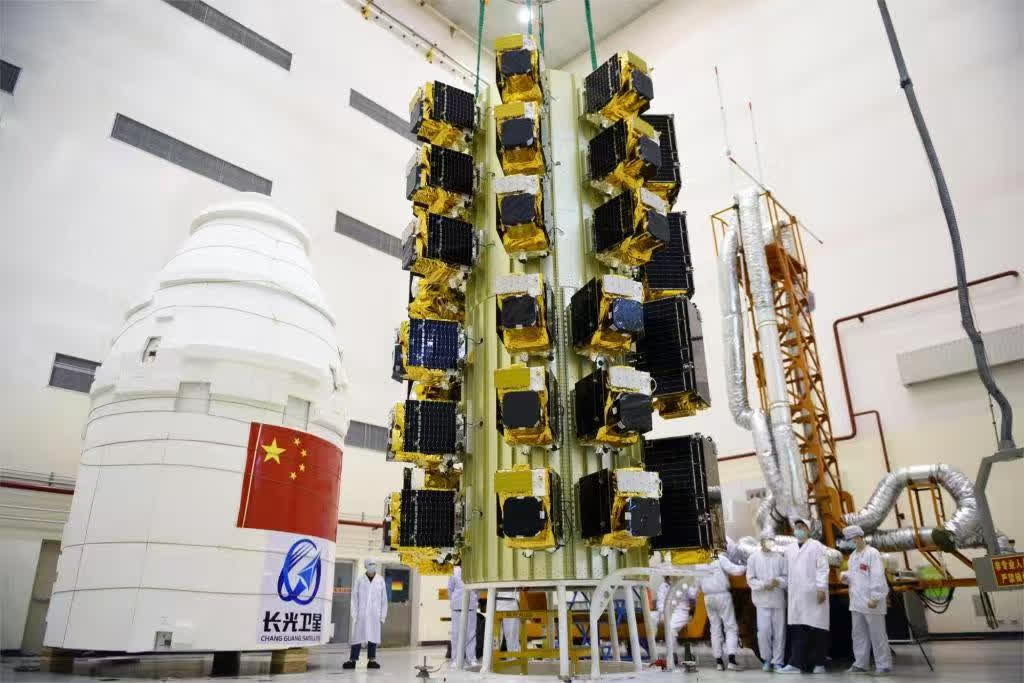
The accelerated breakthroughs in the aerospace information industry demonstrate Jilin’s strong momentum in cultivating new-quality productive forces through technological innovation.
— Deep integration of historical and cultural resources from preservation to development empowerment. The plan highlights the deep empowerment of historical culture through systematic protection and innovative transformation, injecting both spiritual strength and industrial momentum into comprehensive revitalization. By strengthening the inheritance of revolutionary heritage, revitalizing historical assets, renovating historic buildings, and reimagining cultural spaces, Jilin seeks to transform its rich cultural resources into experiential and consumable cultural and tourism drivers. In doing so, it aims to let millennia-old heritage flourish anew between the Changbai Mountains and Songhua River—turning cultural “soft power” into a genuine “hard support” for improved quality of life, consumer vitality, and renewed development confidence.

Illuminated city landmarks such as the Museum of the Imperial Palace of Manchukuo in Changchun bear witness to Jilin’s exploration of empowering high-quality development through cultural revitalization.
— Firmly safeguarding the twin foundations of people’s livelihoods and ecological security. In the plan, livelihood issues carry the greatest weight and richest content, embodying a people-centered approach that ensures the fruits of modernization are shared more fairly and broadly—from employment and income to education and social security—making revitalization tangible and accessible. Meanwhile, comprehensive measures to protect blue skies, clear waters, and fertile black soil continue to transform the ecological beauty of “white mountains and black waters” into lasting green development value, injecting sustainable momentum into long-term revitalization.
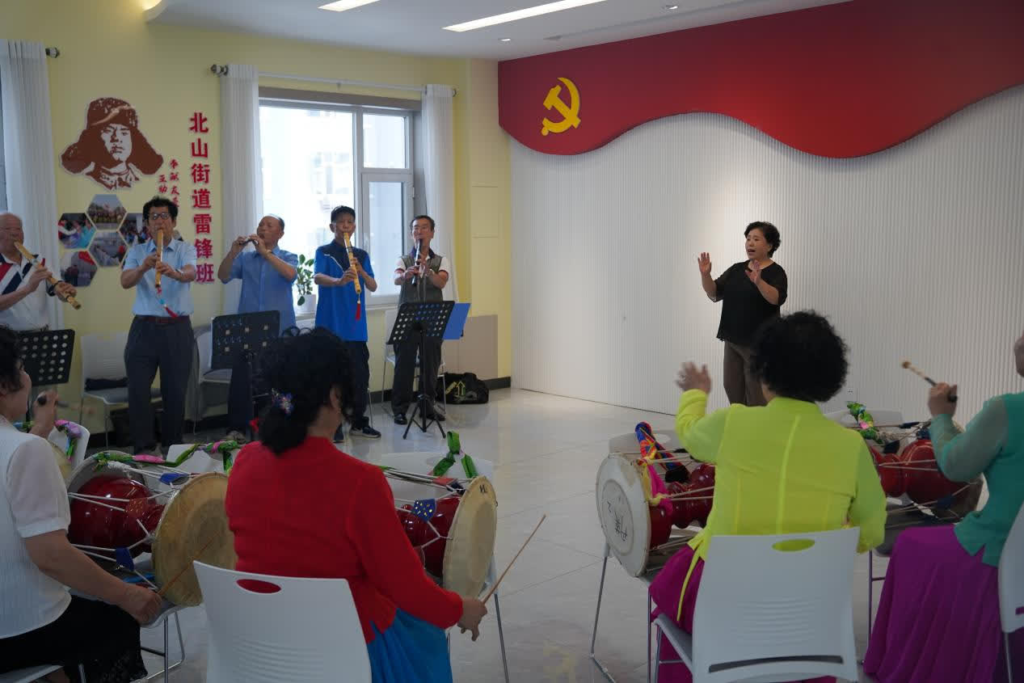
Vibrant grassroots cultural activities in communities such as Beishan Subdistrict’s Lei Feng Class reflect Jilin’s progress in improving livelihoods and advancing spiritual civilization.
At the Intersection, Writing a New Chapter; Advancing Through Action Toward the Future
Jilin’s “15th Five-Year Plan” blueprint is a carefully drawn construction plan at the intersection of national strategy and provincial mission. It shoulders the national responsibility of safeguarding the “Five Major Securities” and contributing to Northeast revitalization, while embodying the aspirations of Jilin’s people for development and a better life.
From a resolve to fight with determination, to confidence born of responsibility, and finally to steady, methodical execution, this blueprint reflects a border province’s clear-eyed pursuit of systemic renewal, its courage to achieve critical breakthroughs, and its commitment to practical, long-term effort.
The road ahead is not without challenges, but the direction is clear and momentum is building. As the tailwinds of national strategy align with Jilin’s own determination, the vision of industrial revitalization, innovation-driven growth, coordinated regional development, agricultural strength, ecological beauty, and shared prosperity gains a solid foundation to move from blueprint to reality.