AI · Asia · Factories | If the AI Boom Cools, How Long Can Asia’s Factories Stay Hot?
By Kelly in Tokyo
In July 2026, the global semiconductor market produced a set of figures that appeared contradictory.
On July 6, the Semiconductor Industry Association reported that global semiconductor sales reached US$120.6 billion in May, up 104.1% year on year and marking the 31st consecutive month of annual growth. On the same day, the combined capital expenditure of major Asian chipmakers surpassed US$136 billion, an increase of 25% from a year earlier.
Yet at almost the same time, capital markets were undergoing a sharp correction. The Philadelphia Semiconductor Index, or SOX, fell more than 20% from its record high on June 22, entering a technical bear market. South Korea’s benchmark KOSPI dropped more than 24% from its mid-June peak. Chinese memory-chip companies GigaDevice Semiconductor and Biwin Storage both retreated by more than 30% from their highs for the year.
On one side, production lines are operating around the clock and order books stretch into 2029. On the other, share prices are falling sharply and leveraged capital is retreating. Between these two extremes, what is really happening in the AI chip industry?
Share Prices Are Falling, but Factories Are Still Running
Most institutions have characterised the latest market decline as a technical correction rather than the structural peak of the semiconductor investment cycle.
Yao Yuan, senior Asia investment strategist at the Amundi Investment Institute, said the recent decline in the Philadelphia Semiconductor Index and the sharp volatility in major AI-related stocks represented “a relatively short-term technical correction rather than a structural peak in the capital-expenditure cycle.”In its mid-year investment outlook for 2026, Blackstone said AI remained a decisive force reshaping the investment landscape. Morgan Stanley Investment Management similarly argued that the AI industry’s growth trend remained intact, with capital expenditure across the sector and the continued development of large models both maintaining strong momentum.
The market volatility has been driven more by the unwinding of leveraged positions. In July, the Philadelphia Semiconductor Index first doubled within three months and then lost 20% in a single month. The Direxion Daily Semiconductor Bull 3X Shares ETF, or SOXL, fell more than 50% from its June 22 peak.
A senior bank executive serving hedge-fund clients said major hedge funds had recently reduced their exposure to AI-related assets and leveraged exchange-traded funds. Sue Trinh, senior global macro strategist at Manulife Investment Management, told reporters that the current correction in the South Korean market was “a healthy technical pullback driven primarily by leveraged capital and market sentiment, rather than a deterioration in fundamentals.”
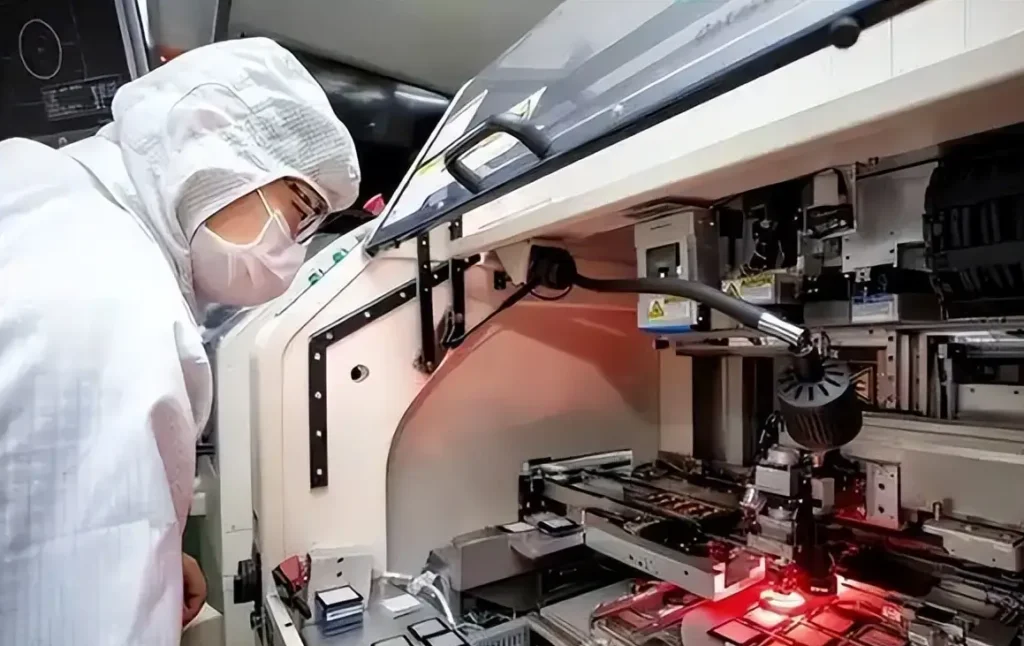
Fluctuations in share prices do not mean factories have stopped operating. TSMC’s capital expenditure in 2026 is expected to reach a record US$52 billion to US$56 billion. Samsung Electronics and SK hynix are both expanding capacity, with much of the additional output dedicated to high-bandwidth memory.
In a written response on July 13, the Bank of Korea acknowledged that “the semiconductor market is continuing to expand, primarily because rapid investment in AI infrastructure is driving sustained growth in semiconductor demand, while the pace of supply expansion continues to lag behind demand.”
Share prices may fall, but the lights on the production lines remain on.
The Real Risks Lie in Capacity, Electricity and Talent
Sentiment in capital markets will eventually stabilise, but the industry’s physical constraints will not disappear.
The first risk is the sword of Damocles represented by excess capacity. Ajit Manocha, president and chief executive of SEMI, has estimated that 64 new semiconductor fabrication plants will begin production across Asia by 2029 at the latest.In a July 13 report, the Bank of Korea said a significant easing of memory-chip supply constraints might not occur until 2028, while the risk of oversupply could emerge between the second half of 2028 and 2029. Major manufacturers have already scheduled their expansion plans through 2029, but no one can guarantee that demand will continue growing quickly enough to absorb the additional capacity.
The second risk is electricity, which is becoming the physical ceiling of AI chip manufacturing. South Korea’s Yongin semiconductor cluster is projected to require 15 gigawatts of electricity, with an additional 27.7 gigawatts needed by 2040. That is broadly equivalent to the generating capacity of around 20 modern nuclear reactors.From packaging and testing plants in Malaysia to wafer fabs in Taiwan and server assembly lines in mainland China, every AI chip carries an enormous electricity bill. Power supply is becoming a resource that may be even more difficult to secure than lithography equipment.
The third risk is the hollowing-out of the talent base. In KPMG’s 2026 Global Semiconductor Industry Survey, 41% of respondents identified talent shortages as the industry’s second most important challenge.Malaysia is facing a shortage of advanced semiconductor design specialists, while some highly skilled workers are moving to Singapore. China’s integrated-circuit industry has an overall talent shortfall of around 300,000 people. Machines can operate 24 hours a day, but training a qualified semiconductor engineer takes at least five years.
The fourth risk is the geopolitical grey rhino. The trend towards technological decoupling between China and the United States has not changed, while the European Union’s carbon border levy is approaching full implementation.Asia’s semiconductor industry depends heavily on international specialisation: Japan supplies materials and equipment, Taiwan manufactures wafers, South Korea produces memory chips, and Malaysia handles packaging and testing. If any one part of this chain is cut off, the entire system could be disrupted.
Asia’s Position Has Become Irreversible
The risks are real, but Asia’s position in the global semiconductor supply chain has become increasingly difficult to reverse.
Asia controls the world’s most complete and concentrated semiconductor production network. From a bottle of Japanese photoresist to a South Korean HBM chip, from a wafer manufactured in Taiwan to a packaging process in Malaysia and a server assembled in mainland China, the region occupies critical positions across the entire chain.Wafers, advanced packaging, high-performance substrates, power components, electricity supply and even cleanroom space have all become hard constraints on the industry’s development. Asia controls key nodes in nearly all of them.
TSMC’s monthly CoWoS capacity is expected to reach between 120,000 and 140,000 wafers by the end of 2026. Samsung Electronics and SK hynix dominate the global HBM market. Japan leads the world in 14 of the 19 core semiconductor-material categories. Malaysia holds around 13% of the global semiconductor packaging and testing market, while mainland China is a major global production base for AI servers.This network has already been woven together, and no one can dismantle it easily.
In an analysis published on July 13, JPMorgan said that although the semiconductor cycle had entered its third year of expansion and was therefore moving into its later stages, the current demand trend continued to exceed historical levels. The bank expected substantial capacity growth to appear only towards the end of 2027 and in 2028.
SK Group Chairman Chey Tae-won offered a more aggressive forecast. He said demand for AI semiconductors could rise by 60% to 100% next year, while overall memory-chip demand could increase by 50% to 60%. Yet major manufacturers had almost no plans for meaningful capacity expansion next year, making a continued widening of the supply-demand gap inevitable.AI has changed Asia. It has kept the region’s factories operating around the clock, delivered unprecedented wages to parts of its industrial workforce and placed Asian supply chains at the centre of the global economy.
But Asia is also shaping AI. Without the region’s manufacturing capacity, AI would remain a collection of algorithms confined to laboratories.
Markets will fluctuate and capital may retreat, but production lines will not simply stop. In 2026, the combined capital expenditure of Asian semiconductor manufacturers surpassed US$136 billion. By 2029, 64 new wafer fabs are expected to begin operating across the region.
Cooling does not mean disappearance. After the excitement fades, the factories, equipment, processes and talent that remain will constitute Asia’s real wealth.
Those who failed to keep pace during the hottest stage of the boom may discover, when the market turns cold, that they have already fallen far behind. During these years of rapid expansion, Asia has embedded itself in nearly every critical node of the global semiconductor supply chain.
Commentary
Asia’s New Chapter Is Still Being Written
As this series was approaching publication, a new set of figures arrived from across the Pacific.
On OpenRouter, a platform that aggregates access to AI models, the share of Chinese models used by US companies, measured by the volume of tokens processed, exceeded 30% from February 2026 and reached a peak of 46%. That represented an increase of more than tenfold from the roughly 4% recorded in the first half of 2025.
The reason is straightforward: some Chinese AI models cost only around 1% as much as high-performance US models. Anthropic’s Claude charges US$25 to generate one million output tokens, while the most popular DeepSeek model costs just US$0.18.
Coinbase has reportedly made Chinese large language models the default tools for its engineers. US AI start-up Lindy transferred all of its AI traffic from Claude to DeepSeek, saving several million dollars within a matter of months.
Researchers at the Brookings Institution have said Chinese models remain approximately six to nine months behind the leading US frontier models, while performing almost equally well on certain tasks. Chinese companies are using performance that is “good enough” and costs as little as 1% of rival services to redefine the benchmark for value in AI applications.
From chips to servers, and from semiconductor packaging and testing to AI models, Asia’s story is extending beyond manufacturing into the definition of the technology itself.
The transformation is not over.Asia’s next chapter is still being written.