The Conscience of a City Lies Underground
Written by Riky and Li Da
Photography by Wan Ge
Tokyo’s Roads and Sewers Through the Eyes of a Chinese Engineer
October 4, Sunday. Wearing work clothes, Zhao Gang drove a small engineering vehicle and took us from Tokyo’s Kita Ward toward Taito Ward.
Along the way, almost every stretch of road or roadside construction site seemed to trigger a memory.
As we passed an intersection, he pointed ahead. “We worked on this road. That sewer over there was ours too.”
A little farther on, he recognized another project completed 15 years ago and asked with unmistakable pride: “Look at it now. Fifteen years later—how is it?”
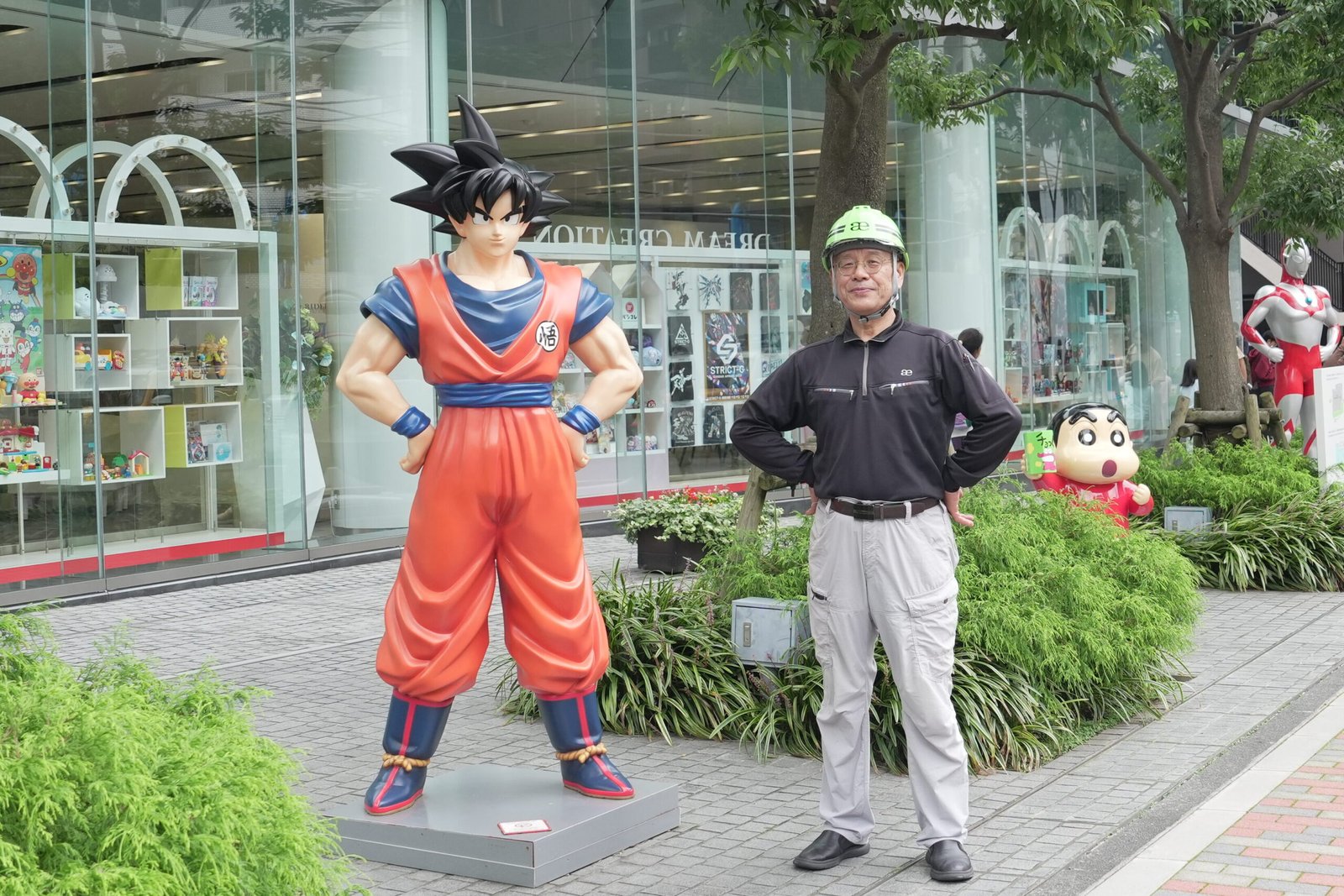
Zhao has been building roads for nearly four decades.
When he first came to Japan, he wanted to learn more professional skills so he could do the work properly. At the time, some Japanese colleagues were cautious about trusting him as a foreigner. Zhao did not argue much. He simply said:
“I want to change your prejudice against Chinese people through what I do.”
He started from basic construction and subcontracting work, gradually building his own team and eventually earning the qualifications needed to participate in Tokyo public-works tenders.
“The longer I worked, the more I realized that sewer construction is truly a matter of conscience,” Zhao said.
By “a matter of conscience,” he means work that disappears underground once it is completed. Ordinary people will never see what materials were used, whether each layer was properly compacted, or whether pipe joints were securely installed.
For a while, poor workmanship may look no different from good workmanship.
Years later, however, the road may begin to sink after heavy rain, or poor drainage may turn an intersection into a pool of standing water.
The places no one can see are often where integrity matters most.
Tokyo is where Zhao built roads, built a career and built a life. But he still thinks often about his hometown in Northeast China. One day, he says, he hopes to use what he has learned to give something back.
From Changchun to Tokyo: An Engineer’s Turning Point
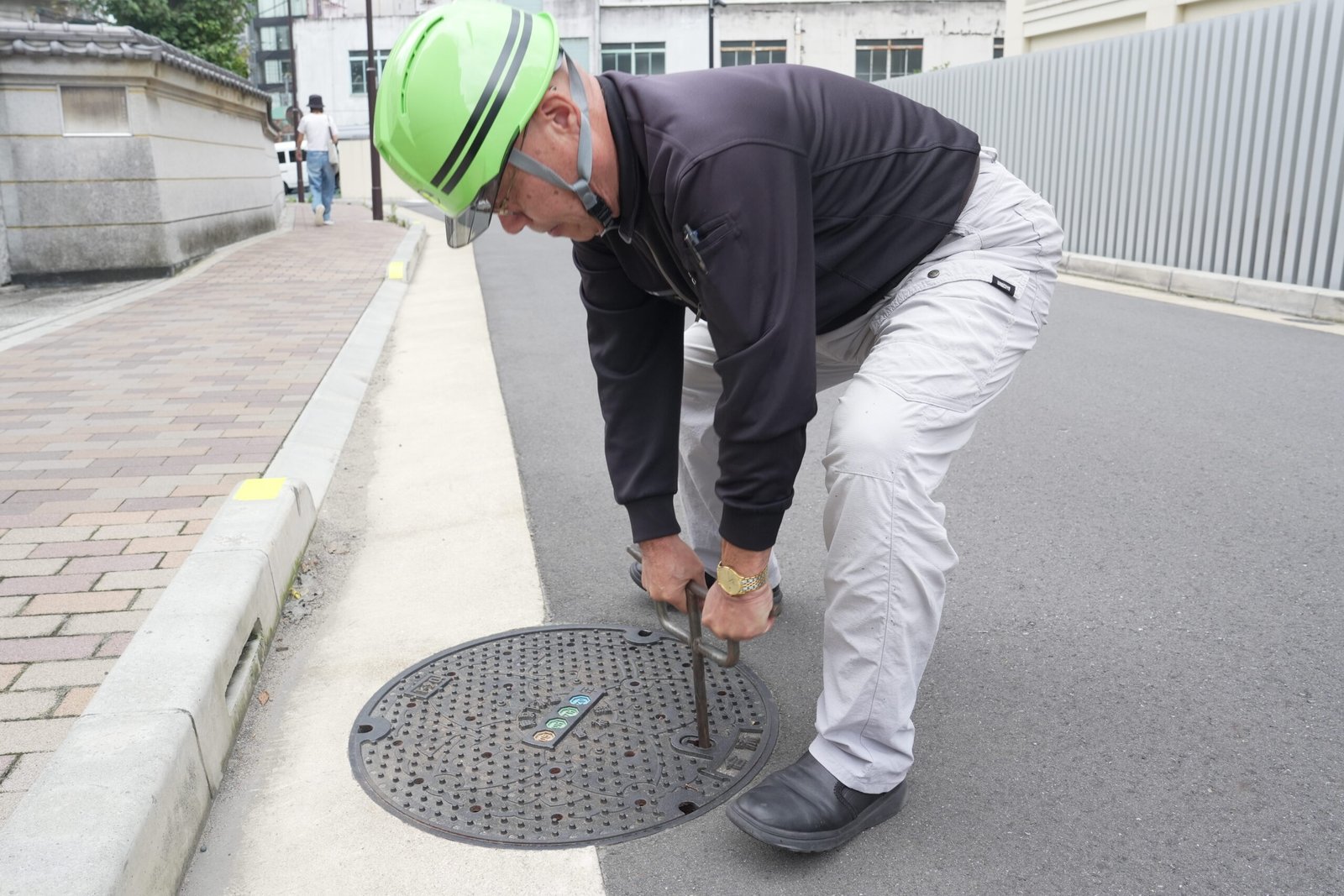
Zhao once worked an ordinary municipal-related office job in Changchun.
One evening after work, heavy rain flooded the streets. Zhao and several colleagues were wading through the water when they suddenly realized one person was missing.
Looking around, they saw him climbing out of an uncovered manhole.
Fortunately, it was not deep enough to cause serious harm.
“If it had been deeper, who knows what would have happened,” Zhao recalled.
The incident made him understand for the first time that manhole covers, roads and drainage systems are directly connected to human safety.
He later moved to Fukuoka, Japan, where he studied Japanese and worked part-time. After graduation, his skills in road drafting and surveying helped him find work in road and sewer construction.
His goal, he says, was simple: learn practical skills that might one day be useful back home.
His Japanese employer did not fully trust him at first, but Zhao gradually proved himself through one construction site after another. Over time, recognition became trust. His employer even traveled with him to China for inspections.
Zhao’s toughness was not directed only at himself.
Once, a Japanese coworker arrived at a job site smelling of alcohol and mistreated several Chinese technical trainees under Zhao’s supervision. Zhao walked into the site hut and told the man to leave for the day. He then called the boss and explained exactly what he had done.
The boss supported his decision.
Years later, Zhao still remembers where those trainees eventually went. He also recalls helping some of them establish themselves in Tokyo, recommending jobs and acting as guarantor.
He has never forgotten an Australian who helped him during his early years in Fukuoka. When Zhao once asked how he could repay the kindness, the man told him:
“Help someone who is in greater difficulty than you. That will be repayment enough.”
Decades later, Zhao still carries those words with him.
The Invisible “Layer Cake” Beneath the Road
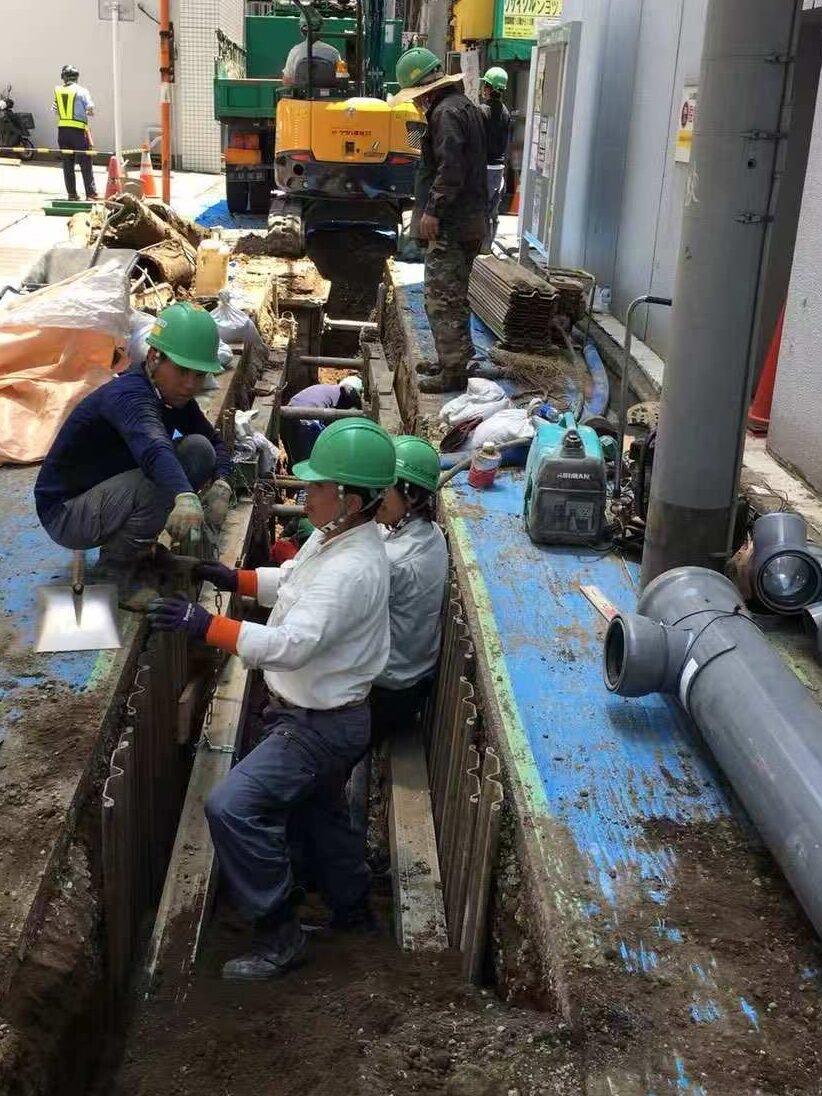
To most people, road construction looks simple: lay asphalt and flatten it.
In reality, Zhao says, a road is more like a layer cake.
The asphalt people see every day is only the surface. Beneath it are base courses, sub-base layers and the roadbed that carry the actual load.
“If the legs of a table aren’t stable, polishing the tabletop won’t help,” Zhao explained.
If the foundation beneath the road is loose, even a perfectly smooth surface will eventually crack or sink under repeated vehicle loads and rainwater.
In Tokyo, trucks may enter city areas during designated times and along approved routes, Zhao said, but overloading is strictly prohibited. The rule protects not only traffic order but the road itself.
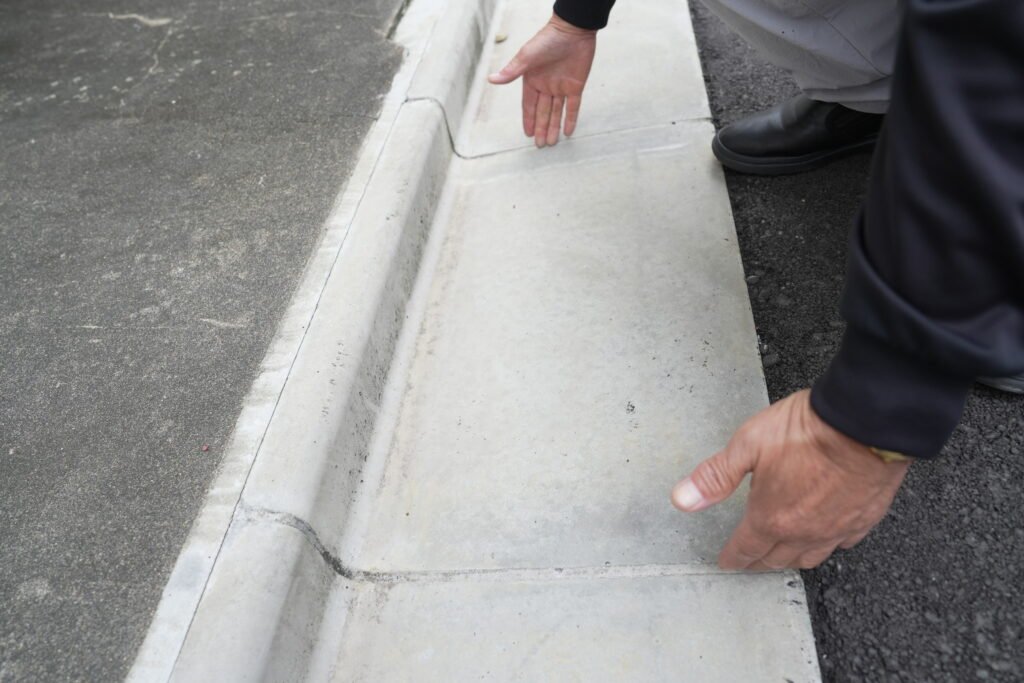
Near the Former Iwasaki Residence Garden, Zhao pointed to a concrete block beside the road.
“Materials like this are part of our projects too,” he said. “Whenever we win a municipal project, many manufacturers come to us with quotations.”
Many road components—curbs, drainage channels, covers and catch basins—are prefabricated in factories and transported to the site for installation. It works almost like assembling building blocks, reducing on-site pouring and curing time and allowing roads to reopen more quickly.
But prefabrication cannot solve everything.
Older neighborhoods have narrow streets and dense underground networks of electricity, gas, telecommunications, water and sewer pipes. Irregular spaces still require crews to adapt to conditions on site.
Why So Much Work Happens at Night
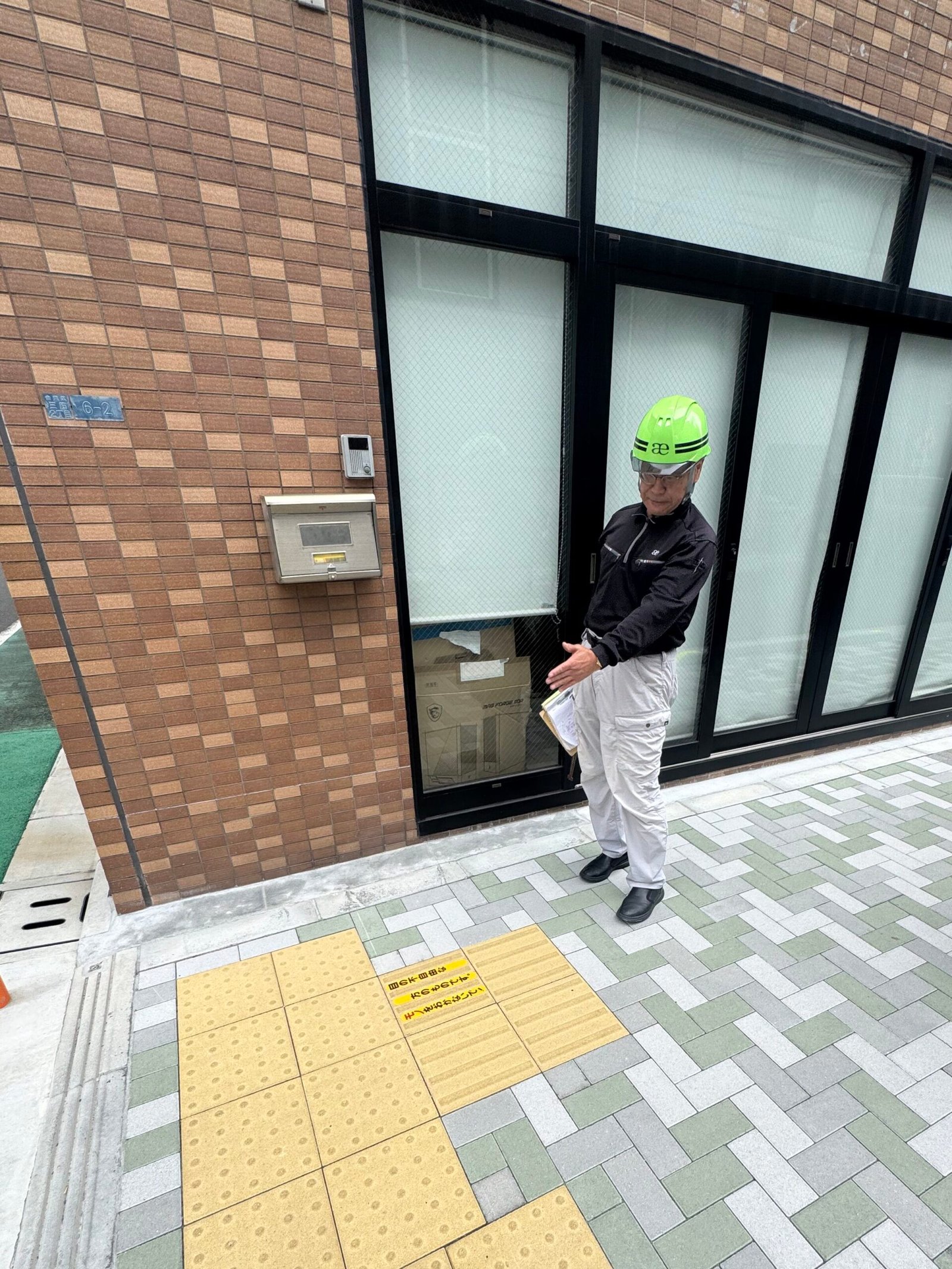
“In Tokyo, most road construction has to be carried out at night,” Zhao said.
Once the approved work period begins, crews set up barriers and warning signs, assign staff to guide vehicles, cut open the road and begin excavation.
When the permitted hours end, even if the day’s work is unfinished, the opening must be covered with steel plates or temporarily restored so pedestrians and vehicles can pass normally.
“Doesn’t that make the work too slow?” we asked.
Zhao smiled.
“Finishing a certain number of meters in one day is one kind of efficiency. But if you disrupt the lives of nearby businesses and residents, and disturb everyday traffic, isn’t that also part of efficiency?”
That is why road works in Tokyo require more than construction crews. Dedicated traffic controllers and safety staff are also needed.
Where barriers can be placed, when work can start and what time the road must reopen all have to be confirmed in advance.
Underground Infrastructure Cannot Simply Stop
Zhao compares roads to human skin and sewers to blood vessels.
“If the blood vessels are blocked, eventually the surface will have problems too.”
When major cities face heavy rain, roadside drains alone are not enough. Underground pipe networks, storage facilities and flood-control systems must work together.
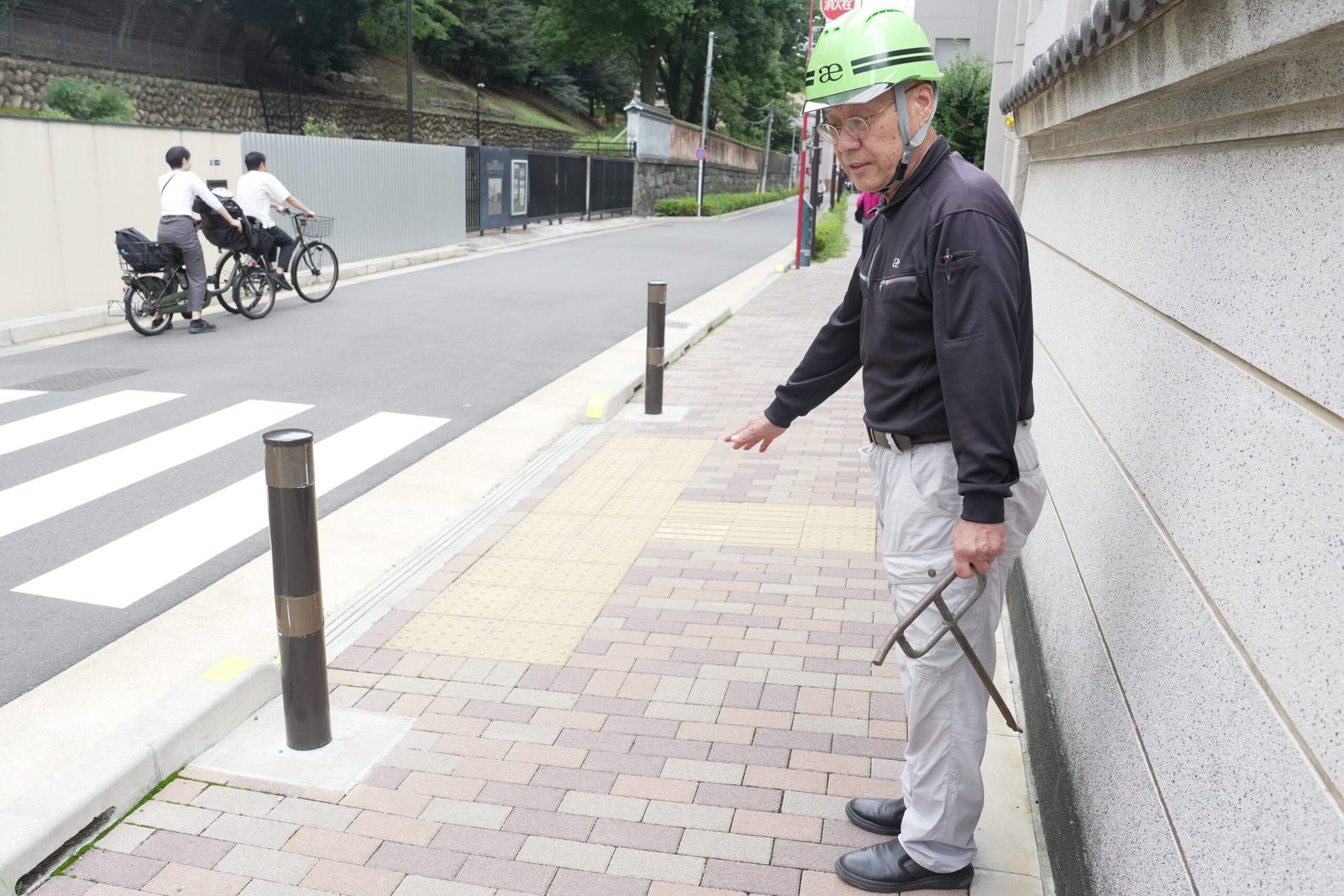
These projects are expensive, take years to build and remain largely invisible once completed. Unlike landmark buildings, they rarely attract attention.
But when extreme rain arrives, their importance becomes obvious.
“No matter who is in charge, critical infrastructure projects like these cannot simply change with leadership,” Zhao said.
Behind that remark is both his respect for Japan’s long-term planning and his concern for his hometown.
High-quality construction can keep a road smooth for more than a decade. A well-designed drainage system can keep streets functioning even during heavy rain.
If the opportunity comes, Zhao says, he wants to bring those lessons back to municipal construction in Northeast China.
No Banquets to Win Public Contracts
We asked Zhao whether contractors handling municipal projects need to invite government officials to dinner.
“No. No. No. Absolutely not,” he replied immediately.
“But you know each other, right?”
“Of course we do. But we don’t even offer them water.”
That answer captures much of Zhao’s personality. He speaks directly and pays close attention to the boundaries of rules.
In his view, public contracts are not won through dinners or gifts. Companies participate in online tenders, and what matters is the quality of previous work, project evaluations and the number of qualified professionals on staff.
Some people describe Japan’s public-works market as simply “winning based on ability.”
Zhao shook his head.
“It sounds easy when you say it like that. Without more than ten years of hard work, how could the local government possibly recognize you?”
A company may begin as a subcontractor. If it performs well, earns strong project evaluations and gradually builds up its qualifications and credibility, it may eventually compete directly for more public projects.
Here, “trust” is not a slogan.
It is a record built through work that can be tested by time.
How deep the ground was excavated, what materials were used and how each layer was constructed all have to be inspected and photographed. Records are kept before, during and after construction. When the project is completed, photographs, test results and written documents become part of the inspection record.
If serious problems emerge in hidden works, the contractor may have to redo the work and absorb the losses. Its project rating and reputation may also suffer, affecting future bids.
But Zhao does not believe conscience alone is enough.
“Relying only on conscience doesn’t work either. That’s no guarantee,” he said. “In the end, you still need a system to guarantee quality.”
Conscience is the builder’s responsibility. Documentation, testing and evaluation are the mechanisms that keep quality under control.
For roads people see every day—and sewers they never see at all—the work must leave behind records that can be checked.
Walking the Same Road Fifteen Years Later
The vehicle continued forward.
Whenever Zhao passed a place where he had once worked, he could not help looking again.
Projects completed 15 years ago are still functioning normally.
For him, that carries more weight than any polished statement.
“I measured all of this. I organized the work,” he said, with pride but little embellishment.
Zhao’s name is not written on the pavement, nor engraved on the pipes underground. Most residents nearby will never know that parts of these roads were built under the supervision of a Chinese engineer.
Yet the reliability of a city often depends precisely on these nameless, invisible processes.
Doing good work where everyone can see is not difficult.
The real test is whether people still build every unseen layer properly when no one is watching.
The conscience of a city is hidden in the places we cannot see.