


Hong Kong’s financial market has once again seen a shift in interest rates, with the three major issuing banks moving in unison to lower rates, providing a boost to the local economy and property market.
After the U.S. Federal Reserve restarted its rate-cut cycle for the first time in nine months, Hong Kong’s three major issuing banks announced on September 18, 2025, that they would simultaneously lower their prime rates (P) by 0.125 cent.
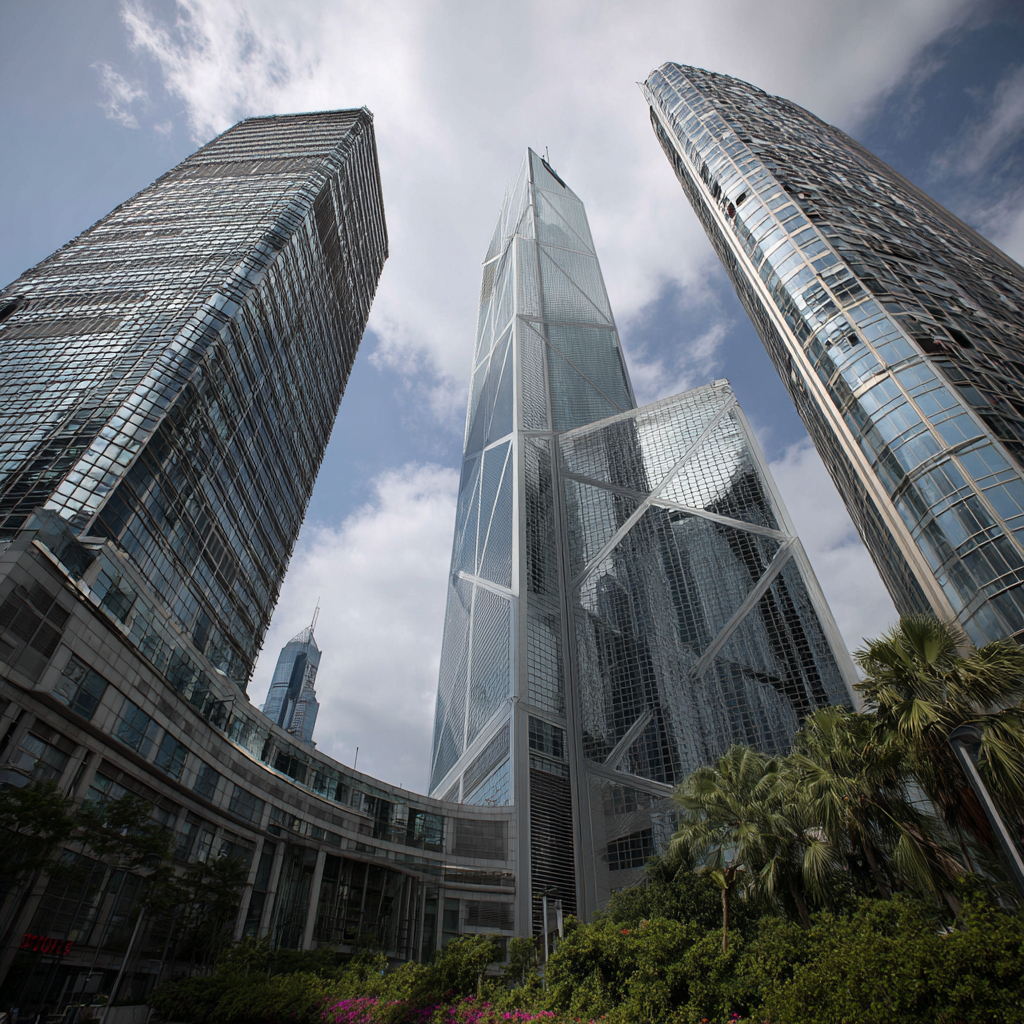
HSBC and Bank of China (Hong Kong) both reduced their prime rates from 5.25% to 5.125%, while Standard Chartered Hong Kong lowered its rate from 5.5% to 5.375%. This rate cut is another adjustment in Hong Kong’s interest rate cycle, which began last September. HSBC alone has reduced its rate by 0.75% in total.
01 Banks’ Rate Cut Decisions and Differences
As expected, the Federal Reserve cut its rates by 0.25%, lowering the federal funds rate to 4-4.25%. The Hong Kong Monetary Authority (HKMA) followed by adjusting the base rate, creating room for the banks to lower their rates.
The three major issuing banks in Hong Kong responded quickly after the Fed’s action, but the rate cut was not fully aligned with the U.S. Fed’s. HSBC was the first to announce the rate cut, with the new prime rate of 5.125% coming into effect on September 19.
Bank of China (Hong Kong) and Standard Chartered Hong Kong both stated that their new rates would take effect on Monday, September 21.
In addition to the prime rate, the three banks also lowered their Hong Kong dollar savings deposit rates. HSBC reduced the rate for deposits over 5,000 HKD by 0.125%.
Bank of China (Hong Kong) and Standard Chartered Hong Kong also adjusted their respective deposit rates.
There are some differences in the rate adjustments between the banks. The Chairman of the Hong Kong Association of Banks, Ching Wai-yee, explained that the extent of the prime rate cut depends on various factors specific to each bank, such as operational factors and the structure of their balance sheets.
02 HKMA and Market Experts’ Reactions
HKMA Chief Executive Eddie Yue expressed approval of the rate cut, stating that the lower rates would help ease the debt burden of individuals and businesses, positively impacting the economy and property market.
However, he also warned that there is still uncertainty surrounding the pace of future rate cuts by the U.S. Federal Reserve, especially considering the weaker-than-expected U.S. labor market, high inflation, and potential impacts on economic activity from tariff measures.
Eddie Yue emphasized, “Citizens need to fully consider and manage interest rate risks when purchasing property, investing, or borrowing. The HKMA will continue to closely monitor market changes and maintain monetary and financial stability.”
The Fed’s dot plot suggests that there could be an additional 0.5% rate cut in the U.S. within this year, but Eddie Yue pointed out that there remains significant uncertainty.
The banking industry remains optimistic about the rate cuts. Ching Wai-yee indicated that if the U.S. economy and employment data remain weak, the Fed is likely to cut rates further within this year.
Bank of China (Hong Kong) economist Zeng Zhiteng predicts that Hong Kong’s rates will follow the U.S. rate decreases, which would help lower corporate financing costs and increase businesses’ willingness to expand capital expenditure.
03 The Actual Impact of Rate Cuts on the Property Market and Economy
The rate cut directly reduces the burden on mortgage payers. For example, on a loan of 5 million HKD over 30 years, the monthly repayment would decrease by about 347 HKD after the rate cut.
This adjustment comes as Hong Kong’s property market transitions from an interest rate hike to a rate cut phase. Compared to 2023, the cost of entering the property market has significantly decreased. For the same 5 million HKD loan, the total interest in 2023 would have amounted to 3.72 million HKD, but with the recent rate cut, the total interest payment drops to about 2.96 million HKD, saving over 760,000 HKD.
Chao Tak-ming, Chief Vice President of Mortgage Referral at Mings Mortgage, noted that the major banks’ prime rate cuts will not only reduce interest payments for property owners, thus easing repayment pressure immediately, but also boost public confidence in entering the property market, increasing transaction volumes.
OCBC Wing Hang Bank’s economist Jiang Jing pointed out that while Hong Kong banks have room to follow the U.S. rate cuts, there are differing expectations in the market regarding the extent of the rate cut. She believes the market has largely priced in the rate cuts, and that Hong Kong rates and the Hong Kong dollar exchange rate are mainly influenced by short-term factors, such as southbound capital flows and fundraising activities.
04 Future Rate Outlook and Risk Warnings
Looking ahead, Ching Wai-yee believes that if the U.S. economy and employment data remain weak, the Fed could further cut rates within this year.
However, uncertainty remains. Eddie Yue specifically mentioned, “The extent and pace of U.S. rate cuts remain uncertain, which will also affect Hong Kong’s interest rate environment.” He pointed out risks such as the weak U.S. labor market, high inflation, and the potential impact of tariff measures on economic activity.
As for the outlook for Hong Kong’s property market, experts believe that the rate cut is just one of many factors at play. Eddie Yue stated that in addition to interest rates, the property market is influenced by factors such as supply and demand and the overall economic environment.
Chao Tak-ming predicts that the rate cut will lead some banks to adopt a more aggressive stance on mortgage business, which, in combination with the government’s recent relaxation of mortgage measures, will have a positive effect on the mortgage market.
Zeng Zhiteng from Bank of China (Hong Kong) added that the Fed’s rate cut could help offset global economic downside risks to some extent, stimulate manufacturing activity, and benefit Hong Kong’s trade activities.
With ample liquidity in the banking system, Hong Kong dollar HIBOR rates may continue to fall, and Hong Kong’s interest rate environment is expected to enter a new phase of monetary easing. Chao Tak-ming noted that the rate cuts are encouraging some banks to take a more proactive stance on mortgage business, and combined with recent government measures to ease mortgage requirements, this will bring positive effects to the mortgage market.
The rate cuts’ stimulative effect will not be limited to the property market. Zeng Zhiteng also noted, “Hong Kong’s interest rates will fall along with the U.S. rates, which will help lower corporate financing costs and increase businesses’ willingness to expand capital expenditure.”
Hong Kong is entering a new cycle of gradually decreasing funding costs, which is a positive signal for business investment, the real estate market, and overall economic development.