

(Asia Financial Observer reporter Kelly, Tokyo, Nov. 28)
Japan’s Ministry of Education, Culture, Sports, Science and Technology (MEXT) has recently decided to increase the proportion of high school students choosing the science track from the current 27% to around 39% by 2040. The initiative aims to cultivate more STEM talent to support Japan’s competitiveness in fields such as artificial intelligence.
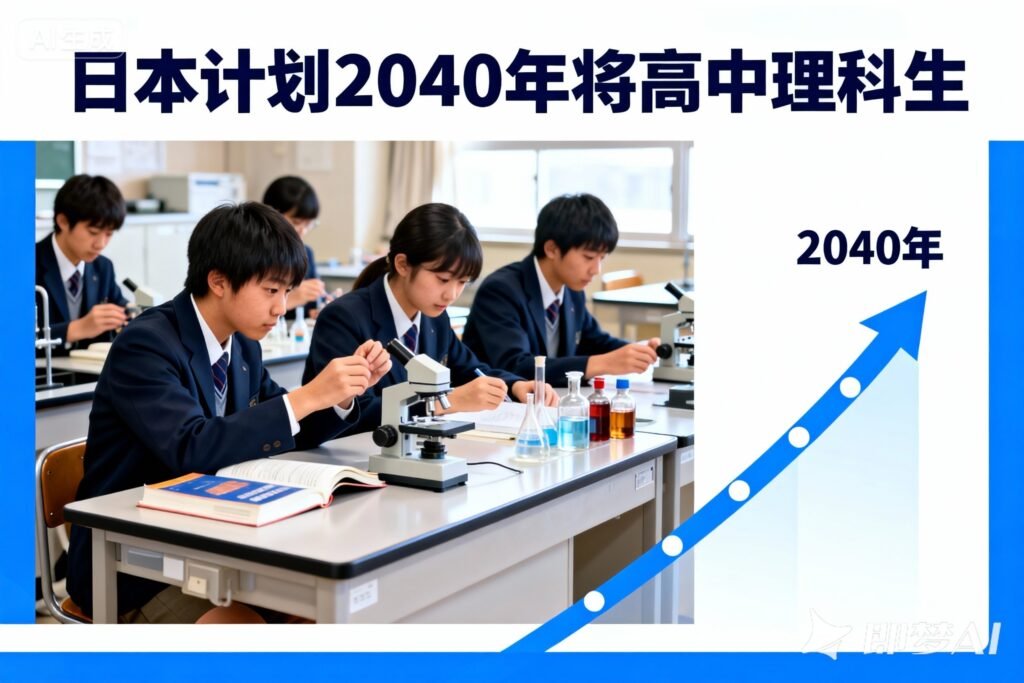
According to MEXT statistics, among the approximately 950,000 third-year high school students in 2024, 47% of general-track students applied for humanities programs, while only 27% chose science. Behind this trend are factors such as the relatively low interest in science among female students and a widespread belief among parents that “giving up science early to raise academic deviation scores and enter top universities in major cities is a safer option.”
Japanese media report that the Ministry of Economy, Trade and Industry estimates a shortage of about 3.3 million professionals with strong mathematical and scientific skills by 2040, while administrative and sales workers—mainly from humanities backgrounds—are expected to be oversupplied by about 3.2 million.
Under the new plan, MEXT aims to raise the proportion of science-track students to 39% and humanities-track students to 30% by 2040. It also plans to increase the percentage of specialized high school students—such as those in industrial and commercial programs—from 20% in 2024 to 26%, in order to develop specialized talent for regional industries.
To achieve these goals, the Japanese government will implement measures including:
Educational support: Increased funding for science education, improved curriculum design and laboratory facilities. MEXT is considering establishing a fund of 300 billion yen in fiscal year 2026.
Science and technology immigration policies: Attracting international STEM talent to help mitigate domestic shortages.