

(By Li Da, Asia Financial Observer, Tokyo – Nov. 24)
In today’s world of information overload and relentless pace, anxiety and pressure hang in the air like an invisible haze, permeating every corner of life. People run between tasks and deadlines, their thoughts caught between regret over the past and fear of the future, while the most precious “present moment” slips quietly away.

Studies show that more than 70% of working adults experience long-term stress and anxiety, and students likewise suffer heavy psychological burdens under intense academic competition. We seem endlessly preparing for the “next stop,” forgetting that life itself is a journey—not a destination.
Yet the way out may lie in what we often overlook. The Buddha once taught: “The past mind cannot be grasped; the present mind cannot be grasped; the future mind cannot be grasped.”
The truth of life is that the only moment we can truly experience and hold is now. Zen practice and present-moment awareness offer a key that guides us back to this moment and toward the essence of life.
Zen Practice and Present Awareness: Inner Training Beyond Form
Zen practice is far more than the outward act of sitting cross-legged. Its essence lies in profound mental training. It seeks to tame the mind—constantly grasping and scattered in the secular world—so it gradually becomes focused, clear, and calm.
From Bodhidharma’s nine years of wall-gazing to Steve Jobs drawing innovative insight from Zen meditation, countless examples show how the practice helps people transcend cognitive limits and access the source of wisdom. Scientific research also demonstrates that long-term meditation enhances the development of the prefrontal cortex, improving concentration, emotional regulation, and self-awareness.
Closely connected is present-moment awareness, the ability to observe one’s mind and surroundings without judgment. It invites us to fully engage in each experience:
feeling the contact between feet and ground while walking, tasting the true flavor of food when eating, sensing the subtle rise and fall of sound while listening.
This awareness pulls us out of the whirlpool of thought, allowing ordinary moments to reveal their long-neglected vitality and beauty.
The Union of Zen and Awareness: A Path of Stress Relief and Awakening
In an era where stress has become normal, combining Zen practice with present awareness offers a sanctuary for the mind.
Focusing attention on one’s breath or bodily sensations helps us loosen our grip on the past and release fear of the future, restoring inner calm.
Even a few minutes of meditation during work breaks can effectively relieve anxiety and improve clarity when facing challenges.
This practice is also a journey of deepening self-understanding. Through mindful observation, we watch thoughts arise and fade, notice emotional ripples like a witness, and begin to break habitual reaction patterns.
Writer Zhang Defen’s personal transformation is a vivid example: through meditation and awareness, she recognized her dependence on external validation and began an inward search, leading to spiritual renewal and authentic growth.
Integrating Practice into Daily Life: From Sitting Meditation to Every Moment
The true power of Zen lies in integrating its spirit into every moment of daily living:
Breathing Meditation
Using the breath as an anchor, gently returning wandering attention to the present, cultivating focus and calm.
Body Scan
Systematically sensing each part of the body to release accumulated tension, rebuild mind–body connection, and deepen presence.
Everyday Mindfulness
Transforming walking, eating, washing, and other mundane activities into opportunities for practice—
fully sensing the lift and fall of each step, the taste of food, the touch of water on the skin.
Thus, Zen becomes not limited to a specific place or time, but a way of living.
Resonance Across Fields: The Contemporary Value of Zen
From Chen Kun’s twenty years of practice to the experiences of Huang Xuan, Liu Yifei, and many other public figures, Zen meditation has quietly become a form of universal life wisdom.
No longer confined to traditional spiritual disciplines, it has emerged as an effective approach to coping with modern psychological challenges and improving quality of life, offering guidance for countless urban individuals seeking inner balance.
Conclusion
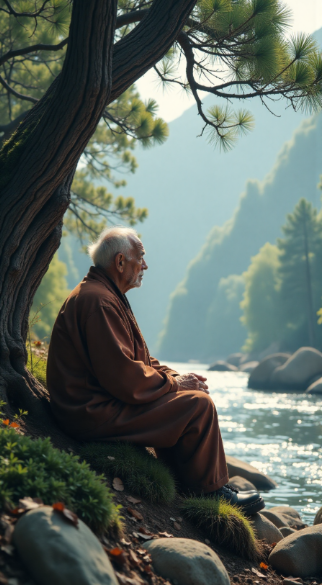
Life’s richness is not found elsewhere—it resides in every breath, every step, every taste of a meal.
Zen practice and present-moment awareness are pathways to reclaiming that richness. They do not promise instant liberation from all troubles, but they guide us to face life with greater clarity and composure.
May we all embark on this inward journey, building a sanctuary of stillness amid the noise, awakening in the ordinary, and living the depth and authenticity of our lives.