


Prologue | What Is Happening to the World?
This year, the world has never been short of news.
Markets fluctuate daily, policies are rolled out one after another, technologies advance at breakneck speed, and the flow of capital and data seems endless.
Yet amid this constant noise, one fundamental question has grown clearer, sharper, and more urgent—
What, exactly, is happening to the world?
Why has money never been more abundant, while the sense of personal wealth feels increasingly scarce?
Why do macro tools keep appearing, yet micro-level anxiety refuses to recede?
Why do technological frontiers expand rapidly, while our sense of security subtly retreats?
Why are market narratives as lively as ever, while the real stories of the economy are harder and harder to tell?
These questions transcend borders and cut across social strata.
They echo simultaneously in Europe and the United States, across Asia, Africa, and Latin America; they manifest in nations large and small, and are embedded in corporate balance sheets, household decisions, and individual life planning.
This is not the shock of a single event, but the impact of a moment when many “once-taken-for-granted rules” appear to be failing at the same time—producing a widespread and visceral sense of dislocation.
This is why we launch this year-end observation.
Not to offer a simple answer, but to return to the concrete realities on the ground—
to the profit-and-loss lines of businesses, the consumption lists of families, the testing grounds of policy, the hesitation points of the market, and the Z generation oscillating between “hyper-competition” and “lying flat.”
By linking signals that seem isolated on the surface, we seek to uncover the deeper connections behind them.
If the world is indeed facing a certain predicament, perhaps it is not because it has suddenly deteriorated.
Rather, it may be because we are still holding an old “blueprint” while trying to measure an era whose underlying logic has already been reshaped.
This is what we aim to document and present—
a deep inquiry into the world we live in today.
What is happening to the world?
(By Yuanyin,reporting from Tokyo on the 8th)As one of Central Asia’s most agriculturally promising countries, Kazakhstan has been steadily increasing its presence in the global livestock market. Yet its ambitions extend much further. Leveraging its strategic geographical connectivity, the country is accelerating its global market deployment.
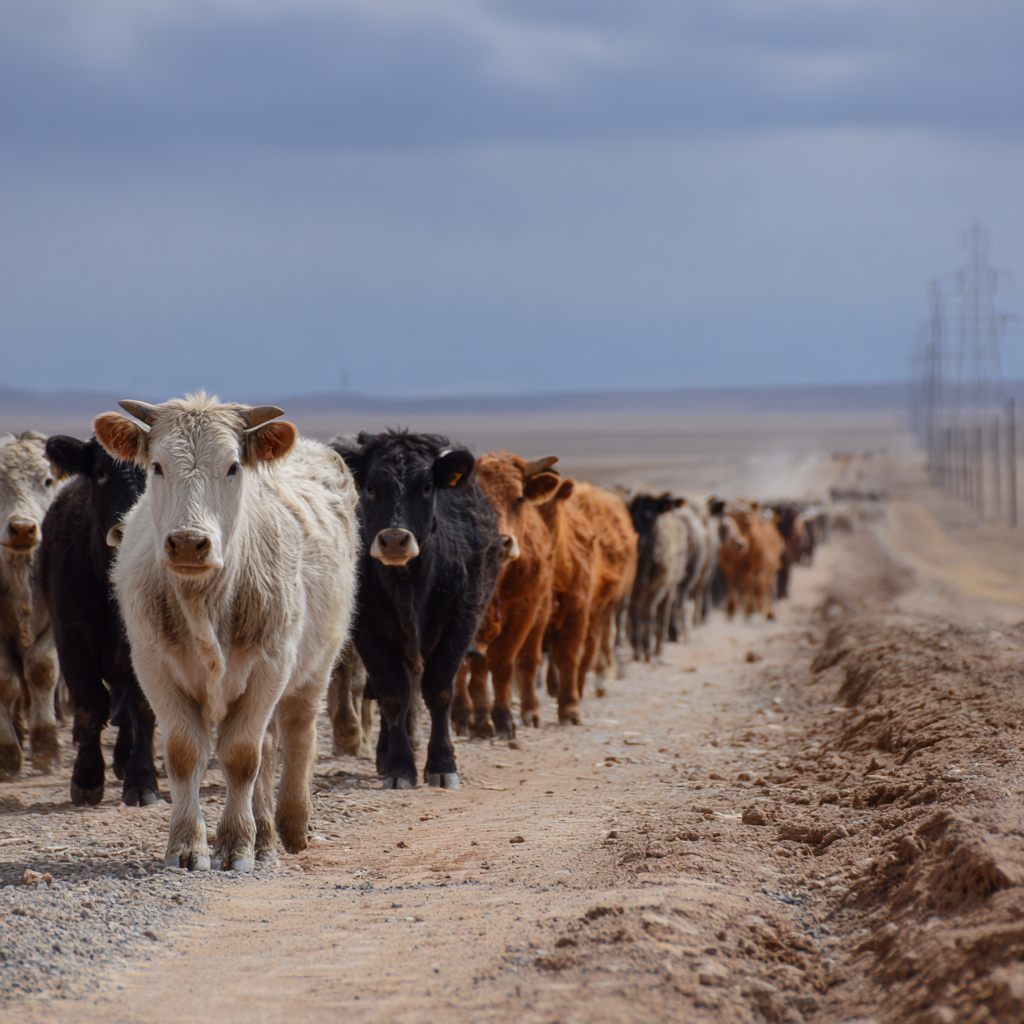
Particularly in 2025, which is about to conclude, Kazakhstan’s livestock sector has shown stable growth, resilience, and a higher degree of openness under the combined effects of policy support, capacity expansion, market liberalization, and faster international cooperation. The latest data show continued increases in meat and dairy production as well as livestock inventories. Meanwhile, diversified export markets have enabled the dairy and meat industries to transition from a domestic foundational sector to an emerging global supply-chain node.
Rising Capacity: Dairy and Meat as Core Drivers of Agricultural Growth
As one of Central Asia’s largest agricultural and pastoral economies, Kazakhstan has long relied on its vast grasslands and natural grazing environment to develop the livestock industry. These conditions provide stable production environments for cattle, sheep, horses, and other livestock. Natural grass-fed systems and antibiotic-free farming also give Kazakh livestock products strong appeal in global health food and green food markets.
In 2025, Kazakhstan’s agricultural sector continued its growth trend: total agricultural output for January–August reached 3.6 trillion tenge, up 3.4% year-on-year. Livestock remained the main driver, with livestock output rising 3.2% over the same period—making it a key contributor to overall agricultural growth.
Major products showed stable increases as well: meat production was 696,200 tons (live weight, +1.9% YoY), milk output reached 2.6252 million tons (+6%), and egg production hit 3.0117 billion units (+1.2%). Livestock inventories also increased (as of August): 8.6 million cattle, 4.5 million horses, 299,800 camels, and 46.9 million poultry. The ongoing growth in herd numbers provides a solid foundation for expanded processing and export capacity.
Livestock farming not only supports rural employment and agricultural stability but is also one of Kazakhstan’s traditional strengths. As the agro-industrial complex upgrades, processed products now account for 52% of agricultural exports, demonstrating significant progress in value-chain expansion and value-added enhancement.
Exports: Dairy and Meat Products Leap Over Global Market Barriers
Over the past two years, livestock products have been among the fastest-growing components of Kazakhstan’s exports. According to the Ministry of Agriculture, agricultural exports increased to USD 5.1 billion in five years, with export destinations expanding to 66 countries—livestock products being the strongest growth segment.
This year’s export growth features three major traits: enhanced competitiveness, broader market reach, and institutional breakthroughs.
As multiple countries open market access, Kazakh livestock and agro-industrial products are accelerating their global expansion. Export partners now span over 15 countries and regions, including the EU, Gulf countries, East Asia, and the CIS, with export value recording significant growth for five consecutive years.
According to the Ministry of Agriculture, agricultural exports grew 51% over the past five years to USD 5.1 billion, covering 66 countries. Processed products account for 52% of the export structure.
A total of 3,702 Kazakh companies are currently listed in partner countries’ approved import registries, including 3,339 in the Eurasian Economic Union, 57 in China, 63 in the EU, 101 in Uzbekistan, 13 each in the UAE and Iran, 47 in Japan, 16 in Turkey, 5 in South Korea, 43 in Saudi Arabia, and 9 in Azerbaijan.
In China-Kazakhstan trade, multiple veterinary and quarantine agreements have been signed covering slaughtered cattle, cowhides, poultry and by-products. In addition, negotiations are progressing on market access for kumis (fermented mare’s milk), dried mare’s milk, heat-processed meat products, chilled beef, mutton, and pork. Nine Kazakh companies have been included for the first time in China’s “non-food product list,” further expanding trade categories.
In Europe, Kazakhstan has obtained EU export approval for honey and is exploring export opportunities for kumis and aquaculture products. In Asian markets, Kazakhstan is negotiating with Japan, South Korea, Southeast Asian countries, and Gulf states on exporting live horses, mare’s milk, camel milk, ice cream, and other products.
Constraints: Low Scale, Insufficient Cold Chain, and Technology Dependence
Despite strong momentum, Kazakhstan’s livestock sector still faces structural challenges.
First, the scale of production remains small—only 3% of farms are large-scale operations. Automation and mechanization levels are low, and smallholders remain the majority.
Cold-chain and logistics shortcomings remain critical bottlenecks. Insufficient cold-chain coverage, high cross-border transport costs, and inadequate rural storage facilities limit the long-distance export potential of dairy and chilled meat products. Furthermore, Kazakhstan faces weaknesses in seed and breeding systems, ongoing dependence on imported breeding cattle and sheep, an underdeveloped genetic improvement system, and a shortage of livestock science and technology personnel. These factors constrain the country’s ability to compete in high-value product segments.
Based on 2025 data and policy trends, Kazakhstan’s livestock sector is undergoing a transformation driven by four forces: capacity expansion, processing enhancement, market opening, and institutional reform. While production continues to rise, inventories grow, international market access expands, and industrial modernization accelerates, the sector still faces major constraints—low scale, lagging cold-chain development, and dependence on foreign technologies.
As processing capacity improves, dairy modernization advances, broader market access is secured, and cooperative and logistics systems develop, Kazakhstan’s dairy and meat industries are expected to undergo structural upgrading in the coming years, becoming the core engine of agricultural exports and occupying an increasingly important role in the global livestock supply chain.