


On November 13, the Vietnamese National Assembly officially approved a development plan targeting GDP growth of more than 10% in 2026 compared with the previous year. This marks the first time since 2010 that Vietnam has set an annual double-digit growth target.
Earlier, in its January edition of the Global Economic Prospects report, the World Bank projected Vietnam’s GDP growth in 2026 at only 6.3%—significantly lower than the government’s newly announced target. However, the Vietnamese government has been intensifying its policy efforts and rolling out a series of measures to accelerate growth.
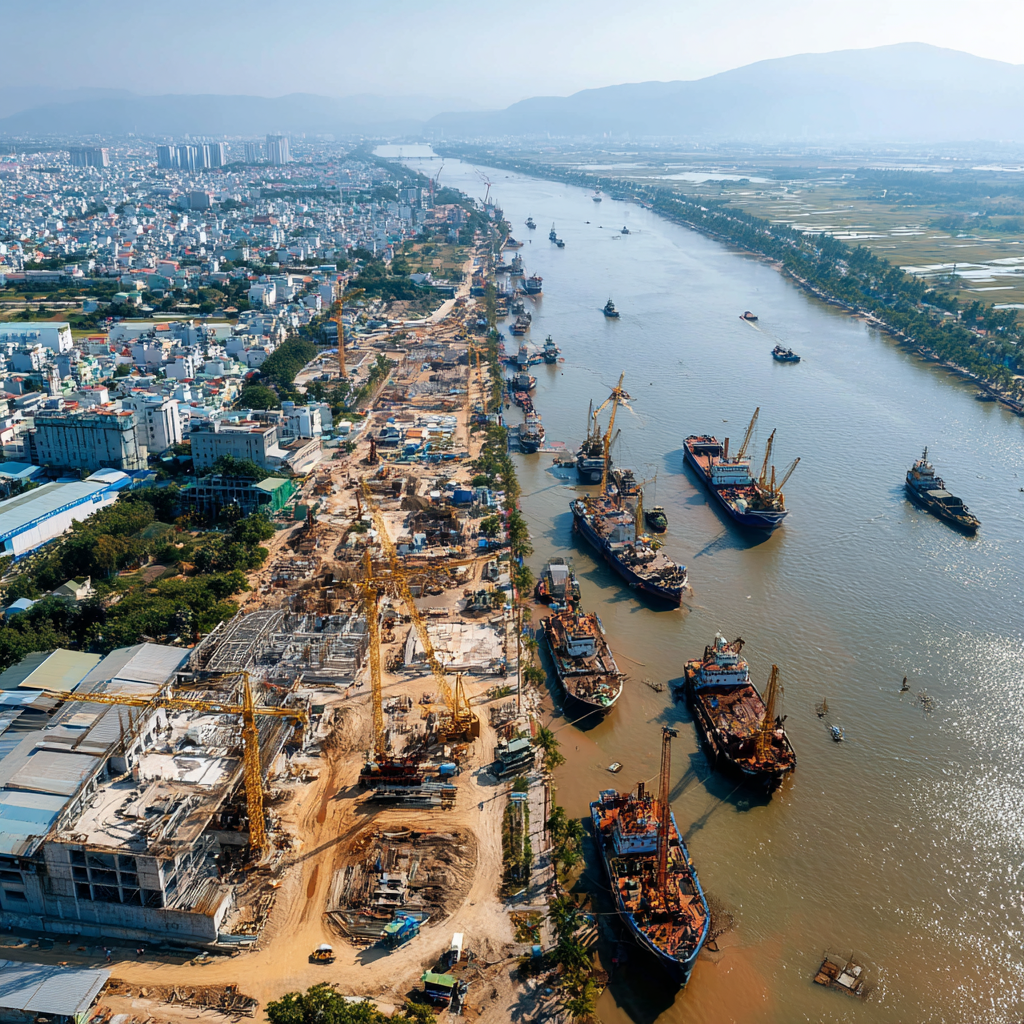
Export expansion and strong public investment are expected to serve as key growth engines. A rail project linking Lao Cai Province on the China–Vietnam border with Hanoi and Hai Phong Port is set to begin construction soon. Multiple urban railway projects are underway in both Hanoi and Ho Chi Minh City, and new airport developments in the outskirts of the two major cities are also progressing. These large-scale infrastructure initiatives are expected to significantly boost investment demand.
According to the approved socioeconomic targets, Vietnam’s GDP per capita is expected to reach USD 5,400–5,500 in 2026, with consumer price index (CPI) inflation kept around 4.5%.
Prime Minister Pham Minh Chinh stated during a National Assembly session on November 8 that Vietnam aims for 8% GDP growth in 2025. Growth in the first nine months of this year reached 7.85%. Export value from January to October rose 16% year-on-year to USD 391 billion. Foreign direct investment (FDI), based on approved capital, also increased 16% to USD 31.5 billion, while retail and service sales climbed 9%, indicating sustained economic momentum.
As one of the fastest-growing major economies in Southeast Asia in recent years, Vietnam continues to pursue high-speed growth driven by export expansion and infrastructure investment, despite external demand fluctuations and global economic uncertainties.