


(Asia Financial Observer, Kelly reporting from Tokyo, Dec 12)
Prologue | What Is Happening to the World?
This year, the world has never been short of news.
Markets fluctuate daily, policies are rolled out one after another, technologies advance at breakneck speed, and the flow of capital and data seems endless.
Yet amid this constant noise, one fundamental question has grown clearer, sharper, and more urgent—
What, exactly, is happening to the world?
Why has money never been more abundant, while the sense of personal wealth feels increasingly scarce?
Why do macro tools keep appearing, yet micro-level anxiety refuses to recede?
Why do technological frontiers expand rapidly, while our sense of security subtly retreats?
Why are market narratives as lively as ever, while the real stories of the economy are harder and harder to tell?
These questions transcend borders and cut across social strata.
They echo simultaneously in Europe and the United States, across Asia, Africa, and Latin America; they manifest in nations large and small, and are embedded in corporate balance sheets, household decisions, and individual life planning.
This is not the shock of a single event, but the impact of a moment when many “once-taken-for-granted rules” appear to be failing at the same time—producing a widespread and visceral sense of dislocation.
This is why we launch this year-end observation.
Not to offer a simple answer, but to return to the concrete realities on the ground—
to the profit-and-loss lines of businesses, the consumption lists of families, the testing grounds of policy, the hesitation points of the market, and the Z generation oscillating between “hyper-competition” and “lying flat.”
By linking signals that seem isolated on the surface, we seek to uncover the deeper connections behind them.
If the world is indeed facing a certain predicament, perhaps it is not because it has suddenly deteriorated.
Rather, it may be because we are still holding an old “blueprint” while trying to measure an era whose underlying logic has already been reshaped.
This is what we aim to document and present—
a deep inquiry into the world we live in today.
What is happening to the world?
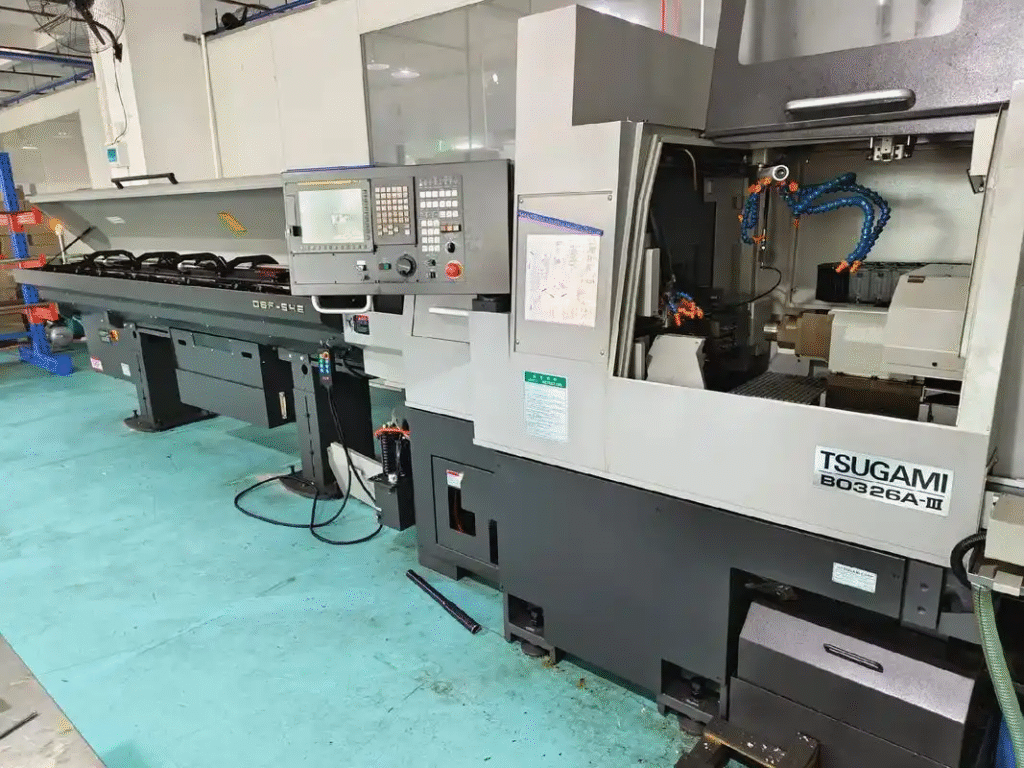
What happens when hardcore precision manufacturing meets agile financial intelligence? Tsugami China Co., Ltd. (hereafter “Tsugami China”) delivered a striking answer with its exceptional performance in the first half of FY2026. This earnings report not only set a new record for the period but also established fresh benchmarks in profit quality and shareholder returns. Like a sonata in which industry and capital resonate in harmony, Tsugami China has played a powerful and distinct note in the ongoing symphony of China’s manufacturing upgrade.
Core Results: A Midterm Report That Exceeded Expectations
According to Tsugami China’s recently released financial results, revenue for the six months ending September 30, 2025 reached RMB 2.497 billion, an increase of 26.2% year on year. Even more remarkable was its profit surge: net profit rose to RMB 502 million, up 47.7% year on year, marking an all-time high for the period. This growth signals not just expansion in scale but a qualitative rise in profitability—its 34.6% gross margin and over 20% net margin further solidify its leadership in China’s high-end machine tool market. In parallel with these strong results, the company announced an interim dividend of HKD 0.6 per share, the highest half-year payout since listing.
Growth Engines: Multi-Driver Expansion With Precision Businesses Flourishing
Behind the impressive numbers lies the synergy of multiple business lines, with high-growth units standing out.
Its core precision automatic lathe business remained the cornerstone, generating RMB 2.051 billion in revenue—82.1% of the total—up 19.4% year on year.
The star performer was the precision machining center segment, with revenue reaching RMB 207 million, soaring 157% year on year and raising its contribution from 4.1% to 8.3%.
The precision grinding machine segment also grew strongly, up 47.5%, while other businesses (including thread rolling machines, components, and services) saw steady growth of 19.8%.
Market Depth: Emerging Sectors Deliver Critical Incremental Growth
Tsugami China’s explosive growth is rooted in China’s shift toward intelligent and high-end manufacturing.
The automotive sector—especially driven by booming NEV demand—remained the largest revenue source, contributing RMB 1.03 billion, up 51.6% year on year.
The 3C electronics sector contributed RMB 190 million with both YoY and QoQ increases.
The category of “other industries” was the brightest highlight, reaching RMB 970 million with growth rates approaching or exceeding 40% YoY and QoQ. AI-driven liquid cooling systems alone contributed RMB 120 million, becoming a significant new growth engine. The company has also established partnerships with dozens of clients in the field of humanoid robot core component machining equipment.
Outstanding financial performance is inseparable from the company’s commitment to meticulous internal management. Since 2018, its company-wide improvement proposal program has become a cultural DNA for reducing costs and boosting efficiency. Multiple award-winning improvement initiatives reflect operational refinements that collectively build profitability far above industry averages.
To meet strong market demand, Tsugami China is accelerating its capacity expansion. The fifth factory in Pinghu, Zhejiang commenced operations last year with an annual capacity of 3,000–4,000 units. The company recently acquired 34 mu of land for two additional plants, expected to add another 3,000 units of annual capacity. This ensures a solid hardware foundation for capturing future growth opportunities in China’s manufacturing upgrade.
From record-breaking financial data to a clear and powerful growth logic and forward-looking capacity deployment, Tsugami China’s interim results do more than summarize six months—they outline a blueprint for high-quality development driven by the “beauty of precision.” As precision manufacturing and flexible financial strategy converge, the company’s story is far from over.