


On June 18, 2026, the International Auto and Supply Chain Expo (Hong Kong) opened at AsiaWorld-Expo, bringing together a wide range of new energy vehicle manufacturers. A notable trend at this year’s event was the strong presence of right-hand-drive (RHD) models, highlighting the growing importance of Asia’s RHD markets in the global automotive landscape.
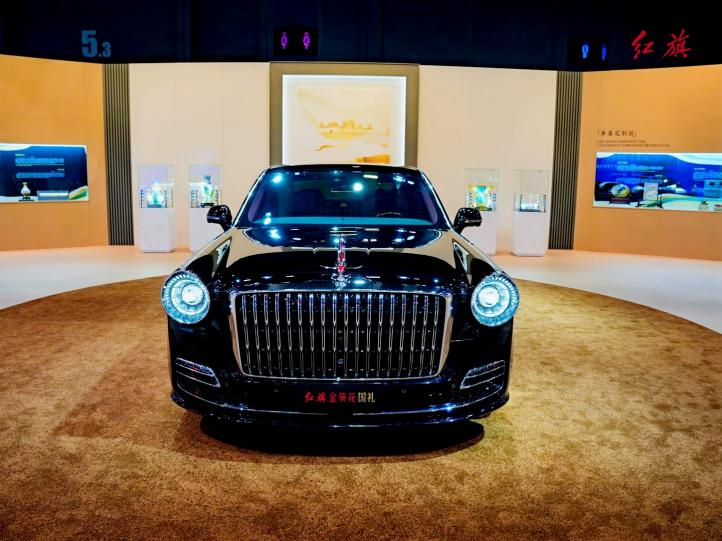
Among the exhibitors, Hongqi—China’s most iconic automotive brand—unveiled several RHD electric vehicles and officially launched the right-hand-drive version of its flagship electric SUV, the E-HS9, in Hong Kong.
Behind this move lies a profound transformation taking place across Asian automotive markets.
For decades, Southeast Asia has been regarded as a stronghold of Japanese automakers. However, the rapid rise of new energy vehicles is reshaping the competitive landscape. At the 47th Bangkok International Motor Show earlier this year, Chinese automotive brands recorded more vehicle reservations than Japanese brands for the first time, signaling a major shift in regional market dynamics.
As Chinese automakers move from competing primarily on affordability to competing on technology, quality, and brand value, Hongqi has chosen Hong Kong as a testing ground for its broader expansion into Asia’s right-hand-drive markets.
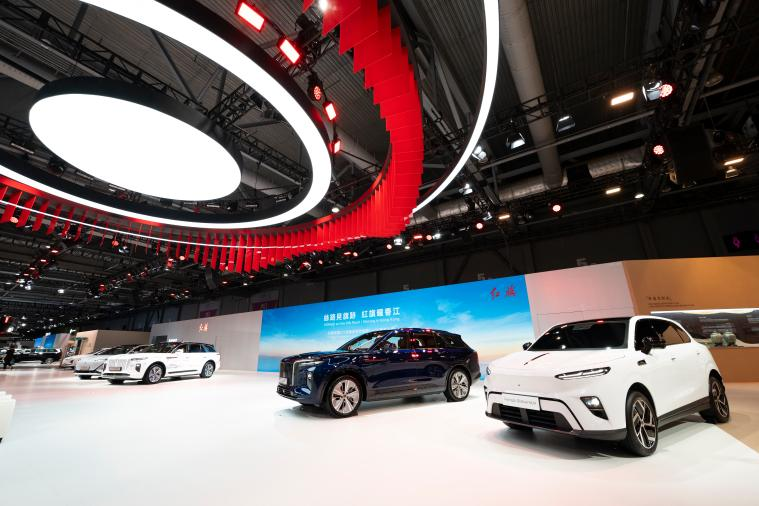
A New Right-Hand-Drive Frontier: From Product Adaptation to Strategic Expansion
At the Hong Kong auto show, Hongqi showcased three RHD new energy vehicles: the Global SUV, the high-performance EHS5, and the flagship luxury electric SUV E-HS9. Together, they target family mobility, performance-oriented driving, and premium business transportation.
From an industry perspective, launching RHD vehicles involves far more than modifying vehicle configurations. Roughly one-third of the global automotive market operates under right-hand-drive systems, covering Southeast Asia, Oceania, South Asia, and parts of Europe.
Entering these markets requires not only engineering adjustments but also regulatory compliance, supply-chain development, after-sales service networks, and localized operational capabilities. As a result, RHD programs are often viewed as a benchmark of an automaker’s internationalization capabilities.
The E-HS9 represents a key pillar of Hongqi’s overseas strategy. Measuring more than 5.2 meters in length and equipped with a 120-kWh battery pack and dual-motor all-wheel-drive system, the vehicle targets the global premium EV segment with competitive range, performance, and interior space.
As China’s EV industry continues to evolve, manufacturers are increasingly shifting their focus from price competition toward innovation, quality, and brand differentiation. Design language, intelligent technologies, and user experience are becoming critical factors in building sustainable international competitiveness.
Another highlight at the exhibition was the E-HS9 「Belt and Road」 prototype vehicle. In April, the vehicle departed Beijing and completed a 10,000-kilometer-plus journey across multiple countries and regions before arriving in Hong Kong after 35 days. The expedition served not only as a test of vehicle performance but also as a demonstration of cross-border operational capabilities.
Hong Kong as a Testing Ground: From Exporting Vehicles to Building Ecosystems
If the three RHD models demonstrate Hongqi’s product strength, its Hong Kong strategy reveals a broader global vision.
Hongqi’s presence in Hong Kong has already evolved beyond traditional vehicle sales. It represents a systematic effort to transition from exporting products to exporting complete operating systems.
On July 1, Hongqi will open its Hong Kong Experience Center in Taikoo Shing, introducing the 「Hongqi CARE 365」 service platform, which covers the entire ownership lifecycle—from sales and test drives to delivery and after-sales support.
At the same time, Hongqi is accelerating the deployment of battery-swapping infrastructure in Hong Kong. Given the city’s limited land resources, battery swapping offers unique advantages by minimizing parking-space requirements while enabling energy replenishment in as little as 99 seconds.
From an industry standpoint, this reflects a broader transformation in how Chinese automakers approach overseas expansion. The focus is shifting from exporting vehicles alone to exporting charging and battery-swapping networks, digital service platforms, and operational expertise—creating complete mobility ecosystems.
As Chen Bin, Executive Vice President of FAW Group, noted, 「Taking root in Hong Kong, serving Hong Kong, and contributing to Hong Kong is a firm commitment by FAW to fulfill its responsibilities as a central state-owned enterprise and align with national development strategies.」
This positioning suggests that Hong Kong is no longer viewed merely as a sales destination. Instead, it serves as a proving ground for service standards, operational models, and ecosystem development that can later be replicated across Southeast Asia and other global RHD markets.
Asia’s Strategic Chessboard: Expanding from Hong Kong Across the RHD World
Hong Kong is only the starting point of Hongqi’s right-hand-drive strategy.
Just one month earlier, the RHD E-HS9 was officially launched in Singapore at a price of approximately S$500,000. In its review, The Straits Times described the vehicle as 「a rolling status symbol,」 praising its imposing presence and luxury credentials as rivaling—or even surpassing—more expensive European competitors.
Singapore thus became the world’s first official market for the RHD E-HS9.
Over the next three years, Hongqi plans to launch at least six new energy vehicles across global right-hand-drive markets, using Hong Kong as a strategic hub. Parallel expansion plans are already underway in Thailand, Indonesia, Malaysia, and other Southeast Asian economies.
What stands out is Hongqi’s decision not to compete primarily through low pricing. Instead, it is positioning itself around the concept of 「Oriental Luxury,」 targeting the global premium market directly. At the Hong Kong expo, Hongqi also showcased several million-yuan customized models from its Golden Sunflower series.
This approach mirrors the path taken by Lexus with the LS400 in North America and Genesis in the global premium segment. The Golden Sunflower lineup may well represent Hongqi’s cultural differentiator—an attempt to introduce an Eastern interpretation of luxury into a market long dominated by Western narratives.
Asia’s Right-Hand-Drive Markets: A New Growth Engine for the Global EV Industry
Hong Kong’s experience is only the beginning. The broader Asian RHD market is emerging as one of the most promising growth engines in the global EV industry.
Countries such as Singapore, Thailand, Malaysia, and Indonesia continue to accelerate EV adoption through supportive policies, infrastructure investment, and growing consumer acceptance.
Singapore, in particular, has become an important benchmark market. Its highly sophisticated consumers place strong emphasis on product quality, technological innovation, and brand reputation, making it a valuable testing ground for automakers entering right-hand-drive markets.
As EV markets mature, competition is increasingly defined not only by price but also by brand strength, technological capability, customer service, and localization expertise.
From Singapore to Bangkok, from Hong Kong to Jakarta, Asia’s right-hand-drive markets are rapidly becoming one of the most dynamic growth regions in the global EV industry.
What the Hong Kong auto expo showcased was far more than a collection of new vehicle launches. It reflected a deeper transformation underway across the automotive sector: companies are adapting to diverse markets, responding to varied consumer needs, and competing globally through comprehensive ecosystems rather than products alone.
That is perhaps the fundamental reason why Asia’s right-hand-drive markets are attracting growing attention—and why Hongqi has chosen Hong Kong as the launchpad for its broader strategic ambitions.