


(Asia Financial Observer, Reporter Jiuri, December 13, Tokyo)
Prologue | What Is Happening to the World?
This year, the world has never been short of news.
Markets fluctuate daily, policies are rolled out one after another, technologies advance at breakneck speed, and the flow of capital and data seems endless.
Yet amid this constant noise, one fundamental question has grown clearer, sharper, and more urgent—
What, exactly, is happening to the world?
Why has money never been more abundant, while the sense of personal wealth feels increasingly scarce?
Why do macro tools keep appearing, yet micro-level anxiety refuses to recede?
Why do technological frontiers expand rapidly, while our sense of security subtly retreats?
Why are market narratives as lively as ever, while the real stories of the economy are harder and harder to tell?
These questions transcend borders and cut across social strata.
They echo simultaneously in Europe and the United States, across Asia, Africa, and Latin America; they manifest in nations large and small, and are embedded in corporate balance sheets, household decisions, and individual life planning.
This is not the shock of a single event, but the impact of a moment when many “once-taken-for-granted rules” appear to be failing at the same time—producing a widespread and visceral sense of dislocation.
This is why we launch this year-end observation.
Not to offer a simple answer, but to return to the concrete realities on the ground—
to the profit-and-loss lines of businesses, the consumption lists of families, the testing grounds of policy, the hesitation points of the market, and the Z generation oscillating between “hyper-competition” and “lying flat.”
By linking signals that seem isolated on the surface, we seek to uncover the deeper connections behind them.
If the world is indeed facing a certain predicament, perhaps it is not because it has suddenly deteriorated.
Rather, it may be because we are still holding an old “blueprint” while trying to measure an era whose underlying logic has already been reshaped.
This is what we aim to document and present—
a deep inquiry into the world we live in today.
What is happening to the world?
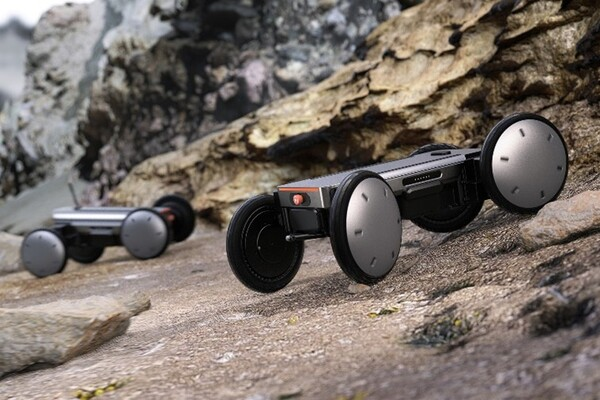
At a moment when the global automotive industry is moving toward deeper integration between Software-Defined Vehicles (SDV) and robotics, Hyundai Motor Group is accelerating its investment in future technologies at an unprecedented pace. On November 16, the Group announced that it would invest 125.2 trillion won (approximately USD 86 billion) in Korea over the next five years, focusing on artificial intelligence, robotics, and next-generation mobility platforms.
According to official information, MobED will be officially launched in the first half of 2026, with two models—MobED Basic and MobED Pro—targeting developers, enterprises, and general consumers.
This is not merely a product release; it represents Hyundai’s strategic attempt to integrate automotive manufacturing with robotics and mobile platform technologies to capture global markets for mobile and service robots. By advancing the concept of “Mobility of Things,” Hyundai aims to transform itself from a traditional automaker into a provider of future mobility and robot-based ecosystems.
To understand why Hyundai dares to bet on MobED—and why Korea is positioned to become a major player in global robot competition—we must consider both industrial foundations and national-level factors.
Korea has long led the world in industrial automation and robot density. According to the International Federation of Robotics (IFR), Korea has the world’s highest industrial robot density, with 1,012 robots per 10,000 manufacturing workers, far exceeding the global average. This reflects Korean manufacturing’s strong acceptance of automation and robotics, as well as its advantages in supply chains, ecosystem readiness, and technology adoption.
The Korean government and industry are also increasing support for robotics, AI, and smart manufacturing. The “Fourth Basic Plan for Intelligent Robots (2024–202)” identifies robotics as a core industry for the Fourth Industrial Revolution and seeks to enhance competitiveness through public and private investment.
At the corporate level, Hyundai Mobis has announced entry into key robot components such as actuators, sensors, and controllers. The company argues that its longstanding capabilities in automotive components provide a strong foundation for robot component manufacturing.
Korean manufacturing has also widely adopted AGVs and AMRs for internal logistics. Reports indicate that hundreds of AMRs/AGVs operate inside Hyundai and Kia factories, demonstrating that robots are not just conceptual technologies but already integral tools for production and supply chain optimization.
【International Comparison】
Compared with China, the United States, and Japan, Korea’s automotive sector faces certain limitations but still retains notable strengths.
China’s robot market has grown rapidly. IFR data shows that China installed 295,000 industrial robots in 2024, accounting for more than half of global new installations, with total stock surpassing 2 million units. Chinese robot makers are scaling production of industrial robots and service robots—including humanoid, bionic, and wheeled mobile robots—leveraging comprehensive manufacturing supply chains, cost advantages, and policy support.
The United States maintains global leadership in advanced robotics hardware and AI software, including perception, planning, and navigation. However, U.S. manufacturing relies heavily on imported robots, and domestic industrial automation penetration is relatively low. IFR data from 2023 shows the U.S. robot density at 295 per 10,000 workers, significantly below Korea and China. As a result, the U.S. excels in frontier research but lags in large-scale robot deployment and integration with automotive manufacturing.
Japan has historically been a robotics powerhouse, with strengths in precision engineering and control technologies. However, its transition toward service and mobile robots has been slower than China’s. Moreover, its traditional focus on industrial robotics does not fully align with emerging trends centered on modular mobile platforms, AI, and multi-scenario adaptability.
With MobED set for release in 2026 and Hyundai Motor Group committing unprecedented investment, Korea is accelerating its transformation from an automotive manufacturing nation into a robotics mobility powerhouse. As global intelligent robotics competition reaches a critical phase, Korea’s industrial strategy may reshape the future landscape of mobility technologies and influence the next growth cycle of the global automotive industry.