


(Reported by Yuan Yin in Tokyo on the 28th)
Prologue | Perhaps the World Isn’t Getting Worse — We’re Just Looking at It the Wrong Way
When people repeatedly ask, “What’s wrong with this world?”, the problem often lies not in the events themselves, but in the way we interpret them.
We are simultaneously facing inflation, geopolitical risks, technological disruption, widening inequality, and declining trust. If we continue to rely on the experience frameworks formed over the past few decades to explain today’s anxieties, disappointment is almost inevitable.
This is not a moment for emotional venting, but a moment that demands an update to our cognitive framework.
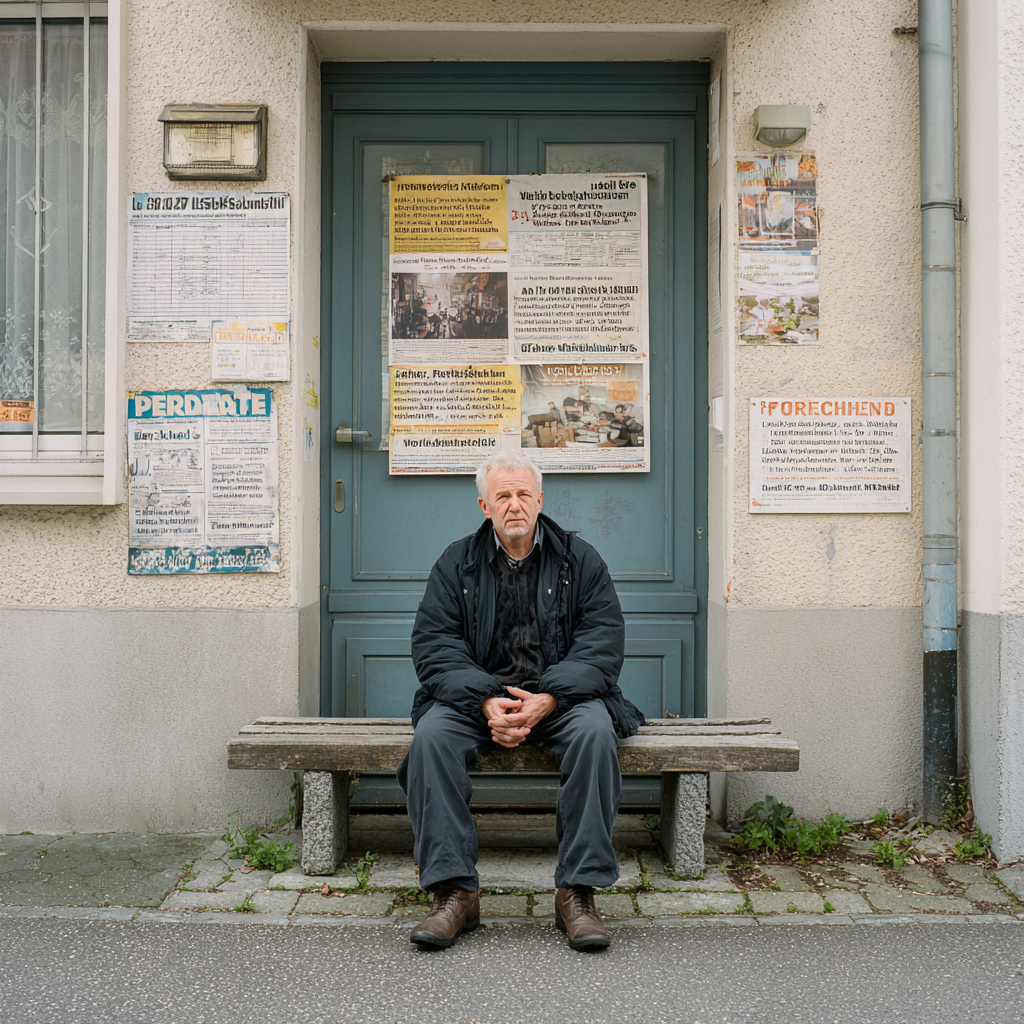
Mistaking an Exceptional Era for the Norm
Low inflation, low interest rates, high growth, and the dividends of globalization were once treated as natural conditions. In reality, they were the product of a highly unusual historical window.
Post–Cold War geopolitical easing, China’s entry into the WTO and the resulting capacity expansion, the diffusion of internet technologies, relatively young demographic structures, and long-term energy price stability converged briefly, creating the illusion of a “high-growth, low-volatility” world.
A Small Story | A German Family’s Memory of the “Golden Thirty Years”
A Small Story | A German Family’s “Golden Thirty Years”
Hans Bergmann, 58, lives in Munich. His father, an ordinary technician, supported a family of four on a single income in the 1970s and bought a townhouse in the suburbs.
“Back then, annual raises were taken for granted, prices were stable, and companies didn’t lay people off,” Hans recalled.
In the 1990s, Hans entered the automotive industry, benefiting from German reunification and the opening of Eastern European markets. His salary and position rose steadily.
His son Felix, now 28 and a software engineer, faces a very different reality. Housing prices are ten times what they were in his grandparents’ era, permanent contracts are rare, and energy and food prices fluctuate sharply.
“My father always says, ‘Hard work pays off,’” Felix said. “But the returns I see are far less certain than what their generation had.”
Felix and his partner rent long-term and invest half their income in highly liquid assets.
“We can’t plan thirty years ahead like they did. We just try to make sure the next three years are secure.”
This three-generation family neatly traces the full cycle from a “golden age” to a return to historical normality.
Past successes have led societies to place excessive expectations on policy tools. Monetary easing and fiscal stimulus can be effective in the early stages of crises, but over time they cannot reverse deep structural trends such as demographic change, technological substitution, or widening inequality.
A Small Story | A Silicon Valley Founder’s Sense of Policy Limits
According to The Wall Street Journal’s tracking of small and mid-sized tech firms, Elena Chen, 35, runs a small AI application company in San Francisco.
In 2021, she received low-interest government loans and tax breaks aimed at small businesses and initially planned to expand her team. That plan was soon derailed by supply-chain disruptions, engineers being poached by tech giants at double the pay, and a frozen financing environment following the Federal Reserve’s rapid rate hikes.
“Policy gave me a brief breathing space,” she said, “but it couldn’t change the rules of the game. The biggest pressure isn’t interest rates — it’s the absolute shortage of talent and the dominance of giants. These aren’t problems short-term policy can fix.”
She has since moved her company to lower-cost Texas and adopted highly automated and remote collaboration models to reduce dependence on labor.
Her adjustment reflects a shift from relying on policy conditions to adapting to structural realities.
Using Growth Narratives to Understand a Low-Return World
Many institutions and expectations — pension systems, returns on education, career advancement paths — are still built on the assumption of sufficiently high returns. Yet declining potential growth rates are reshaping everything.
A Small Story | A Taipei Engineer’s “Mathematical Awakening”
This case, drawn from a market report by Taiwan’s Yungching Realty Group, is highly representative.
Xiao Yuheng, 30, works in chip design in Taipei and earns a solid income. Yet after careful calculation, he gave up the idea of buying a home.
His numbers were straightforward:
Desired presale apartment price: approx. NT$35 million
Annual household disposable income: NT$1.8 million, growing at about 3%
Average annual housing price growth in the area over five years: over 10%
“My savings curve and the housing price curve are diverging in opposite directions,” he said. “My parents’ income growth could catch up with housing prices. Mine can’t. The harder I save for a down payment, the farther away the goal gets. This isn’t about attitude — it’s about math.”
He chose to rent a comfortable suburban apartment and invest what would have been a down payment into skill development and global index funds.
“A house is no longer an ‘asset’ in my life,” he said. “It could easily become a liability that drains my liquidity and choices.”
His decision was not a downgrade in aspiration, but a precise financial calculation.
The Deepest Anxiety Comes from the Loss of Predictability
What people struggle with most is not hardship itself, but uncertainty. When the future becomes difficult to forecast and long-term planning loses meaning, individuals naturally shift toward short-term, low-risk behaviors.
A Small Story | Building a ‘Career Safety Cushion’ in Shanghai
AAccording to a LinkedIn China talent trends report, Lin Wei, 29, works as a marketing manager at a multinational consumer goods company in Shanghai. Her career appears promising, yet feels fragile.
“My contract is fixed-term, renewed every three years,” she said. “You never know if next year’s brand budget will be cut in half, or if headquarters will move the whole department to Singapore.”
She has therefore built a clear personal risk-hedging strategy:
Income diversification: She runs a small social media account on weekends, offering brand consulting; side income now equals 30% of her main salary.
Skill monetization: She earned a professional data analysis certification and prices this skill as a freelance backup option.
Strategic consumption: She limits luxury spending but invests willingly in health insurance, psychological counseling, and travel that builds high-quality networks.
“I don’t expect companies or the economy to give me a predictable future,” Lin said. “My sense of security comes from the anti-fragile system I’ve built myself.”
Her approach illustrates how, as external predictability declines, stability increasingly comes from multiple internal support points.
Year-End Conclusion | Change the Lens to See What’s Really Happening
By Wan Ge
We are accustomed to explaining today’s world using yesterday’s experiences, only to feel growing helplessness. High housing prices, low desire, job volatility, global turbulence — when these phenomena are dismissed as generational weakness or temporary crises, we may be using an outdated map to navigate a continent that has already drifted.
The prosperity of past decades rested on specific historical conditions: accelerating globalization, expanding industries, long-rising asset prices, and relatively smooth social mobility. The “effort equals reward” logic became deeply embedded as a default worldview.
Today, that underlying logic is shifting. Growth is slowing from high speed to moderate levels; efficiency is giving way to security and resilience; certainty is being replaced by volatility.
Young people choosing not to buy homes, avoid debt, and spend cautiously are not giving up — they are rationally managing risk in a low-return, high-uncertainty environment. In many ways, they are the first to understand the new rules.
If we continue to measure new realities with old standards, we fall into a double bind: criticizing younger generations for not trying hard enough, while being unable to explain why effort no longer produces expected returns.
The real challenge is not that the world has become “worse,” but that the logic driving it has changed — from pursuing unlimited growth to managing complex risk, from relying on grand narratives to building individual resilience.
Understanding the world now requires a cognitive “operating system upgrade.” We need new lenses to see what is unfolding — not to abandon the value of effort, but to redefine its direction; not to cling to a golden past, but to learn how to live wisely in a new normal.
The world has never stopped evolving. Our thinking must evolve with it.