Henan has no coastline, yet one river carries it to the sea
Overseas Chinese-language media visit Zhoukou Port |❶
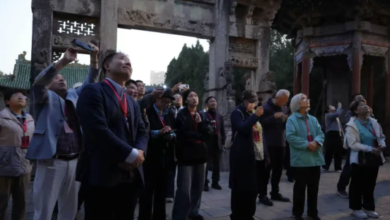
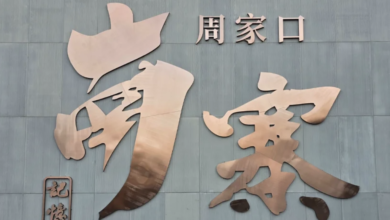
(By Fukuta Takeshi and Tian Mingfeng, Zhoukou) Henan may have no coastline, but it can still reach the seas through its rivers. On November 27, the “Walk Henan, Understand China” 2026 tour for senior overseas Chinese-language media representatives, organized by Hong Kong’s Ta Kung Wen Wei Media Group and the Overseas Chinese Media Cooperation Organization, visited Zhoukou Port. Along the Shaying River, cranes rose and fell over containers stacked neatly on the quayside, while cargo vessels waited to be loaded. This inland port is using water transport to link the heart of the Central Plains with global supply chains.
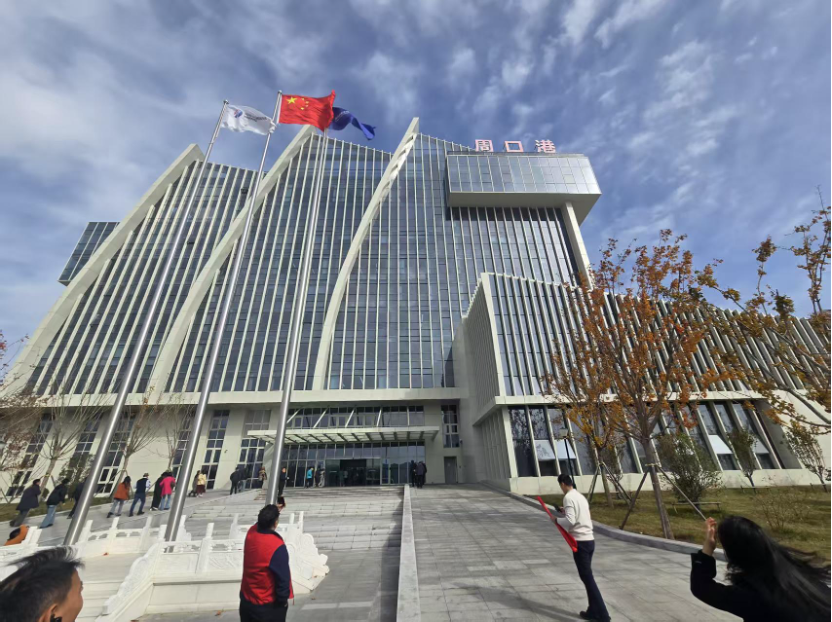
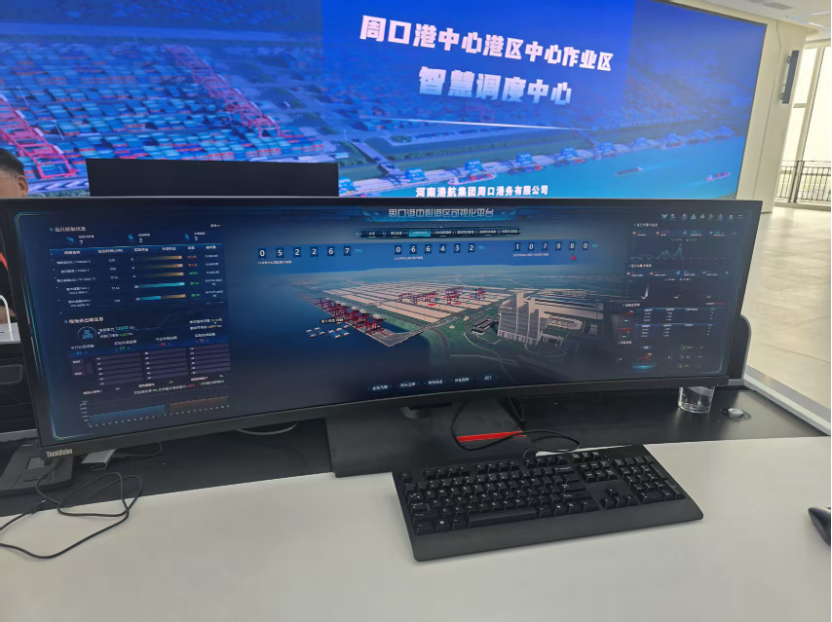
The delegation visited Zhoukou Port’s Fanying operating area, the Yihai Kerry food industrial park and the central operating area. From the development of grain and oil processing industries beside the port to dock operations, they saw firsthand how water transport is reshaping the industrial landscape of an inland region.
“Henan has no coastline, but inland waterways give it access to the sea”
“Henan has no coastline, but inland waterways give it access to the sea,” the head of the port area told the delegation. Through continued expansion and upgrading, Zhoukou Port is making the most of its role as a transport hub, attracting more port-related industries and bringing fresh momentum from water transport to eastern Henan. From the viewing platform, visitors watched containers being lifted and loaded.
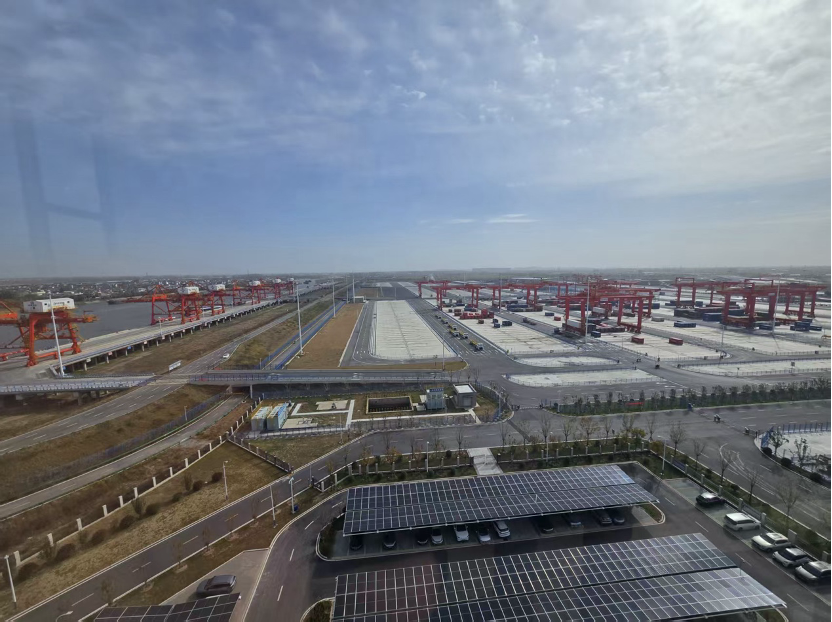
“Henan has no coastline, but inland waterways give it access to the sea,” the head of the port area told the delegation. Through continued expansion and upgrading, Zhoukou Port is making the most of its role as a transport hub, attracting more port-related industries and bringing fresh momentum from water transport to eastern Henan. From the viewing platform, visitors watched containers being lifted and loaded.
“When people write about Henan, they tend to think first of wheat fields and ancient capitals, and seldom of inland ports,” said Chen Tiemei, editor-in-chief of Feilong Media in the United States. Overseas readers often assume that inland areas are far removed from international logistics routes. The visit, she said, showed how the Central Plains are deeply connected to global supply chains through the Shaying River.
Lin Lu, vice president of the New World Times in the United States, stopped beside a production line at the industrial park. A media professional originally from Fujian, she said she admired the pioneering spirit of overseas Chinese entrepreneur Robert Kuok in establishing Yihai Kerry’s operations in Zhoukou. The group has made use of Henan’s agricultural strengths, including corn and wheat, to process farm products locally. The local government, in turn, has built docks and a logistics port to serve the businesses. Together, the company and the government have made effective use of local resources. “The development of Zhoukou Port is a snapshot of Henan’s high-quality development,” Lin said. Overseas media should tell Henan’s story well, she added, and she hopes they can help put local specialties, including Henan peanuts, on supermarket shelves abroad.
Wu Mo, editor-in-chief of the Greater Bay Area Times in Macao, was visiting Zhoukou for the first time. He was impressed by the port area’s well-designed layout and smart operations. Henan, an inland province, is developing ports in several locations, he said, and stronger coordination among them could become a new source of economic growth. He also suggested that Zhoukou Port could further develop its tourism potential and strengthen its links with the Guangxi sea-access waterway leading to the Guangdong-Hong Kong-Macao Greater Bay Area. Wu encouraged young people from Hong Kong and Macao to visit Henan and experience for themselves how the culture and local economy of the Central Plains are changing.
A centuries-old canal route becomes a river corridor for opening up
The Shaying River was once an ancient canal-transport route. Upgrades and continued improvements have opened a waterway linking it to the Huai and Yangtze rivers. Vessels of up to 3,000 tonnes can reportedly navigate the route year-round. Grain, building materials and machinery are shipped out from here, while imported goods travel upstream into the Central Plains.
“Water transport has a clear cost advantage over road freight,” port staff told the delegation. Many port-side businesses have established operations along the waterway, using it to bring in raw materials and ship finished products to market. The thousand-year-old canal route is no longer simply a channel for moving grain and salt. It has become a river corridor connecting the Central Plains with outside markets.