Henan’s largest Guandi Temple, a shared language of the Chinese world
Overseas Chinese-language media visit Zhoukou |❺
(By Fukuta Takeshi and Tian Mingfeng, Zhoukou) On November 27, the 2026 Henan tour for senior overseas Chinese-language media representatives, “Walk Henan, Understand China,” organized by Hong Kong’s Ta Kung Wen Wei Media Group and the Overseas Chinese Media Cooperation Organization, visited the Guandi Temple in Zhoukou.
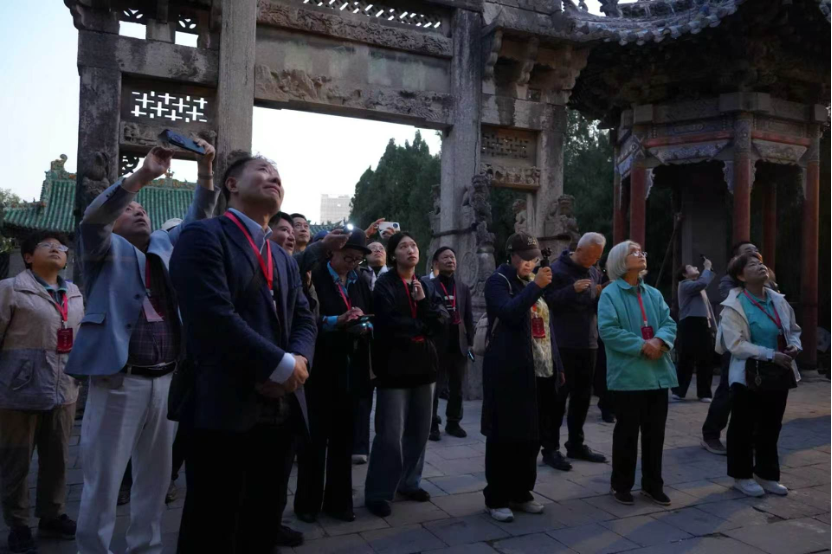
Built over 159 years and spanning the reigns of six Qing emperors, the temple drew a strong response from overseas Chinese-language media representatives with its brick, timber and stone carvings and its culture of loyalty and righteousness.
“This temple is enormous!” visitors exclaimed as they entered. It is currently the largest Guandi Temple in Henan by area, with soaring eaves, intricate bracket sets and a solemn grandeur. Led by a guide, the group was first drawn to a pair of towering iron flagpoles. Together weighing more than 15,000 kilograms and standing 22 metres high, the cast-iron giants were once hailed as “China’s No. 1 Flagpole.” Visitors tilted their heads back and raised their phones to take pictures.
A rare carved bracket, now the only one of its kind
Walking through the temple felt like entering a treasury of Qing-dynasty carving. In front of the main hall, hailed as a “national treasure,” visitors leaned close to the beams and pillars to study floral motifs and auspicious creatures that remain vivid after centuries. The piece that drew the most attention was the temple’s signature carved bracket, known as a queti. When the guide pointed out its intricate openwork, carved on three sides, the guests gasped. They were told that this exceptionally crafted bracket is now the only surviving example of its kind. The visitors expressed both regret and a deeper appreciation for the difficulty of preserving cultural heritage.
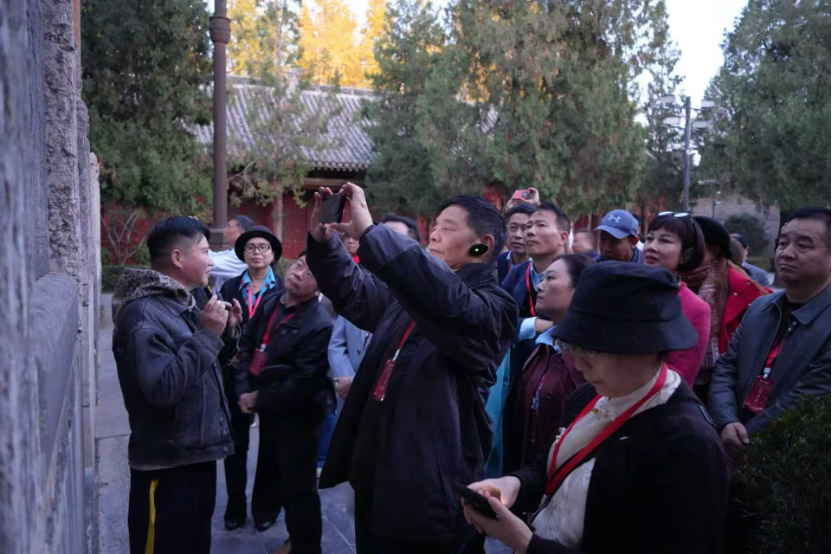
The temple offered more than the wonder of fine craftsmanship; it also held details that touched the hearts of people living far from home. A stone balustrade panel carved with an image inspired by Du Mu’s celebrated poem “Qingming” caught the visitors’ attention. Built with funds raised by merchants from Shanxi and Shaanxi, the Zhoukou Guandi Temple is also known as the Shanxi-Shaanxi Guild Hall. The carving gives visual form to the homesickness of merchants who lived and worked in Zhoukou, raising a cup beneath the moon and thinking of home. For representatives who have long lived overseas, the “Qingming” relief brought to mind travel, longing for one’s hometown and the hope of returning to one’s roots.
“Wherever there are Chinese people, there is a Guandi Temple”
Inside the main hall, a statue of Guan Gong sat in imposing stillness. Song Tijin, chairman of China Microvision and a longtime researcher of Guan Gong culture, stood before the statue for a long time. Returning to Zhoukou after 30 years, he said: “The Guandi Temple in Zhoukou ranks among the finest in China. Its survival to this day shows that people here have revered loyalty and righteousness since ancient times.”
Standing in the century-old temple, he shared several figures with a reporter: “There are currently 600 million worshippers of Guan Gong around the world and more than 30,000 Guandi Temples. Taiwan alone has over 1,000 such temples and some 10 million worshippers. Whether in Hong Kong, Macao, Malaysia or the United States, wherever there are Chinese people, there is a Guandi Temple.”
“Guan Gong culture is a vital subject for us as overseas Chinese-language media to share,” Song said. “The Guandi Temple in Zhoukou is not only an architectural treasure, but also a cultural starting point for people around the world who are searching for their roots. We should share the spirit of loyalty, righteousness, benevolence and courage with the world, and encourage more friends overseas to visit Zhoukou.”
From the iron flagpoles to the carved wooden bracket, from architectural marvels to details steeped in homesickness, the visit allowed the overseas media representatives to encounter a side of the Guan Gong tradition that serves as a shared language across the Chinese world—between century-old carvings and incense offered around the globe.