The confluence of three rivers and the renewal of Nanzhai stir memories of home
Overseas Chinese-language media visit Zhoukou |❸
(By Fukuta Takeshi and Tian Mingfeng, Zhoukou) On November 27, the 2026 Henan tour for senior overseas Chinese-language media representatives, “Walk Henan, Understand China,” organized by Hong Kong’s Ta Kung Wen Wei Media Group and the Overseas Chinese Media Cooperation Organization, visited the Zhoujiakou Nanzhai Historical and Cultural District in Zhoukou.
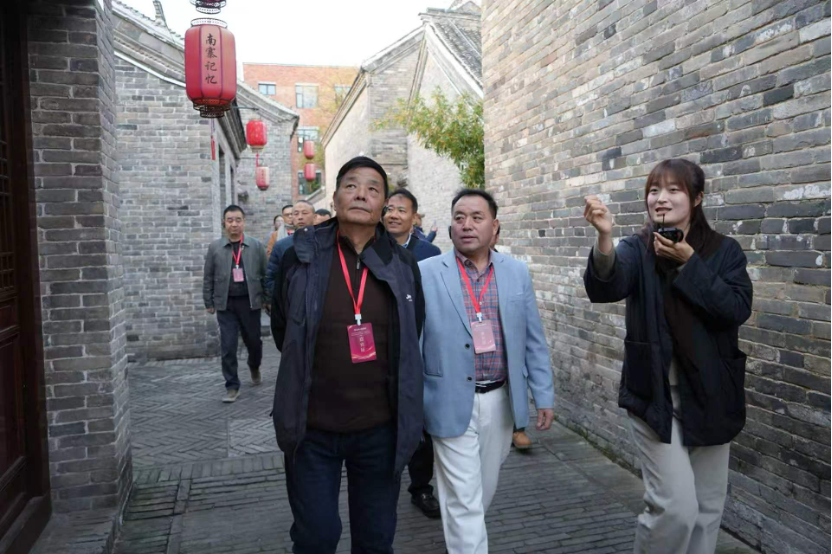
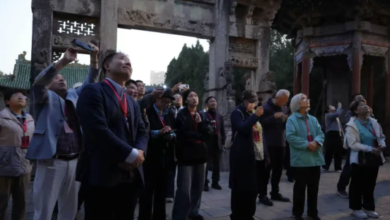
By the Shaying River, in front of Puji Gate, Xie Zhong paused. “The gateway is 3.21 metres wide, symbolizing the idea that one gives rise to two, two to three, and three to all things,” the guide explained. Xie looked out at the river and fell silent for a long while. He has spent many years in the United States and holds several roles, including president of US China Headlines and president of the All-America Chinese Film and Television Center. But first and foremost, he is from Zhoukou. He specifically requested to visit Zhoukou during this trip to Henan. “I just wanted to come back and see my hometown,” he said.
Nanzhai’s renewal brings the city’s history back into view
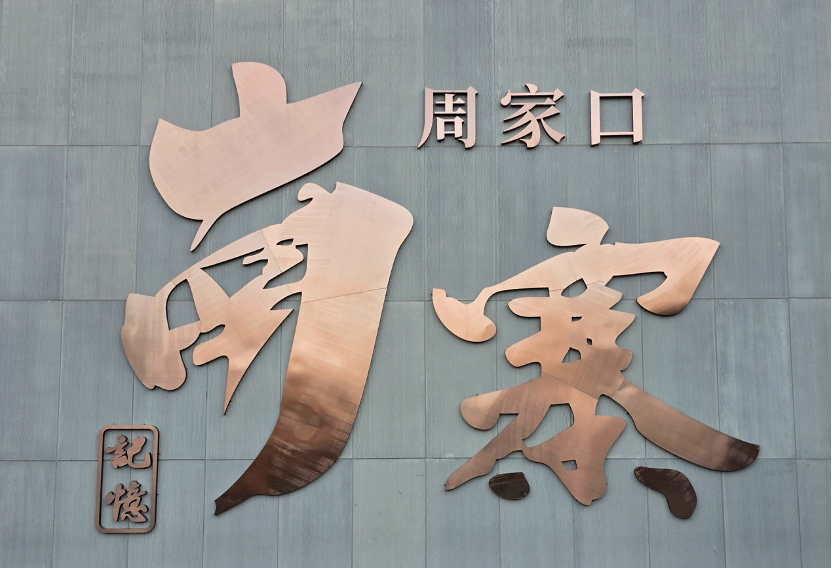
The Shahe and Yinghe rivers meet upstream, then converge here with the Jialu River. Zhoukou’s story begins at this meeting of waters. Xizhai developed into Yongning Market, while the old Ziwu Street grew into a trading hub. The two settlements faced each other across the river, making travel and commerce difficult. Zhou Guochang, a migrant from Shanxi, established a ferry crossing here. It became known as Zhou Family Ferry, then Zhoujiakou, and eventually Zhoukou.
The river brought grain transport and prosperity, but also peril. After the embankments fell into disrepair, Zhao Longzhang, a Zhoukou native then serving as military commander (tidu) of Taiwan, called on his clansmen to rebuild them. There was no local stone, so residents gathered large numbers of millstones and stone rollers. They used the rollers as foundations and the millstones as steps. From a distance, the structure looked like a small hill, giving rise to the name Millstone Hill. The district has now restored six wharves, recreating the old canal-transport scene. Standing on Millstone Hill, one media representative remarked, “This is a testament to the unity and resilience of the Chinese people of the past.”
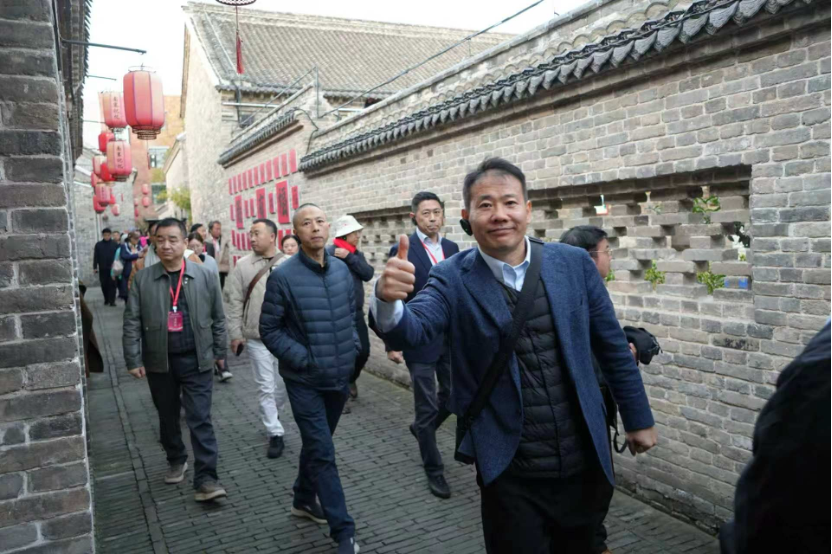
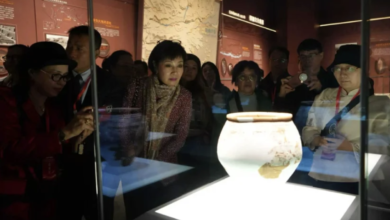
The renewal of Nanzhai has made the city’s history more visible to the visiting media representatives. The guide pointed out the Li family compound and the former residence of Bai Yanzhang, but the old photographs lining the streets drew even more interest. After the district was revitalized, the guide explained, former residents who had moved away began returning. Visitors gathered around the photographs, identifying familiar scenes; some even recognized the stone steps outside their own homes. Many of the media representatives were moved. No matter how far one travels, memories like these can bring the word “hometown” back to mind.
Surname-themed souvenirs offer a glimpse of one’s roots
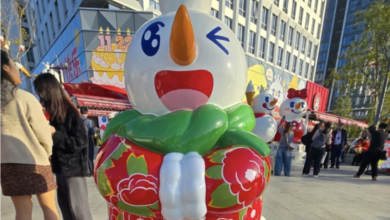
Across the street from Nanzhai, the Chuan Shang Yue district offered a different perspective. Opened earlier this year, its bright storefronts are filled with trendy shops. Xie entered a cultural-creative shop and immediately spotted a souvenir bearing the surname Xie. “I just glanced around, and there it was—my own surname,” he said. His ancestors were all from Henan, he explained, and a surname is a reminder of one’s bloodline and identity. He even hopes to organize a Xie clan gathering in Zhoukou one day. His eyes lit up as he spoke.
Three rivers meet in Zhoukou, and generation after generation of its people have set out from here for destinations of their own. The confluence shaped the city’s history; the currents flowing outward helped shape the achievements of its people. Named for a ferry crossing, Zhoukou still stands by the riverbank, watching each departing ripple drift away.