Japan’s Manufacturing Retreat Remains Anchored to China
By Wan Ge in Tokyo
On July 30, Japan’s Cabinet Office lowered its forecast for real GDP growth in fiscal 2026 from 1.3% in January to 0.9%. On the same day, three seemingly unrelated stories appeared in the financial media.
Panasonic announced that it would end television production in Malaysia by September. Yonex raised badminton shuttlecock prices for the third time in two years. Meanwhile, a report by the World Intellectual Property Organization showed that SoftBank had risen to first place globally in generative AI patents, with 2,985 filings.
These were not isolated events occurring by coincidence. Taken together, they point to an economic phenomenon that deserves closer examination.
One concerns what Japan is losing, another what is becoming more expensive, and the third what it is racing to catch up with. Together, they outline the increasingly complex position of Japanese manufacturing: traditional advantages are eroding, cost competitiveness is disappearing, and Japan is struggling to gain ground in emerging industries.
Industry: The Collective Retreat of Japanese Consumer Electronics
Panasonic will stop producing televisions in Malaysia by September and close the factory in March 2027, affecting approximately 400 employees. Once the closure is completed, Taiwan will be the only remaining location where Panasonic operates its own television manufacturing plant.
Panasonic’s withdrawal is not an isolated case. Sony has transferred control of its television business to a joint venture led by TCL, which will hold a 51% stake and begin operations in April 2027. Toshiba had already handed control of its television business to a Chinese company. Panasonic has also outsourced the production of low-end, small- and medium-sized televisions to TCL and other contract manufacturers. According to research company BCN, Chinese-affiliated manufacturers are expected to control around 60% of Japan’s television market.
The retreat of Japanese consumer-electronics manufacturers did not happen overnight. From Toshiba and Sharp to Sony and Panasonic, Japanese brands are moving from being manufacturers and owners to becoming brand licensors. Sony will retain the BRAVIA name, but research and development, manufacturing and supply-chain operations will be led by TCL.
This does not simply mean that Japanese televisions have failed. It means that Japanese manufacturers no longer believe they need to produce televisions themselves. They are handing the physical body of the business to China while retaining the name.
Macroeconomic data and individual corporate decisions point in the same direction. On July 22, Japan’s Ministry of Finance released trade figures for the first half of 2026. Exports rose 13.7% to ¥60.66 trillion, while imports increased 10.7% to ¥61.675 trillion, leaving a trade deficit of ¥1.01 trillion. This marked Japan’s tenth consecutive half-year trade deficit.
Exports of semiconductors and other electronic components grew strongly, but persistently high energy-import costs made it difficult to reverse the deficit. Exports are rising and imports are also increasing, yet the overall balance remains negative. The structural difficulties facing Japanese manufacturing are clearly visible in the country’s trade accounts.
Costs: The Butterfly Effect of China’s Supply Chain
Yonex has raised badminton shuttlecock prices three times in two years. A tube of AS-600 shuttlecocks now costs ¥6,380, equivalent to approximately RMB264.8, an increase of around 30%.
The sharp rise in prices began in early 2023, accelerated in July 2024 and reached a record level in August 2025. A shortage of waterfowl feathers, caused partly by worsening conditions in China’s waterfowl-farming industry, has been identified as a major factor. In 2025, the price of a dozen Yonex AS-05EX shuttlecocks rose from RMB210 to RMB350.
The price of a single shuttlecock may rise because of developments at a poultry farm in rural China. Any disruption in China’s supply chain can eventually be transmitted to badminton courts around the world.
The price surge has also accelerated the development of alternative products, forcing Japanese companies to search for ways to reduce their dependence on China. Yonex did not raise prices simply because it wanted to. It was compelled to do so because it could not control its upstream supply. This is a typical dilemma confronting Japanese manufacturers in the age of globalisation.
Cost pressures extend far beyond badminton equipment. In July, the yen briefly weakened beyond 163 against the US dollar, reaching its lowest level in nearly four decades. The depreciation increased the cost of imported energy and raw materials.
Data from Japan’s Ministry of Internal Affairs and Communications showed that core consumer prices rose 1.6% year on year in June, marking the 58th consecutive month of increases. Higher energy prices were a major factor. In its economic outlook released on July 30, the Cabinet Office explicitly stated that rising crude-oil prices were expected to weigh on the economy.
The situation is even more difficult for small and medium-sized enterprises. In the first half of 2026, 45 Japanese companies went bankrupt because of the weaker yen, an increase of 32.3% from the same period a year earlier and the highest first-half figure since such statistics began in 2022.
The bankruptcies were concentrated among smaller businesses. The combination of a weak yen, rising labour costs and higher prices has further deteriorated the operating environment for Japan’s small and medium-sized companies.
Technology: Japan Is Catching Up While China Moves Ahead
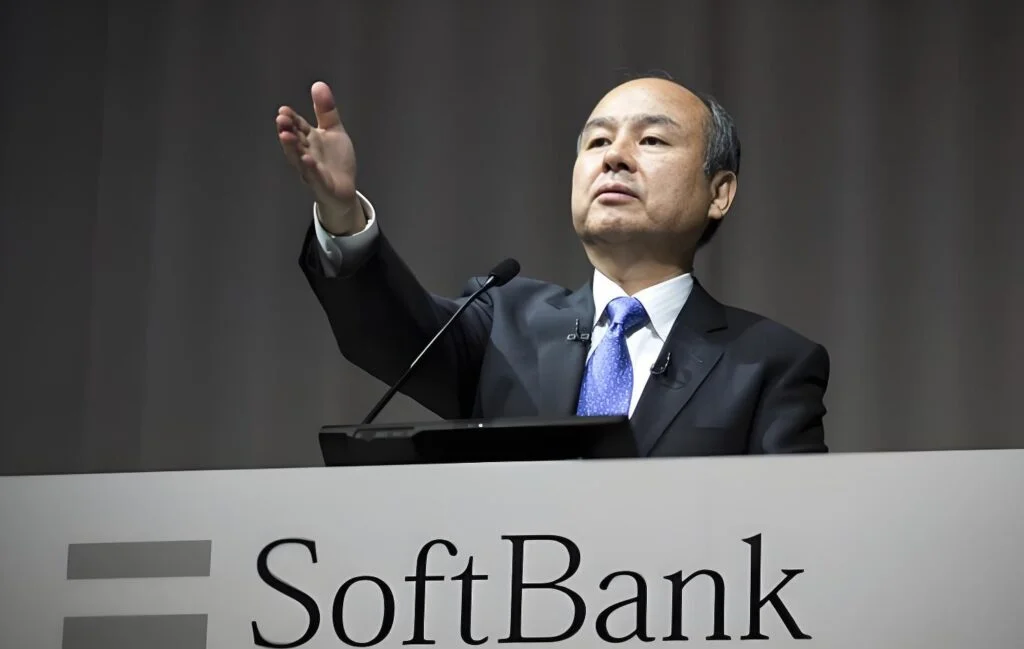
According to a WIPO report covering the period from 2014 to 2025, SoftBank ranked first globally in generative AI patents, with 2,985 filings.
Most of SoftBank’s patents were published in 2025, reflecting the scale of its strategic expansion into AI infrastructure, large language models and data centres. Since 2023, SoftBank has held generative AI application competitions for its employees. By January 2026, the company had collected more than 260,000 ideas, and in 2025 it required each employee to develop 100 AI agents.
However, six of the ten highest-ranked companies or institutions were Chinese.
China retained a substantial lead as the world’s largest source of generative AI patents. SoftBank may have ranked first individually, but Chinese organisations occupied six places in the top ten. Japan has achieved a concentrated breakthrough through a single company, while China’s advances are spread across a much broader range of institutions.
The fact that most of SoftBank’s 2,985 patents were published in 2025 also suggests that Japan remains a latecomer in AI and is working intensively to close the gap. Patent numbers do not automatically translate into industrial competitiveness. A considerable distance still separates SoftBank’s ability to deploy AI commercially from the speed at which China is industrialising the technology.
Commentary
Japan and South Korea Take Different Paths in Responding to China’s Manufacturing Rise
Faced with the rapid rise of Chinese manufacturing, Japan and South Korea have chosen sharply different strategies.
Japan’s approach is one of strategic contraction: defending its position upstream while withdrawing from downstream manufacturing. As the retreat of Japanese consumer-electronics companies demonstrates, Japan is giving up parts of the finished-product market while continuing to protect its strengths in advanced materials and precision equipment.Japanese companies rank first globally in 14 semiconductor-material categories and hold around 90% of the global market for coating and developing equipment. Japan’s logic is straightforward: it may stop producing many end products, but it intends to ensure that those products cannot be manufactured without Japanese materials and machinery.
South Korea has chosen direct confrontation: placing a heavy bet on semiconductors while continuing to compete in finished products.South Korea has not withdrawn. Samsung Electronics and SK hynix together control around 80% of the global HBM market, while Korean companies continue to compete directly with Chinese and Japanese manufacturers in the global automobile industry.
The cost of this strategy is equally apparent. In the first half of 2026, semiconductors accounted for 42.3% of South Korea’s total exports. The economy increasingly displays a pattern of being “hot outside but cold inside”: exports are booming, while domestic demand remains weak.The Korea Enterprises Federation has warned that the decline in competitiveness could become more pronounced as 2030 approaches.
Both paths remain uncertain. Japan is retreating from selected downstream industries while defending its upstream strongholds. South Korea is concentrating resources on semiconductors and continuing to fight in consumer markets.The only certainty is that the competitive structure of East Asian manufacturing has fundamentally changed.