A New Asian Economic Landscape | Hong Kong’s Recovery and Surging Foreign Trade
Wan Ge reports from Tokyo
On the 36th floor of an office building on Queen’s Road Central, a newly established family office is undergoing renovation. A designer gestures over the curvature of a wall with blueprints in hand, while the project manager urges a supplier over the phone to speed up the delivery of furniture.
Similar scenes are unfolding in office towers across Hong Kong.
In the first quarter of 2026, Hong Kong’s GDP grew by 5.9% year on year, marking its strongest quarterly expansion in nearly five years. The city received more than 14.3 million visitors, up 17% from the same period a year earlier. Hong Kong regained the world’s top position in IPO fundraising last year, while total merchandise exports rose by 23.8% in real terms.
Behind these figures are two stories unfolding simultaneously: global capital is flowing into Hong Kong, while Chinese goods are moving out into the world.
The Family-Office Boom
The rapid growth of family offices is one of the clearest signs of Hong Kong’s economic recovery.
By the end of 2025, the number of single-family offices in Hong Kong had exceeded 3,380, an increase of around 680 over two years, or more than 25%.These offices directly employed more than 10,000 full-time professionals locally. Their operating expenditure alone contributed approximately HK$12.6 billion to Hong Kong’s economy each year.
Caroline Lo, a board member of the Financial Services Development Council, cited Securities and Futures Commission data showing that the total value of assets under management in Hong Kong rose by 20% last year to HK$42.2 trillion.She described the expansion of the family-office sector as unprecedented in her many years in the industry.
Research by Deloitte shows that family offices in Hong Kong come from a highly diverse range of regions, industries and wealth levels. Industry professionals surveyed generally regarded Hong Kong as more attractive than Singapore.In May, Boston Consulting Group released its Global Wealth Report 2026, highlighting a historic shift that drew attention across the international financial sector: Hong Kong overtook Switzerland for the first time to become the world’s largest cross-border wealth-management centre.
In 2025, Hong Kong managed US$2.95 trillion in cross-border wealth, slightly above Switzerland’s US$2.94 trillion.Between 2024 and 2025, Hong Kong’s cross-border wealth increased by US$284 billion, representing growth of 10.7%. Switzerland recorded an increase of US$207 billion over the same period, with growth of only 7.6%.
The Hong Kong Special Administrative Region government has no intention of stopping there.The Financial Services and the Treasury Bureau and Invest Hong Kong have announced a target of assisting at least another 220 family offices to establish or expand operations in the city between 2026 and the end of 2028.During the first four months of this year, 36 family offices had already established or expanded their presence in Hong Kong, while around 160 others were actively considering doing so.
Capital flows are reinforcing the trend.UBS’s Global Family Office Report 2026 shows that, amid rising geopolitical tensions and increasing sovereign debt, many family offices are considering reducing their exposure to US-dollar-denominated assets and expanding investment in the Asia-Pacific region, Greater China and Western Europe.The outbreak of conflict in the Middle East earlier this year has intensified the global energy crisis while accelerating the eastward movement of international assets and private wealth.
Hong Kong’s Dual Gateway for China’s Next-Generation Exports
While Hong Kong is becoming a destination for global capital, mainland China remains a major source of goods for international markets.
In the first half of 2026, China’s total trade in goods reached RMB25.47 trillion, surpassing RMB25 trillion for the first time in any comparable period and rising by 16.9% year on year.Exports totalled RMB14.73 trillion, up 13.4%, and maintained growth for an 11th consecutive quarter.The composition of Chinese exports is also undergoing a profound transformation.The “new three”—electric vehicles, lithium-ion batteries and solar cells—continue to lead growth.
Even more notable is the emergence of what may be called the “next-generation three”: robotics, artificial intelligence and innovative medicines, all of which are showing strong export momentum.Hong Kong is providing concrete and practical support for the international expansion of both groups of products.
On the financing side, physical-AI company Momenta listed on the Hong Kong Stock Exchange on July 8, 2026, raising approximately HK$6.8 billion. It became the first publicly listed physical-AI company, with its market capitalisation exceeding HK$70 billion.On July 9, Rokae Robotics debuted in Hong Kong, becoming the market’s first listed company offering a full range of intelligent robotic products.
Luxshare Precision raised HK$24.266 billion in what became Hong Kong’s largest IPO of 2026, while Montage Technology raised HK$7.043 billion to support the development of artificial-intelligence chips.Analysts have observed that Hong Kong’s IPO market is shifting from an “offshore financing centre for internet and consumer companies” to an “offshore financing hub for hard technology and advanced industry.”The companies behind China’s next generation of export industries are increasingly securing global capital through Hong Kong.
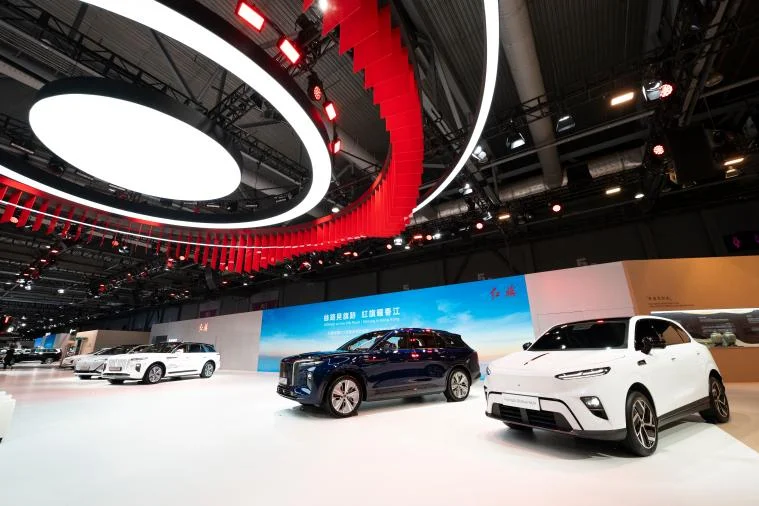
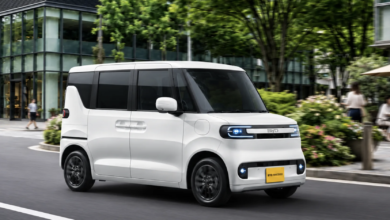
On the commercial-display side, Hong Kong has become an international launch platform for Chinese new-energy vehicles.At the International Automotive and Supply Chain Expo in Hong Kong on June 18, China FAW’s Hongqi brand unveiled three new right-hand-drive electric models.
The company also officially launched the right-hand-drive version of the Hongqi E-HS9 in Hong Kong, priced at HK$998,000.China FAW has designated 2026 as the beginning of Hongqi’s expansion into right-hand-drive markets.
Chen Bin, deputy general manager of China FAW, said the company would use Hong Kong’s advantages in finance, talent and market access to expand into Southeast Asia and other international markets.From financing to product launches, Hong Kong is becoming a dual gateway for the international expansion of China’s next-generation industries: capital is raised in Hong Kong, while products begin their journey to global markets from the city.
Closing the Loop Between Capital and Goods
Hong Kong’s capital and mainland China’s goods are forming a complete economic loop.
Global capital enters China through Hong Kong, while Chinese products reach the world through Hong Kong.The family-office boom means that more international investors are choosing the city as a hub for allocating capital to Chinese assets. The global expansion of China’s “new three” export industries means that more Chinese-manufactured products are gaining ground in international markets.
In the first quarter of 2026, Hong Kong’s GDP grew by 5.9%. During the same period, China’s economy expanded by 4.6%.One economy is bringing capital in, while the other is taking products out. Together, they form one of the most dynamic growth centres in Asia.
Hong Kong’s recovery is not an isolated development.Behind it lies the expansion of trade created by the upgrading of Chinese manufacturing, as well as the increase in wealth generated by the eastward movement of global capital.
Commentary
Hong Kong’s Recovery Is Welcome News
By Wan Ge
In February 2024, Stephen Roach, former chairman of Morgan Stanley Asia, published an article declaring that it was painful to say Hong Kong was “over.”A year later, he changed his assessment. Hong Kong had not suffered the severe damage he had anticipated. Instead, it had found renewed vitality amid competition between China and the United States.
Roach was not the first person to misjudge Hong Kong.In 1995, Fortune magazine predicted “The Death of Hong Kong” on its cover. In 2007, it reversed course and acknowledged that the city was far from dead.
History is repeating itself: those who predict Hong Kong’s decline are eventually contradicted by reality.The figures speak for themselves: 3,380 family offices, HK$42.2 trillion in assets under management, US$2.95 trillion in cross-border wealth and quarterly economic growth of 5.9%.
The world’s most demanding investors are voting with their capital.Hong Kong does not belong only to Hong Kong people. Nor does it belong only to China. Hong Kong belongs to the world.
The city has not become the “ruin” described by its critics. It has simply begun to recover.That recovery is welcome news to the world.