Retaining the Crowd: How Can a City Keep the Traffic After the Event?
By Li Da in Tokyo
In September 2026, the Heads of Delegation Meeting for the Changchun Winter Universiade had just concluded. Delegation leaders and event officials from 23 countries and regions inspected competition venues, supporting facilities and service arrangements in Changchun and Jilin.
With just over 100 days to go before the Games open on January 15, 2027, Changchun is expected to attract more than 10 million visitor trips. But traffic is not the same as retention. The real test is whether those visitors will return after the event is over.
What Can a Ticket Stub Unlock?
In the summer of 2026, Suqian in Jiangsu tried a simple approach: visitors holding football match tickets received free entry to local attractions and discounts at hotels.
During the event period, the city received around 900,000 visitors, up 96.15% from the previous period, while scenic-area revenue reached RMB767 million. A football ticket became an entry point to a weekend trip. Visitors were no longer just “coming for the match”; they stayed overnight, ate locally and visited multiple attractions.
Yanji in Jilin took the idea further. During Northeast Super League home matches, Yanbian created a themed market called “Yanbian Good Products, Football Shopping Fun”, with 30 specialty booths combining match attendance, consumption and tourism experiences. In Haikou, one Asian Cup event attracted 78,500 spectators and generated an estimated RMB443 million in broader economic contribution, boosting accommodation, transport, dining and leisure.
The lesson is clear: the value of a sports event lies not only in ticket revenue, but in what happens beyond the stadium.
Changchun’s “Four-Season” Experiment
Changchun’s tourism dividend has already started before the Games. From January to May 2026, inbound visitor numbers rose 14.92% year on year, while foreign visitors increased 9.40%. During the new snow season, Jingyuetan Scenic Area received 25% more visitors than a year earlier, with tourists from outside Jilin accounting for 76.60%.
What differentiates Changchun from many other winter cities is its attempt to turn a seasonal boom into year-round demand. The Changchun Wanda indoor ski resort operates throughout the year, with about 50,000 square metres of space, an 85-metre vertical drop and capacity for more than 3,000 visitors a day. That gives the city a physical basis for “four-season skiing,” rather than relying only on winter.
The next step is to connect event traffic with the city’s wider tourism assets. Under the theme “Travel Jilin with the Games,” the province plans to offer ticket discounts and other benefits during the event. Jingyuetan, the Museum of the Imperial Palace of Manchukuo, the Changchun Film Studio Museum and Zheyou Mountain could all become part of a broader “ticket-stub economy.”
A Winter Universiade ticket could become more than proof of admission. It could become a map of the city’s consumption opportunities.
International Reference: Turning Event Traffic Into City Assets
There are many international examples of cities converting event traffic into long-term urban value.
After the 1972 Sapporo Winter Olympics, the city continued to build the Sapporo Snow Festival into a major annual attraction, drawing more than two million visitors each February. Olympic venues and infrastructure became part of the festival’s physical foundation, while the festival itself evolved into a city brand. The legacy was not simply the buildings that remained, but the identity that grew around them.
After the 2018 PyeongChang Winter Olympics, Alpensia Resort was repositioned as a four-season destination, combining winter skiing with summer retreats and spring and autumn hiking. In the United States, Salt Lake City converted Olympic facilities after the 2002 Winter Games into student housing, public skating venues and visitor experiences.
The common logic is simple: event traffic is converted into city assets only when visitors still have reasons to stay longer and return later.
From a Seasonal Boom to Year-Round Demand
Changchun’s strategy is increasingly extending from event-time services to post-event operations.
The venues will remain for residents and young people. Competition facilities are expected to continue serving professional training, public sports and future events. The Jilin Provincial Speed Skating Gymnasium can function as a national-team training base, while the Changchun Skating Gymnasium can continue hosting curling and other ice sports.
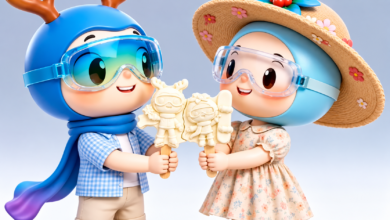
Licensed merchandise can also remain in the market. Nearly 50 offline sales points already cover major commercial districts, scenic areas and historic neighborhoods. After the Games, these channels could continue operating as a regular “Changchun Gifts” network, turning event merchandise into a longer-term city brand.
Brand capabilities can remain with local companies. Quality-control standards, design processes and channel-management experience built during the Games do not disappear once the event ends. And winter sports themselves can be extended across the year through indoor skiing, Jingyuetan’s four-season tourism products and the summer operation of ski resorts.
That is the deeper meaning of turning “one-season heat” into “four-season momentum.”
A More Fundamental Question: Who Is the Event For?
When venues, merchandise, brands and tourism are viewed together, the same idea emerges: the event is not the final goal. The city is.
Existing venues are being reused so they can serve longer after the Games. Cultural products are being designed not as one-off souvenirs, but as assets that can continue to generate value. Brand partnerships are not only about sponsorship revenue, but also about transferring know-how to local companies. And visitor numbers should not be counted only during the event, but after it: will people remember the city and choose to return?
FISU Secretary General Eric Saintrond told Xinhua that the Changchun Winter Universiade would become “one of the most precious memories” for young people around the world. He also noted that the long-term meaning of the Games goes far beyond competition itself, including opening renovated venues to the public, promoting winter sports and raising the global profile of Jilin’s ice-and-snow resources.
Saintrond himself competed as a Swiss cross-country skier in four Winter Universiades between 1985 and 1991. More than 40 years later, he said he still remembers every edition.
That may be the most important legacy of all.
An international event leaves behind more than venues, products and brands. It leaves a moment in which a city is redefined in the memory of the world.
Changchun’s challenge is to make that moment last.