Brand Edition | The Value of Being “Official” — What Can an International Event Leave Behind for a City?
By Jiuri in Tokyo
In September 2026, commercial development for the Changchun Winter Universiade entered an intensive phase. FAW and Jilin Bank became official partners, Quanyangquan was named the official exclusive drinking water supplier, DBAPPSecurity and JD.com became official sponsors, UTO joined as the designated functional base-layer sponsor, and China Media Group was appointed host broadcaster.
The list is impressive. But the more important question is not simply who sponsored the Games. It is what these companies can take away from official cooperation — and, more importantly, what such partnerships can leave behind for local businesses.
The answer lies not in the signing ceremony, but in what happens afterwards.
What “Official” Really Means: Turning Event Status Into Brand Credibility
When Quanyangquan appears at the Winter Universiade as the official exclusive drinking water supplier, the organizing committee is not judging only water quality. Product standards, brand reputation and full-chain supply capability all matter.
Quanyangquan General Manager Wang Huaibo described the partnership as “not only a brand upgrade for Quanyangquan, but also an important opportunity for a local Jilin company to serve its home event.” The phrase “brand upgrade” has real weight. Once a local drinking-water company receives official recognition from an international sports event, the credibility it brings into future cooperation with distributors, suppliers and partners changes significantly. That kind of endorsement cannot simply be bought through advertising.
UTO shows another route. As the designated functional base-layer sponsor, the brand provides professional sports apparel for athletes. The value of that cooperation lies less in logo exposure than in product verification under demanding winter-sport conditions. If UTO products perform reliably in extreme environments, the event effectively becomes a real-world test of the brand’s technical capabilities.
In many cases, the quietest endorsement is the most persuasive.
From Supplier to Brand Owner
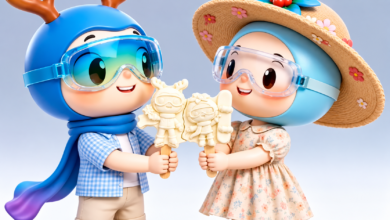
Development of the Winter Universiade’s licensed cultural and creative products is being jointly advanced by Sichuan Bozhang Brand Management Co. and Changchun Culture and Tourism Group. Bozhang has previously participated in licensed merchandise programs for major events including the Chengdu Universiade, Harbin Asian Winter Games, the National Games and the Nagoya Asian Games. What it brings is not simply knowledge of how to make toys, but a full methodology covering product development, quality control and channel management.
Many licensed stores are also being operated by local companies. Changchun Film Century City, for example, combines winter sports with film culture, extending Winter Universiade merchandise into a cultural-tourism setting. These companies are no longer acting only as suppliers placing products on shelves. They are learning product planning, retail scene management and consumer-experience design — capabilities often missing from traditional manufacturing and wholesale-retail models.
The international precedent is Seiko at the 1964 Tokyo Olympics. Seiko supplied all timing equipment for the Games. Before then, it was mainly a domestic Japanese watch brand. Olympic timing demanded extreme precision, and Seiko used the opportunity to demonstrate its quartz timing technology on a global stage. After 1964, Seiko’s international reputation changed dramatically.
The lesson is simple: the value of a major event is not how much a company spends on sponsorship, but whether the event forces the company to raise its standards.
Domestic examples point in the same direction. For the 15th National Games of China, Dongguan Wenbo Arts & Crafts Co. submitted a bid of more than 400 pages, detailing its production system, quality-control capability and design innovation. Another Dongguan company, Konda Toys, embedded AI modules into plush toys to create voice-interactive products and launched 25 items.
The significance of a 400-page bid is not the number of pages. It shows how competition has shifted from “who can offer the lowest price” to “who can prove higher professionalism.” When a company must document its quality system in such detail, it is already moving beyond supplier thinking and beginning to operate by brand-owner standards.
That same pressure can reach Changchun’s local production chain. When a canvas bag requires stronger structural design, a cushion must meet daily-use fabric standards, or a hoodie is expected to collaborate with a specialist brand such as UTO, local companies are forced to understand and execute a higher level of brand specification.
That process itself creates brand awareness.
From a One-Off Deal to a Long-Term Asset
After the Winter Universiade ends, the event IP will become part of the city’s assets. But the quality standards, design processes and channel-management capabilities developed during the Games can remain inside participating local companies.
That may be the most valuable part of the brand partnership system.
It is not simply a one-time sponsorship revenue stream. It is an opportunity to transfer capability.
The stories of Seiko’s “Olympic moment” and Dongguan’s 400-page bid point in the same direction: the core value of event-brand cooperation is not “which large companies became sponsors,” but which companies became stronger because of the event.
For Changchun, the next question is whether licensed production, retail operations and brand collaborations can create a lower-barrier entry point for local SMEs, allowing them not merely to watch from the sidelines, but to participate directly.
If that happens, the legacy of brand cooperation will not be limited to a list of major sponsors.
It will also include the smaller local businesses that learned how to build brands through the Games.
The real shift may therefore be this:
from asking large companies for sponsorship to helping small companies build brands.