Bangkok Luxury Shopping Experience: A One-Day Tour
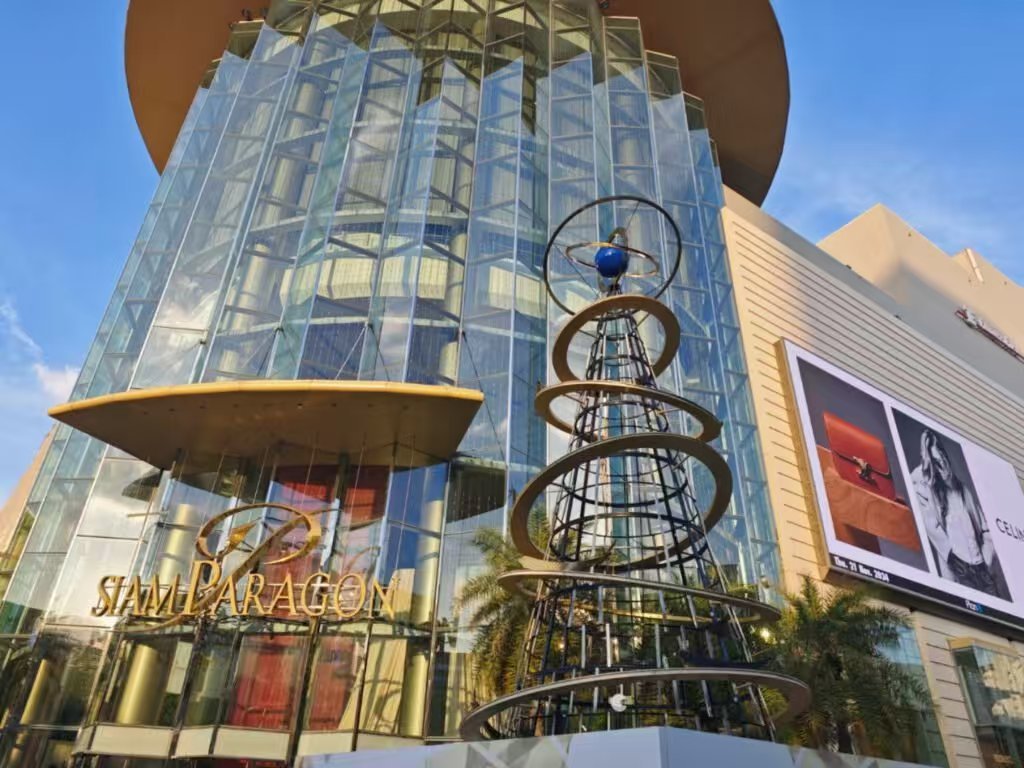
(Reported by Li Da from Tokyo) On a June afternoon in Bangkok, heat waves shimmer off the asphalt. Aditi Sharma, a young woman from India, steps through the side entrance of Siam Paragon into the mall. A rush of cool air greets her, forming an invisible barrier against the stifling outdoor heat. As the elevator doors slide open, a staff member dressed in a crisp, white short-sleeved shirt hands her a directory with both hands. Aditi glances down—a single floor, featuring six international luxury brands.
This is Thailand’s largest high-end shopping center. Having opened its doors 20 years ago, it still commands a staggering 70% share of Thailand’s luxury retail market. Today’s Bangkok, however, is no longer a city defined by a single premier mall. In just a few short years, a brand-new luxury landscape is being aggressively redrawn in a city where annual GDP growth hovers under 2%.
Who is Flocking to Bangkok?
Leaving Siam Paragon, Aditi catches a taxi, cutting through Bangkok’s notoriously congested afternoon traffic. In broken English, the driver tells her, “Before, when foreigners came to Thailand, they only went to SIAM. Now we have the newly opened One Bangkok, and ICONSIAM by the river. It splits the crowd.” He pauses, then adds, “There are more and more rich people.”
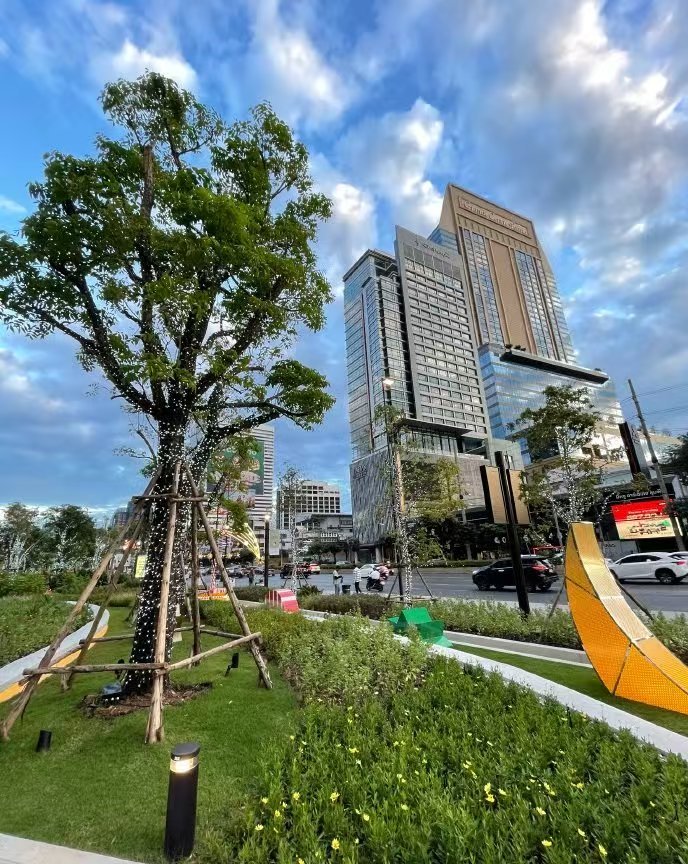
Roughly 30 minutes later, Aditi arrives at One Bangkok, a massive $3.2 billion integrated complex. Located in Bangkok’s diplomatic district, the development will eventually feature three shopping malls, five grade-A office towers, five luxury hotels, and three residential towers once fully operational. Its occupancy rate has already crossed 80%. Rolex has chosen this spot to open its first two-story concept boutique in Thailand—a 300-square-meter space that stands as the brand’s largest storefront in the country.
Waiting for a friend outside the boutique, a tourist tells Aditi, “I visit Bangkok once or twice a year. I used to shop exclusively in SIAM. Now that there are so many options, I discover something new every time I come.”
The drive from One Bangkok to ICONSIAM takes about 20 minutes by taxi. As the car crosses the Chao Phraya River, a striking contrast unfolds: towering skyscrapers dominate the new district on the right, while the low, weathered rooftops of the old city line the left. The skylines on opposite riverbanks look decades apart. The taxi clears the bridge and pulls up to the entrance of ICONSIAM.
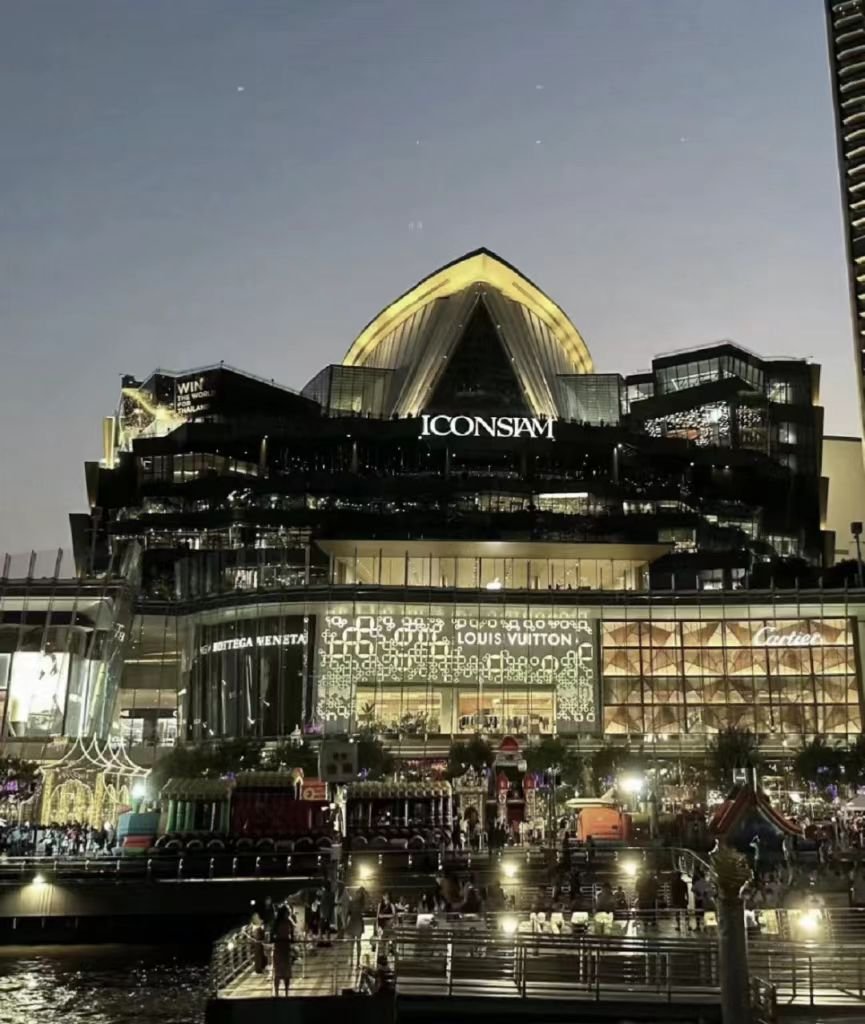
Opened in 2018 on the west bank of the Chao Phraya River, this mega-complex has successfully attracted premium labels like Moncler, Brunello Cucinelli, and Zimmermann to open their first Thai brick-and-mortar stores here. Hermès occupies its first three-story flagship in Thailand here, Prada boasts its first two-story boutique, and Tiffany & Co. has debuted its first “Favrile facade” concept store in Southeast Asia.
Just a week ago, Swiss haute horlogerie brand Jaeger-LeCoultre unveiled its brand-new boutique inside ICONSIAM. According to industry media metrics, out of the 26 luxury flagship stores opened across Southeast Asia over the past year, 11 chose Thailand. From the second half of 2025 through the first quarter of 2026, ICONSIAM alone signed leases with more than 51 brands—the majority entering the Thai market for the very first time, representing a total investment exceeding 1.5 billion baht.
As Aditi sips coffee in ICONSIAM’s top-floor lounge, a news alert pops up on her phone: Chinese tea chain HEYTEA has confirmed its expansion into Thailand, with its first store also slated to open in Bangkok in the second half of the year. While a cup of tea costing a few dozen RMB might not qualify as “luxury,” it has chosen the exact same city and the exact same business logic as timepieces retailing for hundreds of thousands of baht. Bangkok is rapidly cementing its status as the epicenter of Southeast Asia’s consumption upgrade.
Who is Footing the Bill?
By the time Aditi finishes browsing the three megamalls, twilight has fallen. Settling down at a riverside restaurant inside ICONSIAM, she strikes up a conversation with a businessman who runs a family enterprise in Bangkok. He mentions that while Thailand’s export and manufacturing sectors have been under immense pressure lately, Bangkok’s high-end consumption remains remarkably resilient. Sensing her underlying confusion, he offers a candid explanation: “Our family business is taking a hit too, but the spending among my circle of friends hasn’t slowed down at all.”
This perfectly encapsulates the economic paradox on display. Thailand’s first-quarter GDP grew by 2.8% year-on-year, yet projections for the full year of 2026 by multiple institutions generally hover between 1.6% and 2%. The Board of Investment of Thailand (BOI) has issued an official forecast of 1.6%. In stark contrast, private consumption is projected to grow by 2.3%, and private investment is expected to rise by 3.2%.
The data explains why. According to Knight Frank, the number of Ultra-High-Net-Worth Individuals (UHNWIs) in Thailand with assets exceeding $30 million is projected to surge by 14.7% by 2028, making Thailand the third-largest hub for affluent individuals in Southeast Asia. Concurrently, Thailand’s luxury market is expected to expand at a Compound Annual Growth Rate (CAGR) of 9%.
Another powerful driver is the robust resurgence of tourism. As of June 20, Thailand has welcomed over 15.44 million international visitors this year. The Tourism Authority of Thailand (TAT) targets 33 million foreign tourists for 2026, aiming for a total tourism revenue of 2.65 trillion baht. The official strategy has decisively pivoted from “chasing volume” to “prioritizing value over quantity”—and high-spending travelers happen to be the exact demographic luxury brands covet most.
Roland Berger’s 2026 Asia Consumer Study reveals that 79% of Thai consumers prioritize quality and brand reputation over price, with a younger demographic rapidly emerging as the new engine driving high-end retail.
Who is Anchoring the Market?
How can a city with an economic growth rate of less than 2% attract such an intense concentration of global luxury powerhouses? The answer lies outside of Thailand itself, embedded within the broader geopolitical fabric of Southeast Asia.
Strategically anchored at the heart of Southeast Asia, Thailand sits within striking distance of a regional consumer market exceeding 670 million people. Bangkok’s international airports serve as premier regional aviation hubs, facilitating the transit and layovers of tens of millions of international travelers every year. Opening a flagship store here means simultaneously capturing three distinct demographics: local Thai elites, affluent shoppers from neighboring Southeast Asian nations, and global tourists.
More importantly, Bangkok is undergoing a profound structural evolution from merely “selling products” to “curating cultural moments.” The Siam Piwat Group pioneered the “Bangkok Watch Week”—a first for Southeast Asia—where top-tier global watchmakers showcase ultra-rare pieces and synchronize their global rollouts. This indicates that Bangkok is no longer just a shopping destination; it is transforming into a regional luxury cultural hub.
Who is Feeling the Pinch?
As night sets in, both banks of the Chao Phraya River illuminate. Standing on ICONSIAM’s riverfront promenade, Aditi looks across the water at the glowing windows of ultra-luxury condominiums, with a brightly lit shopping metropolis soaring directly behind her.
Yet, this consumption feast is far from universal. The K-shaped divergence of the Thai economy is widening, exposing a deepening rift between premium and mass-market consumption. In the exact same month that luxury boutiques inside ICONSIAM are welcoming VIP clients, the Thai government approved a 400-billion-baht loan bill and rolled out consumer subsidy programs to alleviate ordinary households heavily indebted by the macroeconomic fallout of the Middle East conflicts.
From a global perspective, the luxury sector’s aggressive bet on Southeast Asia is not entirely devoid of risk. Kering Group witnessed a 13% drop in revenue in 2025 and plans to shutter approximately 100 stores globally in 2026—40% of which are located in Asian markets. As global luxury conglomerates face mounting headwinds in their mature home markets, whether their aggressive expansion in Southeast Asia can truly translate into sustainable long-term growth remains to be proven by the market.
Ultimately, the red-hot luxury market in Bangkok represents a collective vote of confidence by global capital in the Southeast Asian growth narrative. This time, the endorsement is not based on aggregate macroeconomic growth metrics, but on a much more straightforward assessment: the rich in Southeast Asia are multiplying, and they are highly eager to spend.
This city, with a GDP growth rate of just 1.6%, is fast becoming the definitive new battleground for global luxury brands in Asia. Whether this opulence can endure depends entirely on Thailand’s ability to translate the momentum of high-end consumerism into broader, systemic economic vitality—rather than letting it remain confined to the shopping lists of the ultra-rich.
[Short Commentary]
The Luxury Craze Sparked by K-Shaped Divergence
The coexistence of a modest 1.6% GDP growth and a dense concentration of brand-new luxury store openings might seem entirely contradictory. However, it exposes a profound contemporary reality of the global consumer market: high-end consumption has decoupled from macroeconomic growth. Instead, it traces a sharp K-shaped trajectory—one short, steep line ascending upward, and a long, heavy line sloping downward.
A single city can seamlessly accommodate a retail paradise for the ultra-wealthy alongside the acute financial anxieties of average working families. This is not a market anomaly; it is the raw reality of globalization. High-end brands choose locations based on the wealth curves of high-net-worth individuals, not the generic consumer price index of the masses. Luxury brands never bet on national fortunes; they only bet on that exclusive, ascending line.
Bangkok, with its 1.6% GDP growth, is the new battleground for global luxury giants. Yet, for true, sustainable prosperity to take root, the two lines of the K-shape must eventually find a way to gravitate closer together.