Venue Edition | The Logic of “No New Construction”: What Can an International Event Leave Behind for a City?
By Kelly in Tokyo
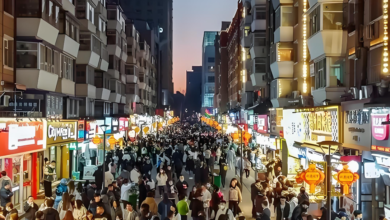
On September 14, 2026, Changchun opened the Heads of Delegation Meeting for the 33rd Winter World University Games 2027. Delegation leaders and event officials from 23 countries and regions visited competition venues, supporting facilities and service systems in Changchun and Jilin.
With just over 100 days to go before the Games open on January 15, 2027, venue renovation is entering its final stage. Renovation of the Changchun Wuhuan Gymnasium is 90% complete and all competition functions are scheduled to be finished by September 30. Work at the Changchun Skating Gymnasium has reached 93%, while the Jilin Provincial Speed Skating Gymnasium is 92% complete.
But the more important question is not how well the city hosts ten days of competition. It is what remains after the event is over.
That question is not unique to Changchun. The 2026 FIFA World Cup in the United States, Canada and Mexico and the Milan-Cortina Winter Olympics both left behind venues, transport investment and urban interventions that will remain part of their host cities for years. Some become productive public assets. Others become expensive “white elephants.”
In many cases, that outcome is determined long before the opening ceremony — when the venue plan is first designed.
Changchun’s Answer: Build Nothing New
The 2027 Winter Universiade will use 12 competition and training venues, with 10 in Changchun and two in Jilin. Every competition venue is being upgraded from an existing facility. No isolated new stadiums are being built, and duplicate construction is being avoided.
The Jilin Provincial Speed Skating Gymnasium, Jilin Provincial Skating Gymnasium, Changchun Wuhuan Gymnasium and Changchun Skating Gymnasium have all previously hosted major events, including the Asian Winter Games and China’s National Winter Games. The current work therefore focuses on renovation rather than reconstruction. At Jingyuetan Ski Resort, existing Vasaloppet ski routes are being reused without adding permanent buildings, preserving their dual function as winter competition routes and summer forest-fire access roads.
After inspecting the preparations, Shen Zhen, Chief Sports Officer of the International University Sports Federation (FISU), said the decision to renovate existing venues was highly consistent with FISU’s sustainability strategy.
Changchun is not alone. Across major international events, “build less, reuse more” is becoming the dominant venue strategy.
The World Cup’s “Lightweight” Model
The 2026 FIFA World Cup was the largest in history, with 48 teams, three host countries and 16 stadiums, yet almost no new stadiums were built specifically for the tournament.
The 11 U.S. venues were largely existing NFL or MLB stadiums, while Canada reused professional sports facilities and Mexico relied on established World Cup venues. Instead of constructing new stadiums, organizers focused on temporary stands, VIP upgrades, security improvements and transport modifications.
The result was a tournament with a reported 99.6% attendance rate, while FIFA projected revenue of about $8.9 billion. The operating logic has shifted from simply “hosting an event” to full life-cycle asset management: light renovation before the event, diversified commercial use during it, and long-term reuse afterwards.
Vancouver’s BC Place, for example, launched a turf-recycling program immediately after the tournament, separating natural and synthetic materials for reuse. In Boston, a new hospitality structure was designed with a large terrace that could be opened to the public after the event. The idea was simple: upgrades should continue to serve the community once the tournament is over.
The real value of “not building new” is therefore not just lower cost. It is the conversion of potential sunk costs into reusable assets. A new stadium can cost hundreds of millions or even billions of dollars. If it cannot generate revenue after the event, it becomes a long-term fiscal burden. Existing venues, by contrast, can often switch almost seamlessly back to club sports, concerts or community use.
The Winter Olympics’ Temporary Philosophy
The Milan-Cortina 2026 Winter Olympics took this logic even further.
Milan’s speed skating venue became the world’s first temporary Olympic speed skating arena. After the Games, all temporary elements were designed for reuse, while the ice system could be reassembled elsewhere. The main structure would return to its original function as part of the Milan exhibition center. During the Olympics it accommodated large crowds; afterwards it could again serve as a 12,000-seat conference venue or a 30,000-capacity concert space.
Cortina took another path. Its sliding center is intended to remain in operation after the Games as an international competition and training venue. Cortina’s mayor made clear that the Olympic facilities would continue to be used, while Bocconi University professor Ruta described the site as a future international sports center, even while acknowledging that sliding sports remain a niche market.
The Olympic Village at Porta Romana shows how venue planning can merge with urban renewal. Built on a former railway yard, the village will be converted into student housing after the Games, while a wider 20-hectare area is planned for affordable housing, offices and commercial development. The Olympics did not create a separate urban island; they accelerated an existing redevelopment plan.
According to the International Olympic Committee, 85% of Milan-Cortina venues were existing or temporary, sharply reducing the need for new permanent facilities.
After “No New Construction,” Operations Become the Real Test
Avoiding new construction reduces pre-event sunk costs. But post-event operations determine whether a venue becomes an asset or a burden.
After the Chengdu Universiade, Phoenix Hill Sports Park hosted more than 600 events from 2023 onward, including over 200 large-scale events with audiences above 10,000. More than 4.6 million visitors and consumers used the complex, generating around RMB2.1 billion in ticket revenue and more than RMB14.3 billion in broader economic activity. Its weekly utilization rate remained above 80%.
After the Beijing Winter Olympics, operators in the Yanqing zone completed adaptive renovation of facilities such as the National Sliding Centre and National Alpine Skiing Centre in just 36 days. The area was transformed into the Yanqing Olympic Park and has since received around 1.2 million visitors.
Shenzhen Universiade Center faced a different problem after the 2011 Games: annual maintenance costs of about RMB60 million. The local government introduced an ROT operating model, handing venue operations to a professional company and developing a commercial model linking the stadium, retail activity and the surrounding district.
Together, these cases suggest that post-event utilization matters more than architectural spectacle. A venue that stays busy, attracts multiple types of users and generates revenue has a much better chance of becoming a lasting city asset.
Changchun has already stated that all Games venues will remain available to residents and young people after 2027, with continued use for professional training, competitions and public sports. The Jilin Provincial Speed Skating Gymnasium can serve as a national-team training base and host international speed skating events, while the Changchun Skating Gymnasium can continue to stage curling and other ice sports.
The direction is clear. But there is still a gap between saying a venue will be “left to the public” and ensuring that people actually use it. Opening hours, pricing, training programs and event frequency will ultimately determine whether these facilities remain active.
International Reference: Managing the Venue Life Cycle
Looking further back, the success of venue legacy often depends on one principle: post-event use must be designed before the event begins.
Paris 2024 offers a useful reference. The South Paris Arena was adapted from exhibition halls at the Porte de Versailles complex and returned to exhibition and conference use after the Olympics. Porte de la Chapelle Arena became a community sports and cultural center, with facilities opened to nearby schools and clubs. The Aquatics Centre reduced its post-Games capacity to 2,500 and became a public multi-sport facility with swimming pools, fitness areas, climbing and padel courts.
The common feature is reversibility. Venues expand for major events, then contract afterwards to fit the everyday needs of the city. Post-event mode is written into the design from the beginning.
Milan’s Olympic Village follows the same logic. Located within an existing urban redevelopment zone, it serves athletes during the Games and students and residents afterwards. The Olympics are not treated as an interruption to the city, but as an accelerator of plans already underway.
Changchun’s Next Step
After inspecting preparations, FISU President Leonz Eder said that venue construction, accommodation and transport arrangements were all progressing on track.
Changchun’s decision not to build new venues is a strong starting point. But the true test will come after February 2027, not during the ten days of competition.
Three issues will matter most. First, the operating model must be clear: will venues remain under direct government management or be entrusted to professional operators? Second, uses need to be diversified beyond elite sport, including concerts, community activities and commercial functions. Third, public access needs to become institutionalized through clear opening schedules, pricing, training programs and event calendars.
A venue’s real value is not how impressive it looks during an international event.
It is how useful it remains afterwards.
Changchun has already written the first half of that answer: no unnecessary new construction, no duplication and no isolated venues.
The second half — how to keep those venues alive — is only beginning.