Winners of “China Plus One” | Pakistan: Standing on Its Own Feet
By Yuanyin in Tokyo
The year 2026 marks the 75th anniversary of diplomatic relations between China and Pakistan and the 13th year of the China–Pakistan Economic Corridor, or CPEC.
At the third China–Pakistan B2B Investment Conference on information technology, telecommunications and battery energy storage, held in Hangzhou on May 24, Pakistani Prime Minister Shehbaz Sharif set out an ambitious goal: Pakistan should learn from China’s development experience and become a “mini China” in South Asia.
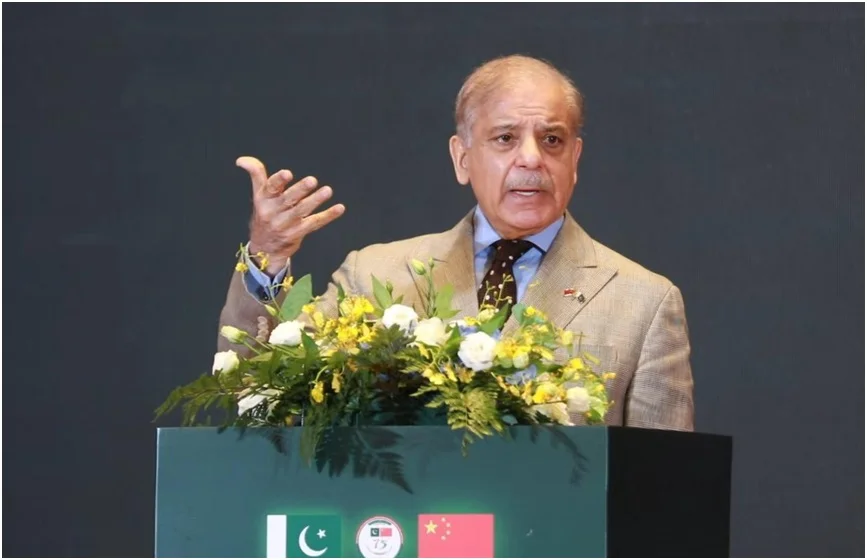
During the conference, companies from the two countries signed cooperation agreements worth $1.22 billion. Sharif’s China visit also marked the launch of an upgraded CPEC 2.0.
Pakistan’s “China Plus One” story is therefore shifting from infrastructure toward industry, and from external support toward domestic capacity building.
Compared with other beneficiaries of “China Plus One,” Pakistan is unusual. It is not simply absorbing relocated manufacturing. It is attempting a broader restructuring — from infrastructure to industrial production, and from dependence on external capital to developing the ability to generate growth itself.
From CPEC 1.0 to 2.0
CPEC is one of the flagship projects of the Belt and Road Initiative.
According to a briefing released by the Chinese Embassy in Pakistan in April 2026, CPEC has brought $25.93 billion in direct investment into Pakistan, created around 261,000 stable jobs, and added more than 8,000 MW of power-generation capacity. The number of companies operating in the Gwadar Port Free Zone has also increased significantly.
But the more important change lies in what comes next.
CPEC 1.0 focused largely on solving infrastructure bottlenecks — electricity shortages, weak transport links and limited port capacity. CPEC 2.0 is designed to move deeper into industry, agriculture, mining, information technology and vocational training.The two countries have proposed five major corridors focused on growth, livelihoods, innovation, green development and openness, with industry, agriculture and mining identified as priority sectors.
Pakistan’s Minister for Planning, Development and Special Initiatives, Ahsan Iqbal, has said the next phase will prioritize special economic zones, export-oriented manufacturing, information technology, renewable energy and agriculture.
The expansion of special economic zones reflects this shift. Pakistan’s approved SEZ network has expanded from seven to 44 zones, including 37 new ones, while nine key SEZs had previously been identified specifically under the CPEC framework.Pakistan is gradually moving from being a “corridor country” to becoming an industrial investment destination.
Healthcare is also emerging as a new area under CPEC 2.0. At the Pakistan–China Pharma and Healthcare B2B Investment Summit held in Islamabad on July 17–18, companies signed 22 commercial agreements worth $629.5 million, as well as 84 memorandums of understanding with potential cooperation valued at around $800 million.
“All-Weather” Trust as the Foundation
Pakistan’s place in the “China Plus One” landscape has never been purely economic.
China and Pakistan describe their relationship as an “all-weather strategic cooperative partnership.” The concept reflects an effort to maintain cooperation across domestic political cycles and shifts in the wider geopolitical environment.China has been Pakistan’s largest trading partner for 12 consecutive years. Officials on both sides have repeatedly emphasized mutual respect, non-interference and long-term political trust as the basis of the relationship.
That political foundation is increasingly translating into commercial agreements.
Pakistan’s ambassador to China, Khalil Hashmi, said in May 2026 that more than 300 memorandums of understanding and over 30 joint-venture agreements, worth more than $13 billion, had been signed over the previous two years. Around 30% of those MOUs had already been converted into formal agreements.
Agriculture is another fast-growing area. At the Pakistan–China Agricultural Investment Conference in Islamabad on January 19, companies from the two countries signed 79 MOUs with estimated investment of around $4.5 billion, covering food processing, livestock, fisheries, agricultural machinery and other subsectors.
Pakistan is also accelerating development of battery storage and advanced battery manufacturing, with the goal of becoming a production and export base serving not only South Asia but also the Middle East, Africa and Central Asia through the CPEC network.
The significance of the “all-weather” relationship lies in its ability to turn political trust into projects that can be executed, expanded and sustained.
A Strategic Depth That Is Difficult to Replicate
Pakistan’s version of “China Plus One” is fundamentally different from those of Southeast Asia or Central Asia.
Vietnam’s advantage has been scale. Malaysia’s has been technology. Thailand’s has been transformation. Indonesia’s has been strategy. Cambodia’s has been latecomer advantage. Kazakhstan is positioning itself as a hub, while Kyrgyzstan is betting on corridors.
Pakistan’s advantage is strategic depth.
Its role is not limited to absorbing production capacity. It is attempting a system-wide transformation linking infrastructure, manufacturing, agriculture, mining, digital industries and energy.
The $25.93 billion in investment, 44 special economic zones and 261,000 jobs are not simply indicators of Chinese capital entering Pakistan. They represent a longer-term attempt by Pakistan to use CPEC and “China Plus One” to reshape its economic structure.
As Sharif has emphasized, Pakistan says it is seeking expertise, investment and industrial cooperation — not aid or charity.
That distinction captures the deeper logic of Pakistan’s next phase: moving from being supported to building the capacity to stand on its own.