Jilin Specialty Products Look to Hong Kong for Global Expansion
From ginseng and beef to skincare, Jilin companies are using Hong Kong to build brands, open sales channels and reach international markets
By Lu Ye and Lin Kai in Hong Kong
Jilin companies are increasingly turning to Hong Kong as a gateway to the Greater Bay Area and overseas markets, moving beyond conventional product exhibitions toward distribution, branding and cross-border expansion.
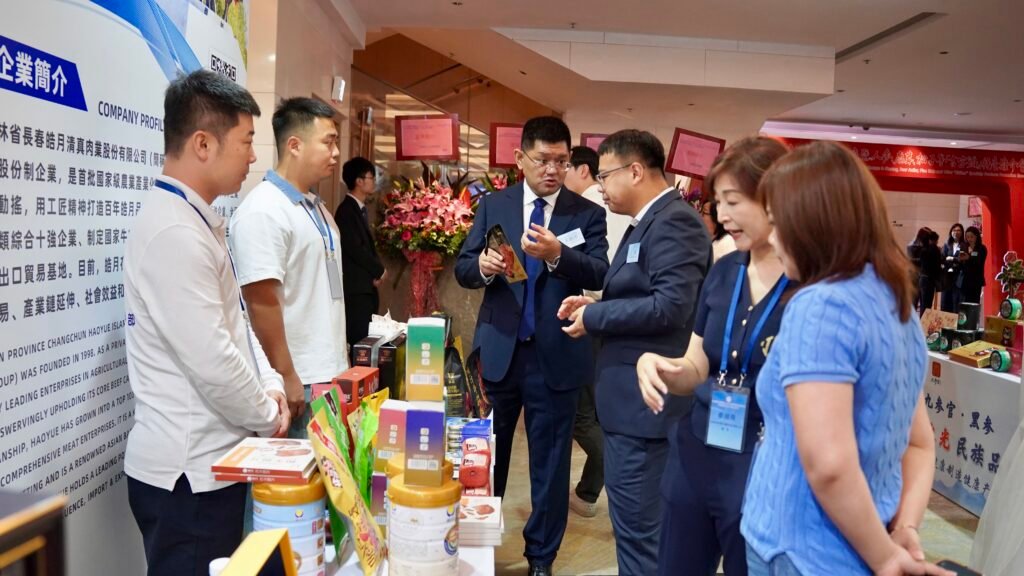
The shift was highlighted at the second Jilin–Hong Kong–Macao Economic and Trade Cooperation Conference and a promotional event for Jilin specialty products, including ginseng, deer antler and pine nuts.
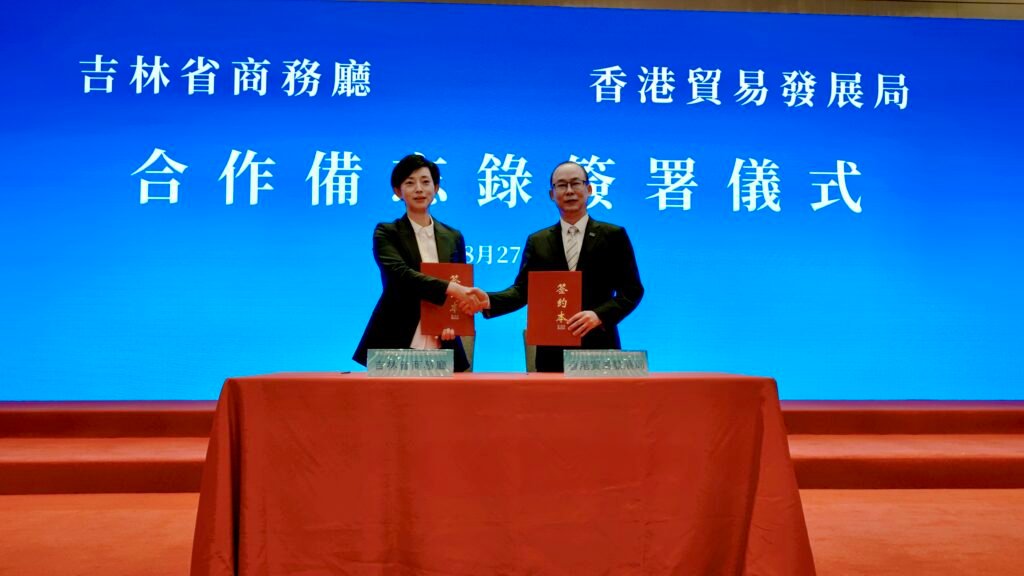
During the event, the Jilin Provincial Department of Commerce and the Hong Kong Trade Development Council signed a memorandum of cooperation. Business representatives also held matchmaking sessions covering trade, investment, distribution and market access.
Hong Kong as a gateway
Qiu Jiang, chairman of the Jilin Overseas Friendship Association, said the province aims to bring more “Jilin-branded” products into the Greater Bay Area and introduce them to international consumers through Hong Kong.
Jilin is known for products such as Changbai Mountain ginseng, deer antler and pine nuts. According to Qiu, Hong Kong’s international business network, financial services and regulatory system make it an important platform for Jilin companies seeking overseas growth.
Hong Kong Chief Secretary for Administration Chan Kwok-ki said Jilin’s natural resources and agricultural specialties have potential beyond the domestic market. Hong Kong, he added, can support their international expansion through professional services, certification and global trade connections.
Hong Kong investment exceeds US$9.1 billion
Hong Kong is one of Jilin’s largest sources of foreign investment.
By the end of 2025, cumulative Hong Kong investment in Jilin had exceeded US$9.1 billion, with 388 Hong Kong-invested companies operating in the province.
Jilin companies had also established 46 registered investment projects in Hong Kong, with non-financial outbound investment totalling approximately US$720 million. The projects cover business services, wholesale and retail, software and information technology.
Trade between the two regions is also expanding. Jilin’s trade with Hong Kong reached RMB272 million in 2025, up 3.3% year on year. Major exports included integrated circuits, semiconductors, starch and frozen beef.
In the first half of 2026, bilateral trade reached RMB266 million, led by smartphones, integrated circuits, passenger vehicles and frozen beef.
Companies open Hong Kong sales channels
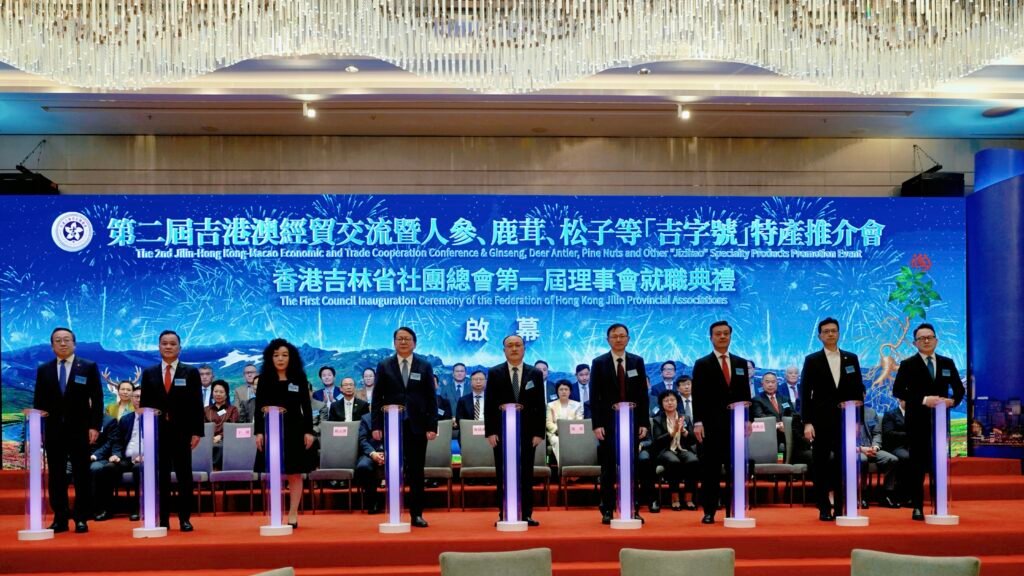
For many returning exhibitors, this year’s event was less about displaying products and more about converting contacts into business.
Haoyue Group, a major Jilin beef producer, previously focused on chilled beef and premium cattle products. This year, it introduced more ready-to-eat foods, snacks and processed products.
The company said some of its products had already entered Hong Kong’s e-commerce and television shopping channels. It now plans to target the city’s mid- to high-end restaurant market, using Hong Kong as a base for expansion into the Greater Bay Area and Southeast Asia.
Tongtai Industrial Group also presented a wider range of processed black-ginseng products. The company met representatives of the Chinese Manufacturers’ Association of Hong Kong to discuss distribution, packaging and labelling requirements.
Rather than redesigning its entire product range, the company was advised to add labels that comply with Hong Kong standards to its existing packaging. The two sides have reached a preliminary cooperation agreement.
Hong Kong Certification Helps Jilin Products Expand Overseas
The event also produced a distribution agreement between a Hong Kong business representative and Jilin Tuohua Biotechnology, a producer of ginseng-based skincare products.
Hong Kong distributor Joanna first discovered the company’s products through a livestreaming platform. After testing them, she contacted the manufacturer to discuss representation. The promotional event marked their first face-to-face meeting and led to a formal agreement.
Several products drew attention during the exhibition, with sales reaching thousands of Hong Kong dollars shortly after they were displayed.
Joanna said Hong Kong’s relatively strict product certification standards could help Jilin products gain credibility in other overseas markets.
Wang Xiaoping, overseas director of Jilin Tuohua Biotechnology, said the company hopes to use Hong Kong’s trade and certification systems to improve its international competitiveness.
Ginseng moves beyond traditional remedies
Jilin’s ginseng industry is also seeking to move beyond traditional herbal products and into everyday wellness, workplace health, household care and beauty.
Some companies are developing instant products, portable packaging and new formats aimed at younger consumers.
Zheng Weining, founder of premium ginseng brand Zhenglü Tang, presented a range of products including instant “mini-jar ginseng.” The company combines rapid-dissolving technology with portable packaging to make ginseng easier to consume.
Zheng said the objective is to transform ginseng from a primary agricultural product into a branded, international and youth-oriented consumer product.
Branded products command higher prices
Export figures suggest Hong Kong consumers are willing to pay more for processed and branded ginseng.
In 2025, the average export price of Jilin ginseng sold to Hong Kong reached US$84.95 per kilogram—about 2.37 times the provincial export average.
The price gap reflects stronger demand in Hong Kong for branded products with greater processing and added value.
For Jilin businesses, Hong Kong is therefore more than a destination for sales. It offers access to certification, professional services, brand exposure and international distribution.
From Changbai Mountain ginseng and beef to skincare and ready-to-eat foods, Jilin’s specialty industries are gradually shifting from raw-material exports to higher-value branded products.